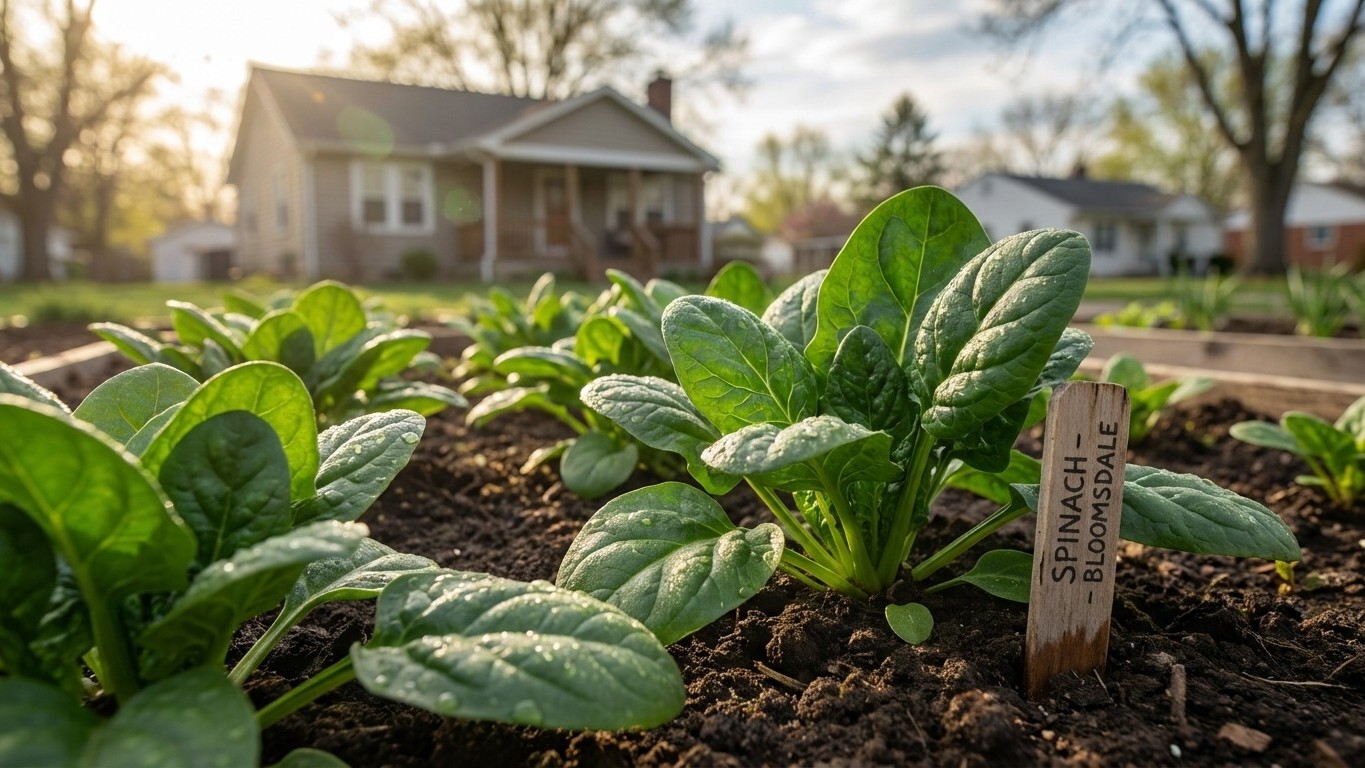

Kentucky gardeners get two shots at spinach each year, and both end the same way: bolting. In spring, the crop runs out of time once the days grow long enough to trigger flowering, usually by mid-to-late May at the reference station near Louisville, a question addressed directly in Will Spinach Bolt Early in Kentucky?. In fall, the challenge flips: soil stays too warm to germinate seed well into late summer, squeezing the sowing date against the first frost.
The short answer
The reference station near Louisville logs 14 hours and 39 minutes of daylight on the year’s longest day. That number matters more than anything on the thermometer, because long days push spinach toward flowering no matter how mild the air feels. A cool stretch of June weather doesn’t buy extra time once day length crosses the threshold that tells the plant to bolt. Spinach reads the clock as much as the calendar, and in Kentucky the clock runs long.
Heat stacks directly on top of that mechanism here. The reference station averages 37.2 days a year at 90F or hotter, which means a large share of late spring and summer afternoons blow well past the 75F point where spinach stops growing well and starts tasting bitter. So Kentucky gardeners face both pressures within weeks of each other: the days lengthen fast on the way to the June peak, and the heat climbs right alongside. That double squeeze is the real reason the spring window feels so short.
Neither factor works alone here. A gardener in a location with Kentucky’s day length but a cooler summer might stretch the harvest a little further into the growth-ceiling zone before bolting sets in. A gardener in a hot region with shorter summer days might dodge the flowering trigger a bit longer even as heat stress builds. Kentucky doesn’t get either break. Day length and heat load arrive close together, and that’s what makes the spring crop feel like it disappears almost as soon as it gets going.
Fall works differently, because shortening days actually work in the gardener’s favor for bolting risk. The barrier in autumn isn’t day length or the 75F ceiling. It’s soil that’s still too warm for reliable germination, a timing challenge explored in detail in When to Sow Autumn Spinach in Kentucky. For spring, though, the takeaway stands: this is a day-length crop and a heat-load crop at the same time, and in Kentucky those two forces are what set the calendar, not personal preference for when to plant.
How long the spring window really is
- Sowing date. Spinach seed goes in the ground two to three weeks before the last frost. With the last spring frost at the reference station falling between March 24 and April 4, that puts sowing dates roughly between the first and third week of March, depending on how the season is running.
- Frost risk fades fast. Once seed is in, the remaining frost risk drops off quickly through late March into early April, giving young spinach a short but workable stretch of cool soil and cool air to get established.
- Day length climbs steadily. From that sowing date forward, daylight lengthens every day on its way toward the 14-hour-39-minute peak at the June solstice. That climb is gradual at first, then accelerates through April and May.
- Heat arrives close behind. With 37.2 days a year averaging 90F or hotter at the reference station, and many of those clustering in the warmer months, the air and soil temperatures climb right alongside the lengthening days rather than lagging behind them.
- The window closes. Once day length crosses the bolting trigger and afternoon temperatures start pushing past the 75F growth ceiling, spinach quality drops fast. Put together, that leaves a usable spring window of roughly two months from a typical March sowing date, sometimes a bit less if the season turns warm early.
That’s a tight run for a crop that rewards steady, unhurried growth. It’s also why many Kentucky gardeners treat spring spinach as a fast, single harvest rather than a crop to pick from for weeks on end.
The autumn crop, and when the soil lets you sow
Soil still too warm to germinate
Spinach seed germinates poorly once soil temperatures climb above 80F, according to Utah State University Extension. That threshold is the real gatekeeper for a fall crop in Kentucky, not the calendar. With the reference station averaging 37.2 days a year at 90F or hotter, soil at seed depth commonly stays above that 80F mark well into late summer, long after the air itself starts to feel like it’s cooling off in the evenings. Sowing too early into that warm soil means a thin, unreliable stand, no matter how carefully the bed is watered.
The frost that ends the season
The first fall frost at the reference station arrives between November 2 and November 12. Utah State University Extension recommends sowing fall spinach 50 to 75 days before the target harvest date, and no days-to-maturity figure is published for the crop, so that sowing-to-harvest window is the only counting tool available. Working backward from a harvest date around the first frost puts the sowing window somewhere between mid-August and late September, depending on which end of that 50-to-75-day range is used.
Overlay that against the soil-temperature obstacle and the practical window narrows further. Mid-August soil is still likely running hot at the reference station, so the safer sowing dates cluster toward September, once soil has had a chance to cool. That leaves less room than the frost dates alone would suggest, and it’s worth checking soil temperature directly rather than relying on the calendar page alone. Four spinach varieties commonly grown in home gardens, Bloomsdale, Melody, Teton, and Olympia, are recognized by name in university guidance, though no maturity or bolt-resistance data for any of them is published in that source.
Checking this against your own county
The frost dates and heat averages here come from the reference station near Louisville, and NWS Louisville has noted that this urban station tends to run later in spring and earlier in fall than the surrounding rural parts of Jefferson County. A garden even a short drive outside the city can see a tighter frost-free window than these numbers suggest, which matters for both the spring sowing date and the fall harvest target.
The most reliable way to pin down local timing is through University of Kentucky Cooperative Extension. County extension offices track local frost records and soil conditions that a single regional station can’t capture, and they can help translate these general windows into dates that fit a specific piece of ground.
Common questions
Can shade delay spinach bolting in Kentucky?
Shade can lower leaf temperature somewhat, which may help with the 75F growth ceiling and bitterness, but it doesn’t change day length. Since long days are one of the two triggers for bolting, shade alone won’t stop a spring crop from flowering once daylight crosses that threshold.
Is fall spinach less likely to bolt than spring spinach?
Yes, because days are shortening rather than lengthening through the fall growing period, which removes the day-length trigger. The obstacle in fall is different: soil warm enough to reduce germination, not the flowering response that limits the spring crop.
How do I know when my soil has cooled enough to sow fall spinach?
The published threshold is germination dropping above 80F soil, so a soil thermometer at seeding depth is the direct way to check. County extension offices can also offer guidance based on local monitoring rather than relying on air temperature alone.
Does variety choice change the bolting timeline in Kentucky?
Bloomsdale, Melody, Teton, and Olympia are all grown in home gardens, but no maturity or bolt-resistance figures for any of them appear in the university guidance behind this article. Without that data, it isn’t possible to say one variety reliably buys more time than another here.