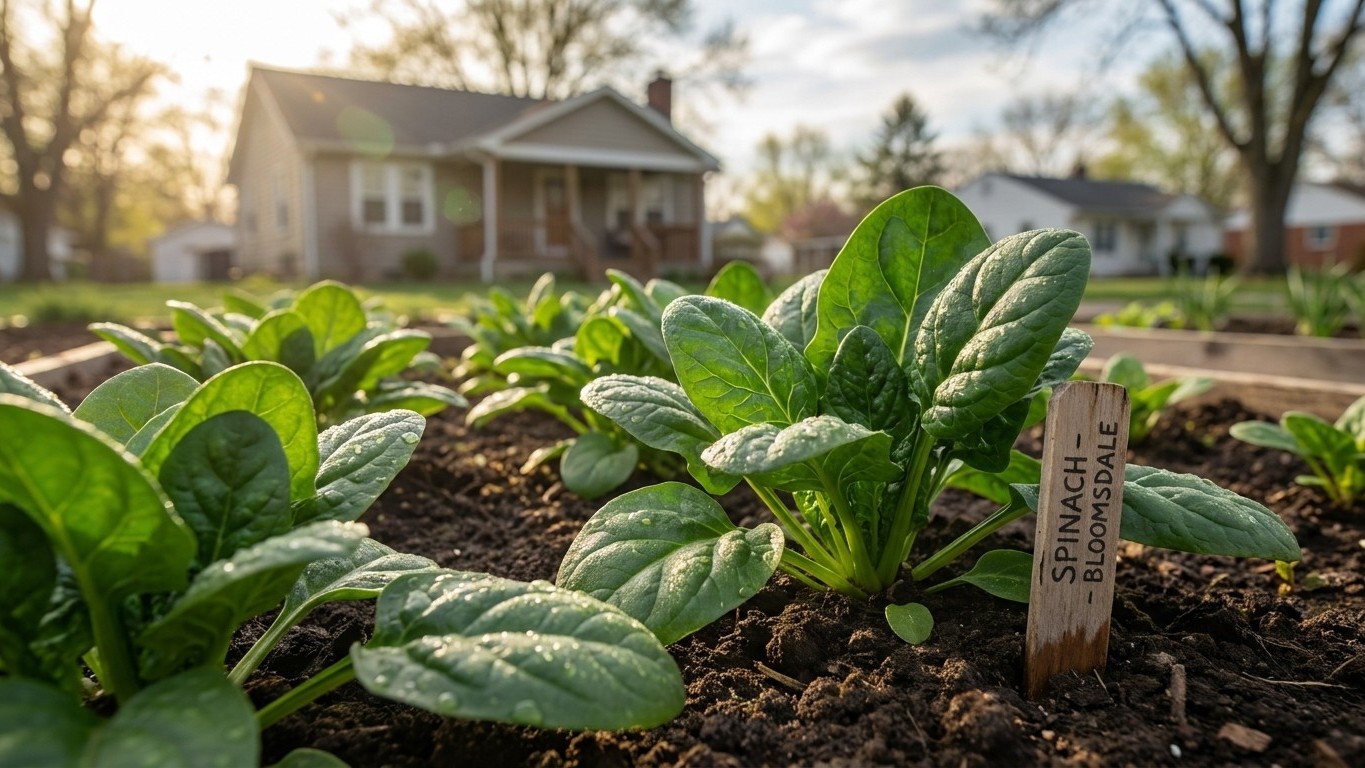

Spinach in Rhode Island bolts for two reasons at once: the state’s summer days stretch past 15 hours, and its air warms past the point spinach can stand. Neither a cool June nor a shady bed changes the day-length trigger. The result is a short, two-sided window that opens in spring and reopens briefly in fall.
The short answer
On the longest day of the year, Rhode Island gets 15 hours and 2 minutes of daylight. That number matters more than most gardeners realize, because spinach reads day length as a signal to stop making leaves and start making seed. Once the days stretch that long, the plant bolts, sending up a flower stalk and turning bitter, regardless of whether the thermometer is mild or scorching that week.
Heat pushes in the same direction from a second angle. Spinach grows well only while temperatures stay below 75 F. Above that line, growth quality drops and the leaves start to taste sharp even before a flower stalk appears. Rhode Island’s summers aren’t brutally hot by national standards; the reference station near Providence averages just 9.4 days a year at 90 F or hotter. But 75 F is a much lower bar, and the state clears it routinely well before those hottest days ever show up.
So the limit here isn’t one thing, it’s both. Day length alone would be enough to end a spring crop of spinach even in a cool year, because the 15-hour mark arrives on the calendar no matter what the weather is doing. Heat layers on top of that, narrowing the usable window further by making the plant unpleasant to eat before it even bolts. Growers who assume a cloudy, mild June will stretch their spinach crop are working against a mechanism that has nothing to do with temperature, which raises the question, Will Spinach Bolt Early in Rhode Island? A cool day in the middle of June still has 15 hours of light in it.
This is the opposite of how day length works for a crop like onions, where long days are what build the bulb. For spinach, long days are the enemy, and there’s no variety trick or watering schedule that resets that. The four spinach varieties commonly mentioned by extension sources, Bloomsdale, Melody, Teton, and Olympia, all face the same day-length physiology; no published data compares how quickly each one bolts under Rhode Island’s specific daylight curve, so no ranking is offered here.
Practically, this means Rhode Island gardeners are working with two short crops a year rather than one long one: a spring planting that has to finish before the days get too long and the air too warm, and a fall planting that has to finish before frost, which raises the question of When to Sow Autumn Spinach in Rhode Island. Both windows are real, but neither is generous.
How long the spring window really is
- Start with the frost date. The reference station near Providence sees its last spring frost between April 7 and April 17. Spinach seed goes in the ground 2 to 3 weeks before that date, which lands sowing somewhere in the second half of March into the very first days of April, as soon as the soil can be worked.
- Track the heat ceiling. From that sowing date, spinach grows well only while temperatures stay under 75 F. Rhode Island’s spring stays cool enough for that through most of April and into May, but the state’s climb toward summer heat, evidenced by an average of 9.4 days a year reaching 90 F, means the comfortable zone doesn’t last through June.
- Track the daylight climb in parallel. While heat is building, daylight is lengthening toward the June solstice figure of 15 hours 2 minutes. This is happening on a fixed calendar schedule, independent of whatever the temperature is doing in a given year.
- Find where the two lines cross. Once either threshold is crossed, the crop is functionally done: leaves get bitter, or a flower stalk appears, or both. In Rhode Island, that crossing tends to happen well before the solstice itself, since 75 F arrives earlier in the season than 90 F does.
- Add it up. Sowing in the second half of March to early April, and losing the crop to heat and day length by sometime in late May to early June, leaves a usable spring window of roughly eight to nine weeks. That’s workable for a fast crop of baby leaves or a single full-size cutting, but it isn’t a season-long harvest.
The autumn crop, and when the soil lets you sow
Fall spinach in Rhode Island isn’t limited by day length the way spring spinach is, since days are shortening rather than lengthening through late summer and fall. The two obstacles instead are soil temperature at sowing and the arrival of hard frost at the other end of the season.
Soil still too warm to germinate
Spinach seed germinates poorly once soil temperature climbs above 80 F. Late July and August soil in Rhode Island’s raised beds and exposed garden rows often sits right at or above that line, especially after a run of dry, sunny days. There’s no published soil-temperature date for Rhode Island specifically to mark when the ground reliably drops back under 80 F; the practical fix is to check soil temperature directly with a probe thermometer, or to wait for a stretch of cooler, cloudier weather in late summer before sowing the fall crop, rather than sowing by calendar date alone.
Counting back from frost
The reference station’s first fall frost arrives between October 24 and November 3. Utah State University Extension, the authority behind the growth thresholds used throughout this page, advises sowing a fall spinach crop 50 to 75 days before the date you want to harvest. Counting back 75 days from the earlier frost date of October 24 lands sowing around August 10. Counting back only 50 days from the later frost date of November 3 allows sowing as late as mid-September. That gives Rhode Island gardeners a sowing window roughly from early August through mid-September for a fall crop meant to finish before the ground freezes.
Layered against the soil-temperature obstacle, the realistic move is to sow toward the earlier end of that window, once soil has cooled below 80 F, rather than waiting until September and rushing the 50-day minimum against an uncertain frost date.
Checking this against your own county
The frost dates and daylight figures above come from a single reference station, and gardens outside that immediate area, particularly inland, at elevation, or away from the coast’s moderating effect, typically see their last spring frost arrive later and their first fall frost arrive earlier than the reference dates suggest, sometimes by one to two weeks. Before locking in a sowing date, check current guidance from the University of Rhode Island Cooperative Extension, which can speak to conditions in your specific county rather than the single airport station used for statewide climate normals.
Common questions
Can shade cloth delay spinach bolting in Rhode Island?
Shade cloth can lower leaf temperature and help keep plants under the 75 F growth ceiling a little longer, but it does nothing about day length. Since long days trigger bolting on their own, shade buys some time against heat stress without stopping the flowering signal tied to the calendar.
Does a fall crop taste better than a spring crop?
Fall spinach sown in the 50-to-75-day window before frost grows under shortening days rather than lengthening ones, so it isn’t fighting the same bolting pressure a spring crop faces near the solstice. Many gardeners find fall spinach holds its quality longer for that reason, though no comparative data is provided by the sources used here.
Is there a spinach variety that resists bolting better in Rhode Island’s day length?
Bloomsdale, Melody, Teton, and Olympia are commonly available varieties, but no published data compares their bolting behavior specifically under Rhode Island’s daylight curve. Choosing between them should rely on other traits, since day-length response data isn’t broken out by variety in the sources behind this page.
What happens if I sow spinach too late into the fall window?
Sowing much past the 50-day-before-frost mark risks the crop being caught by the first hard freeze before it reaches usable size. Since the first fall frost at the reference station arrives between October 24 and November 3, and can arrive earlier in inland or elevated gardens, sowing toward the earlier end of the August-to-September window leaves more margin.