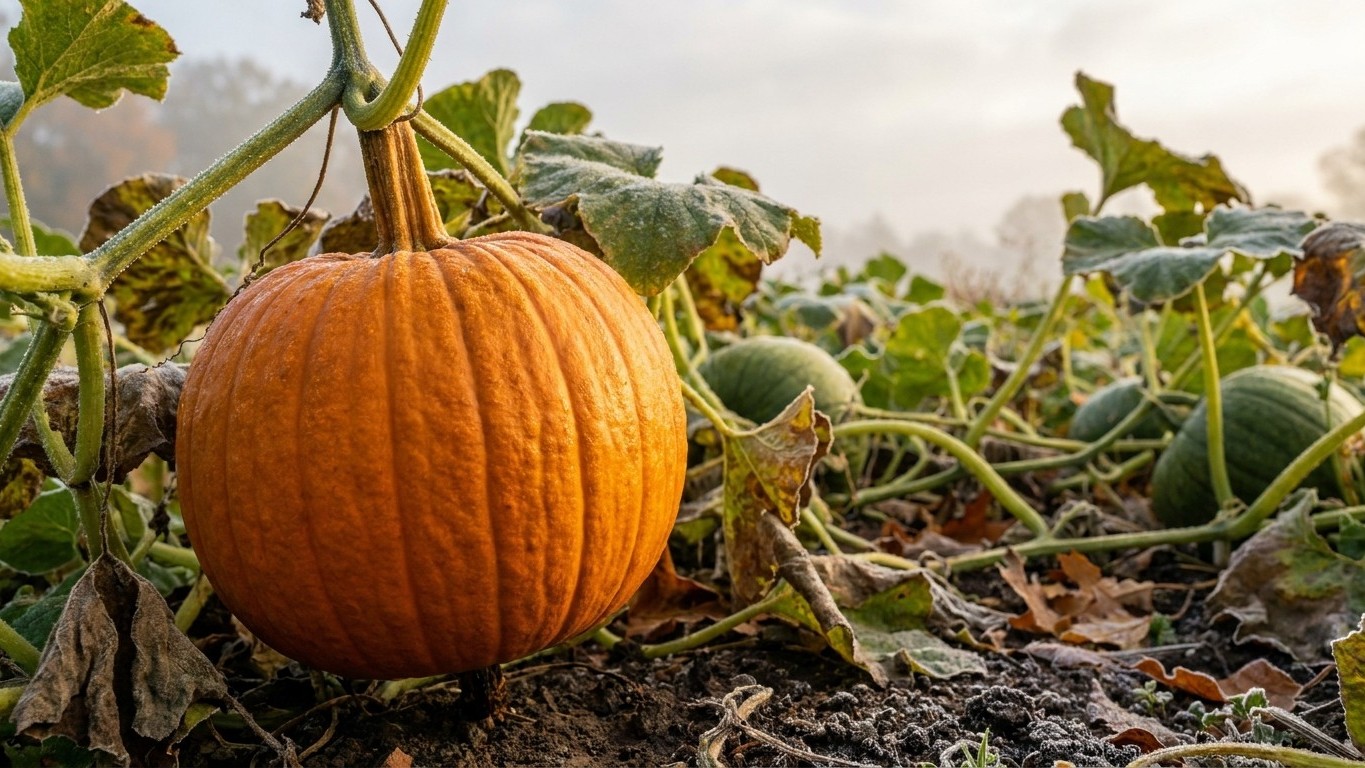

Pumpkins ripen in time in New Hampshire when the flower behind the fruit opens by roughly late August. Open later than that and the vine runs out of season before the shell hardens and the color turns from green to orange. The exact cutoff moves with your local frost date, not a statewide average, so what follows is a starting point to check against your own yard.
The short answer
New Hampshire’s first fall frost lands somewhere between October 13 and October 26, depending on where in the state you garden. Start there, not at the calendar you’d use for tomatoes or beans. Pumpkins don’t run their clock from the seed going into the ground. They run it from the day a female flower opens and gets pollinated, and Utah State University Extension puts that stretch at 45 to 55 days before the fruit is ready to cut.
Run the subtraction both ways and you get the real window. Take the earliest frost date this state sees, October 13, and assume a fruit needs the full 55 days to finish: the flower behind it would have had to open by August 19. Take the latest frost date, October 26, and assume a quicker 45-day fruit: that flower could open as late as September 11. Everything else falls somewhere between those two dates.
That’s not two answers, it’s one moving target. The gap between August 19 and September 11 covers roughly three weeks, and where you land inside it depends on how early frost actually shows up in your yard and which pumpkin variety you’re growing. A gardener who wants a margin of safety plans as if frost were coming in mid-October and budgets the full 55 days, which points to flowers needing to open no later than the last week of August.
Miss that window and the vine keeps growing, keeps setting new flowers, and none of the late ones will finish. A pumpkin that’s still pale green and hard-shelled with weeks of growing left when frost hits will not ripen off the vine the way a tomato does. It just stops where it is.
So the short answer holds: Will Pumpkins Ripen Before Frost in New Hampshire? Yes, for gardeners whose flowers open by late August at the latest. Push the flowering date much past that, whether through a slow start, a cool summer, or a late second flush of blooms, and the calendar stops being on your side.
When to sow here
Working backward from an August flowering date means starting further back still, at the seed or transplant stage, a question covered in detail in When to Sow Pumpkins in New Hampshire, and that’s where New Hampshire soil creates its own delay. The state’s last spring frost falls between April 16 and April 27, but that date tells you when the air stops freezing, not when the ground is warm enough to plant pumpkins. Soil lags air temperature by weeks in spring, and pumpkin seed needs the soil itself at 65 F before it will germinate reliably. Treating April 16 as planting day is the single most common mistake gardeners make with this crop here.
- Let the last frost pass first. April 16 to April 27 is the window for this reference location; treat the later end as the safer bet if your garden sits in a low spot, a valley, or away from the coast.
- Wait again for the soil, not the calendar. Ground that held near freezing in early April doesn’t jump to 65 F the day frost ends. It typically takes several more weeks of warm days before the top several inches hold that temperature morning and night, which pushes direct-seeding into mid or late May across most of the state.
- Check with a soil thermometer rather than guessing. Push it a couple of inches down at midmorning; one warm afternoon after a cold week won’t have moved the number, and a hopeful guess costs you a rotted seed.
- Use row covers if the calendar is working against you. Clear plastic or fabric row covers trap heat and warm the soil under them faster than bare ground. Gardeners who use them can often move their sowing date up by about two weeks compared with an uncovered bed.
- Count forward from the sowing date before you commit. Once seed goes in, track when the plant actually flowers and check that date against the August-to-early-September window above, rather than assuming the season will simply work itself out.
Skip the soil-temperature step and the seed either rots in cold, wet ground or sits without germinating for an extra two weeks, time this state’s already short pumpkin season doesn’t have to spare.
What goes wrong here
- A late flower that never colors. A vine that keeps blooming into September is optimistic, not productive. Flowers opening after the safe window set fruit that stays green and hard-skinned when frost arrives, because there simply isn’t enough of the 45-to-55-day clock left to run. The remedy is to pinch off new flowers and stop the vine tip once you’re within that stretch of your expected frost date, so the plant’s energy goes into fruit already set instead of starting ones that can’t finish.
- A fruit caught by frost before the skin hardens. Frost damages a pumpkin’s rind even when the flesh underneath still looks fine, and a soft or split shell won’t hold up in storage. The remedy is to track the forecast against the frost window above, and if a cold night is arriving early, cut fruit that’s already turned mostly orange with the stem attached and finish it somewhere it won’t freeze, rather than gambling on a few extra days on the vine.
- A vine that dies back before the fruit finishes sizing or coloring. Squash bugs and cucumber beetles both weaken vines faster than a short New Hampshire season can absorb, cutting the plant’s working days before its 45-to-55-day clock runs out. The state pages on squash bugs and cucumber beetles cover identification and control in more depth than fits here. The general remedy is catching that kind of damage early enough in summer that the vine still has healthy leaf area left to finish whatever fruit is already on it.
Checking this against your own county
Every date in this article comes from one weather station, and New Hampshire’s geography argues against treating it as gospel for your own yard. The North Country and the White Mountains hold frost weeks longer into spring and see it arrive earlier in fall than the milder Seacoast or the Merrimack Valley; elevation alone can shift both frost dates by a week or more. A garden sitting in a low, frost-pocket hollow will see frost before a garden on a gentle slope a mile away, no matter which county line either one sits inside.
The most reliable next step is UNH Extension, the University of New Hampshire’s Cooperative Extension service, at extension.unh.edu. It publishes county-level guidance and fields questions through its county offices, and it can tell you how the frost dates and soil-warming pattern for your specific town compare with the reference figures used here. If pumpkins are new to your particular plot, that local check is worth more than any statewide average.
Common questions
Is it too late to sow pumpkins in July in New Hampshire?
Almost certainly, for most varieties. Working backward from even the latest frost date, October 26, and the shortest maturation window, 45 days after flowering, a July-sown plant would need to flower within days of germinating to have any chance. Some gardeners try faster-maturing varieties as a gamble, but there’s no published figure here to say which ones qualify.
Does soil hitting 65 F mean frost is over for good?
No, and this is worth separating clearly. The last spring frost date and the soil reaching 65 F are two different milestones that happen weeks apart. Frost passing tells you the air won’t freeze; it says nothing about whether the ground is warm enough for pumpkin seed to germinate reliably.
My pumpkin’s shell still looks soft. Should I leave it on the vine longer if frost is close?
Weigh the risk both ways. A shell that hasn’t hardened needs more time on the vine, but frost damage to an unhardened rind is worse than cutting it a little early. If a cold night is forecast and the fruit has already turned mostly orange with the stem attached, cutting it and curing it somewhere it won’t freeze is generally the safer call.
How long will a New Hampshire-grown pumpkin keep after harvest?
That figure isn’t published in the source this article relies on. The available guidance only says to store pumpkins where they will not freeze; it gives no specific storage temperature, humidity level, or keeping time, so don’t rely on a number borrowed from another crop.