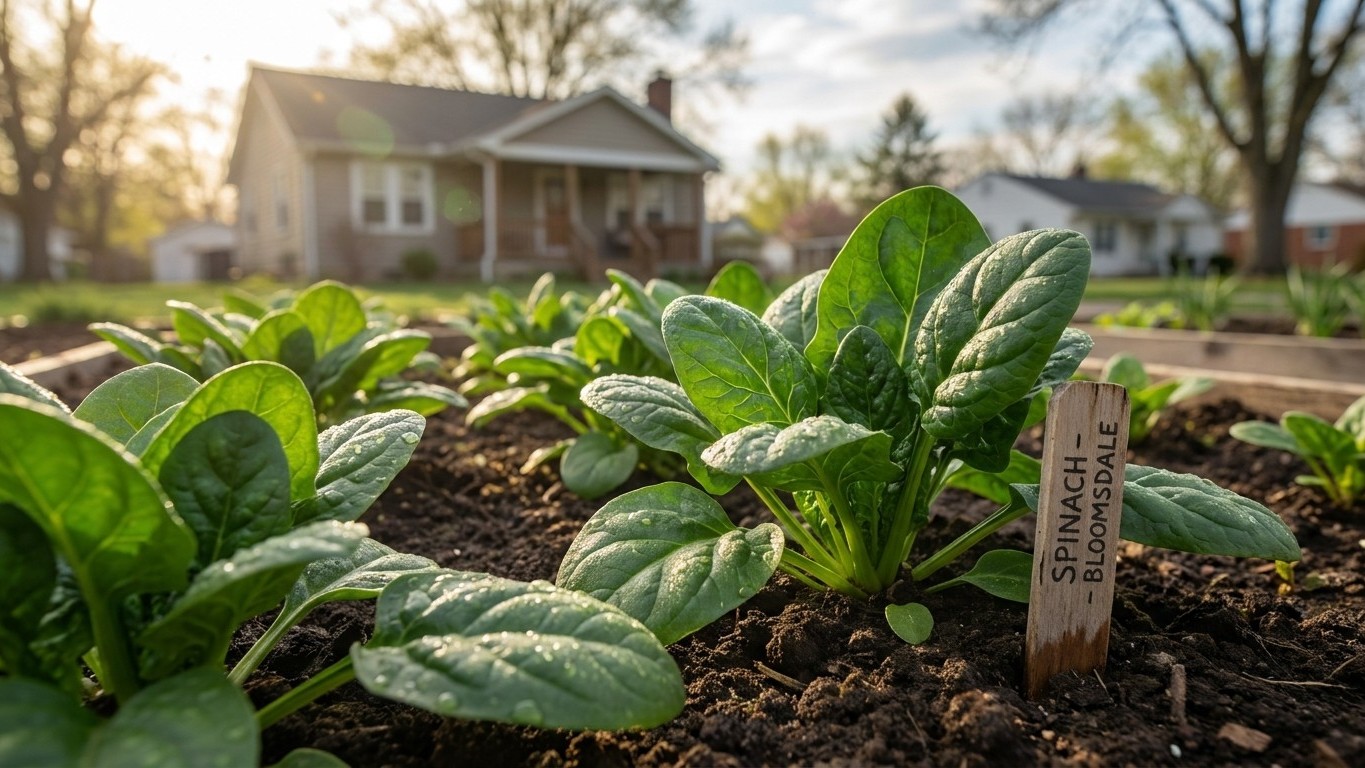

In New York City, spinach’s spring planting is a short race against two clocks running at once: the length of the day and the climbing heat. Bolting arrives once both cross their thresholds, usually within a few weeks of the last spring frost, not because the plant runs out of cold weather but because it runs out of short days. The fall crop escapes that trigger entirely, since days are shrinking instead of lengthening, but it has its own hard stop: the first freeze, which is why knowing When to Sow Autumn Spinach in New York matters just as much as timing the spring crop.
The short answer
The reference station for New York City logs 14 hours and 56 minutes of daylight on the summer solstice, the longest day of the year. That number matters more than most gardeners expect, because spinach flowers, or bolts, once day length gets long and temperatures climb, not one or the other in isolation. A mild, cloudy June does nothing to stop this. The plant is reading the clock, not the thermometer alone, and by the time New York’s days stretch toward that 14-hour-56-minute peak, spinach is already committed to setting seed rather than making leaves.
This is the opposite of how long-day onions behave, where the same lengthening daylight builds the bulb instead of ending the crop. Two crops, one shared variable, opposite outcomes. On a spinach bed, long days are the enemy, and a gardener hoping that New York’s often-humid, not-especially-scorching summer will somehow stretch the harvest is fighting the wrong battle. The days themselves are the limit, regardless of how the mercury behaves.
That said, heat piles on top of day length rather than replacing it as a factor. Spinach grows best where temperatures stay under 75°F, and that ceiling does double duty: above it, growth slows, and the leaves that do form turn more bitter. New York City averages 12.2 days a year at 90°F or hotter, a number that captures the summer heat load driving both water stress and the kind of afternoons that push soil and air well past that 75°F comfort zone. Those hot days cluster in July and August, arriving just as day length is still near its yearly high.
So the honest framing is that New York’s spinach season is limited by both day length and heat, arriving almost together rather than one after the other. There’s no clever timing trick that separates them here. A gardener working around New York City isn’t choosing between a “long-day problem” and a “heat problem” and may wonder, Will Spinach Bolt Early in New York? They’re facing a single narrow window bracketed on one side by lingering spring cold and on the other by a June and July that check both boxes for bolting at once.
How long the spring window really is
- NOAA’s 1991-2020 climate normals put New York City’s last spring frost between March 23 and April 3, based on the 32°F freeze-probability band at the Central Park reference station.
- Spinach seed can go in the ground 2 to 3 weeks ahead of that last frost date, since the crop tolerates cold soil far better than heat. That puts a realistic sowing window somewhere between early March and early April, depending on how that particular spring is running.
- Germination and early leaf growth happen while soil and air are still cool, which is exactly the stretch spinach prefers. This is the productive part of the window, and it’s short by design.
- Growth quality drops once temperatures push consistently above 75°F. Combined with day length climbing toward the 14-hour-56-minute solstice peak, this typically closes the spring crop out well before New York’s hottest stretch, the one responsible for that 12.2-day average above 90°F, even arrives.
- The result is a spring window best measured in a handful of weeks rather than months. Sow as early as soil can be worked in March, expect the crop to bolt as late spring gives way to early summer, and don’t plan on a second spring sowing once the first has gone to seed. Day length doesn’t reset until fall.
- Some seed catalogs list varieties such as Bloomsdale, Melody, Teton, and Olympia for northern gardens, but Utah State University Extension, the source behind the growth thresholds used here, doesn’t publish days-to-maturity or bolt-resistance data for any of them. Treat variety choice as a separate question from the calendar math above.
The autumn crop, and when the soil lets you sow
Fall spinach has an easier relationship with day length, since the crop is heading into shortening days instead of lengthening ones. But two other obstacles bracket the season just as tightly as spring’s frost and heat did.
Soil that’s still too warm to germinate
Utah State University Extension notes that spinach seed germination drops once soil temperature climbs above 80°F. Late summer soil in the New York City area holds heat well past the point where air temperatures start feeling like fall, since soil cools more slowly than the atmosphere above it. With an average of 12.2 days a year hitting 90°F, concentrated in July and August, that heat has time to soak in. Practically, this means an early-August sowing attempt is often working against warm soil even if the calendar feels like the season is winding down. Waiting until soil has genuinely cooled, rather than going by the date alone, is the more reliable trigger for a fall crop.
The frost that ends the season
NOAA’s climate normals put New York City’s first fall frost between November 14 and November 27. Utah State University Extension’s guidance for fall spinach is to sow 50 to 75 days before the date you want to harvest. Counting back from a mid-November harvest target lands sowing dates somewhere between the last days of August and the last week of September, depending on how much of that 50-to-75-day range a gardener wants as a buffer against an early frost. Aim for the earlier end of that sowing range if the goal is a harvest well ahead of frost risk, and the later end if a light frost sweetening the leaves is actually the goal, since spinach tolerates cold far better than heat.
Checking this against your own county
Central Park’s climate station is a dense, heat-retaining urban site, and it runs both warmer and later than the rest of New York State. Upstate counties and the Adirondacks see their last spring frost later and their first fall frost considerably earlier, which tightens both the spring and fall spinach windows described above rather than loosening them.
Before locking in a sowing date, check local frost data and soil conditions through Cornell Cooperative Extension, which maintains county-level offices across the state. A county extension office can confirm how far local frost dates drift from the New York City figures used here, and whether soil in a particular garden is running warmer or cooler than the regional average that late-summer sowing decision depends on.
Common questions
Can a shade cloth or row cover stop spinach from bolting in New York?
Shade reduces heat somewhat, but it doesn’t change day length, and day length is one of the two triggers behind bolting. Expect shade to buy a little time, not a reprieve from the calendar.
Is there a summer spinach option for New York gardens?
Not from spinach itself, since both day length and heat work against it through the New York summer. Gardeners looking to fill that gap typically switch to a different leaf crop for the hottest, longest-day months and return to spinach once fall sowing conditions arrive.
Does mulching help the fall crop germinate in warm soil?
Mulch can moderate soil temperature swings, but Utah State University Extension’s guidance centers on soil actually cooling below 80°F, not on insulation alone. Testing soil temperature directly before sowing is more reliable than assuming mulch has solved the problem.
Why does the same day length help onions but hurt spinach?
The two crops read the identical signal, longer daylight, in opposite ways. Long-day onions use lengthening daylight to trigger bulb formation, while spinach uses that same lengthening daylight as the signal to stop making leaves and start setting seed. It’s one variable driving two unrelated biological switches.