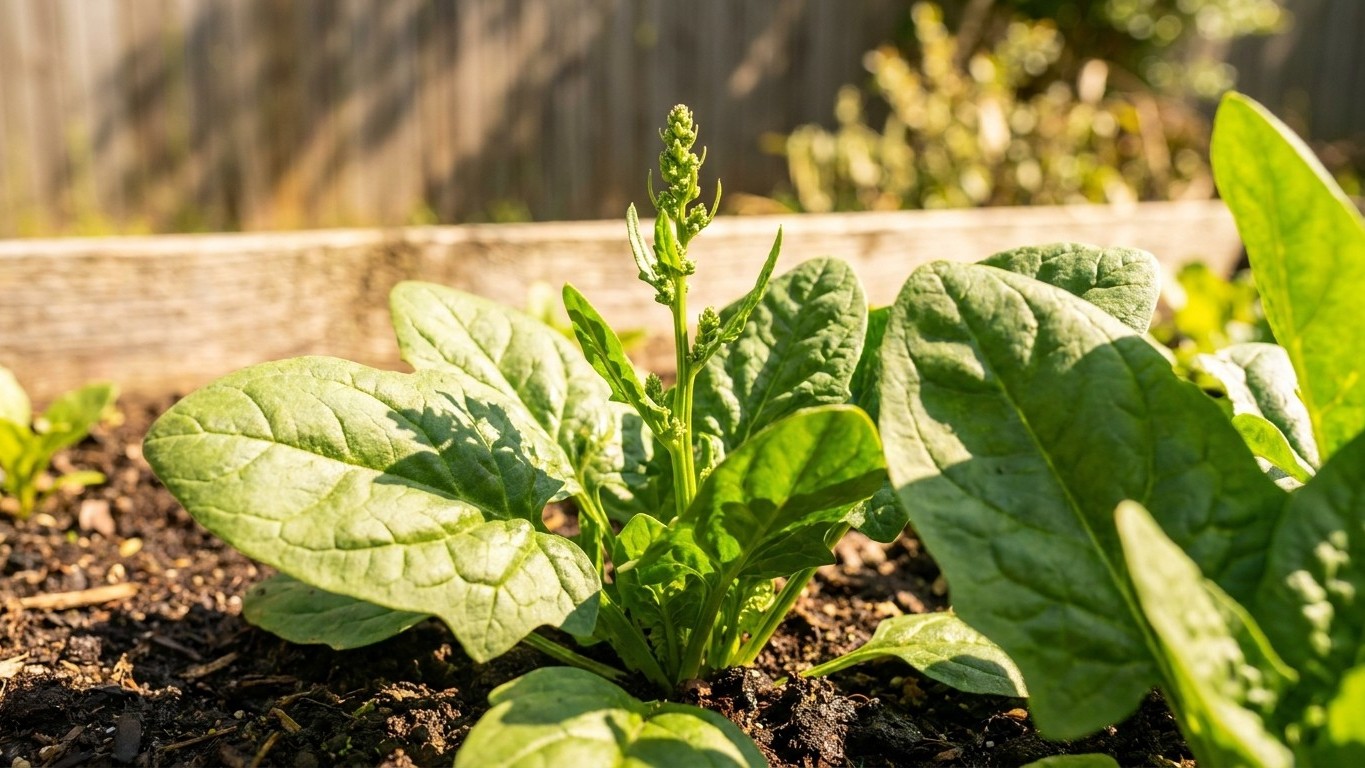

Yes, spinach bolts early almost every spring in Arkansas, and the cause isn’t just the state’s reputation for heat. The plant reads the calendar through daylight as well as temperature, and both cues arrive early here. The workaround isn’t fighting the plant’s internal clock, it’s sowing early enough and harvesting fast enough to finish before the days stretch out and the thermometer climbs. Fall planting, timed to the state’s soil temperature rather than the calendar, tends to be the more forgiving season.
The short answer
On the longest day of the year, Arkansas gets 14 hours and 20 minutes of daylight at the reference city used for these calculations. That number matters more than most gardeners expect, because day length is one of the two triggers that push spinach into flowering. Once daylight stretches past a certain point, the plant shifts from producing leaves to producing a flower stalk, no matter how mild the air feels that week. A cool, overcast June in Arkansas would not slow this process, because light, not the thermometer, drives the first part of bolting.
Layer heat on top and the situation gets worse rather than better. The reference station averages 69.2 days a year at or above 90 F, a heavy load for a crop whose own comfort zone tops out at 75 F. Push spinach past that 75 F ceiling and two things happen at once: growth slows, and the leaves turn bitter, which is the plant’s own signal that stress is building. The same number, 75 F, marks both the growth limit and the flavor limit, and it isn’t a date on a calendar, it’s a threshold the plant crosses whenever conditions allow.
So is the limit here day length, heat, or both? Both, and they land in the same stretch of the Arkansas calendar instead of spreading out over separate seasons. In a state with cooler, shorter summers, a gardener might get extra weeks of good growth even as days lengthen, because heat lags behind daylight. Arkansas doesn’t get that grace period. By the time daylight is long enough to start pushing the plant toward flower, the days above 75 F are already stacking up too. That double pressure is why a single spring sowing rarely lasts long, and why the fall crop, planted after the sun starts losing ground again, ends up carrying more of the season’s harvest.
How long the spring window really is
Working backward from the last frost date gives a usable, if narrow, window for spring spinach in Arkansas.
- Start with the last spring frost at the reference station, which falls between March 12 and March 28. Spinach is typically sown 2 to 3 weeks ahead of that date, not after it, since the seed tolerates cold soil better than the mature plant tolerates heat.
- That math places the earliest safe sowing somewhere between late February and mid-March, depending on which end of the frost window a given spring lands on.
- From there, growth stays good only while temperatures hold below the 75 F ceiling. Arkansas’s spring warm-up moves fast, and afternoons routinely cross that line well before the state logs any of its 69.2 average days above 90 F later in the year.
- That leaves a spring window of roughly six to eight weeks: sowing in late February or early March, with harvest needing to wrap up before the calendar reaches late April.
- Four varieties commonly show up in Arkansas gardens, Bloomsdale, Melody, Teton, and Olympia, but the source used for this fact sheet publishes no days-to-maturity figures for any of them. Timing has to be judged by watching the plant rather than counting days off a seed packet.
- Once the window closes, it closes for both reasons at once, long days and rising heat, which is why a second spring sowing almost never succeeds where the first one bolted.
The autumn crop, and when the soil lets you sow
Fall spinach in Arkansas runs into two separate obstacles, and they don’t arrive in the order a gardener might expect. The soil problem shows up first, and the frost problem shows up last.
Warm soil blocks germination
Utah State University Extension notes that spinach germination drops once soil temperature passes 80 F. Arkansas soil holds onto summer heat well past the point where the air feels like fall. With 69.2 days a year reaching 90 F, the ground several inches down often stays above that 80 F threshold well into September. A sowing date that looks correct on paper, counted backward from a harvest goal, can still fail if the seed goes into soil that hasn’t actually cooled yet. Waiting for the soil to drop below 80 F, rather than for the month on the calendar to change, is the safer trigger.
The frost that ends the season
The first fall frost at the reference station arrives between November 7 and November 20, and once it does, the growing season for spinach is effectively over. The source’s guidance for a fall crop is to sow 50 to 75 days before the target harvest date. Aiming for a harvest around the start of November means sowing somewhere between August 18 and September 12. Set that against the soil-temperature problem above, and the two constraints pull in opposite directions: the harvest math wants an August sowing, while the soil often isn’t ready until mid or late September. In practice, most fall spinach in Arkansas goes into the ground in the second half of September, once soil temperatures have genuinely cooled, even though that pushes the harvest closer to the frost window than the 50-to-75-day count alone would suggest.
Common questions
Can spinach be grown through an Arkansas summer? No. Long daylight hours combine with 69.2 average days a year at or above 90 F, and both push the plant toward bolting well before midsummer. There’s no shaded or watered workaround for the day-length trigger.
What’s the best time to plant spinach in Arkansas? Late February through mid-March for the spring crop, sown 2 to 3 weeks ahead of the last frost window of March 12 to March 28. For fall, the second half of September tends to work better than the calendar math alone suggests, once soil has cooled below 80 F.
Does shade cloth stop spinach from bolting? Shade can lower leaf and soil temperature, which helps with the heat side of the equation, but it does nothing to shorten the actual hours of daylight the plant is exposed to. Since day length alone can trigger flowering, shade cloth reduces one pressure but not the other.
Which spinach variety resists bolting best in Arkansas? Bloomsdale, Melody, Teton, and Olympia are the varieties named in the source used for this page, but no days-to-maturity or bolt-resistance data is published there for any of them. No variety recommendation can be drawn from this data set.