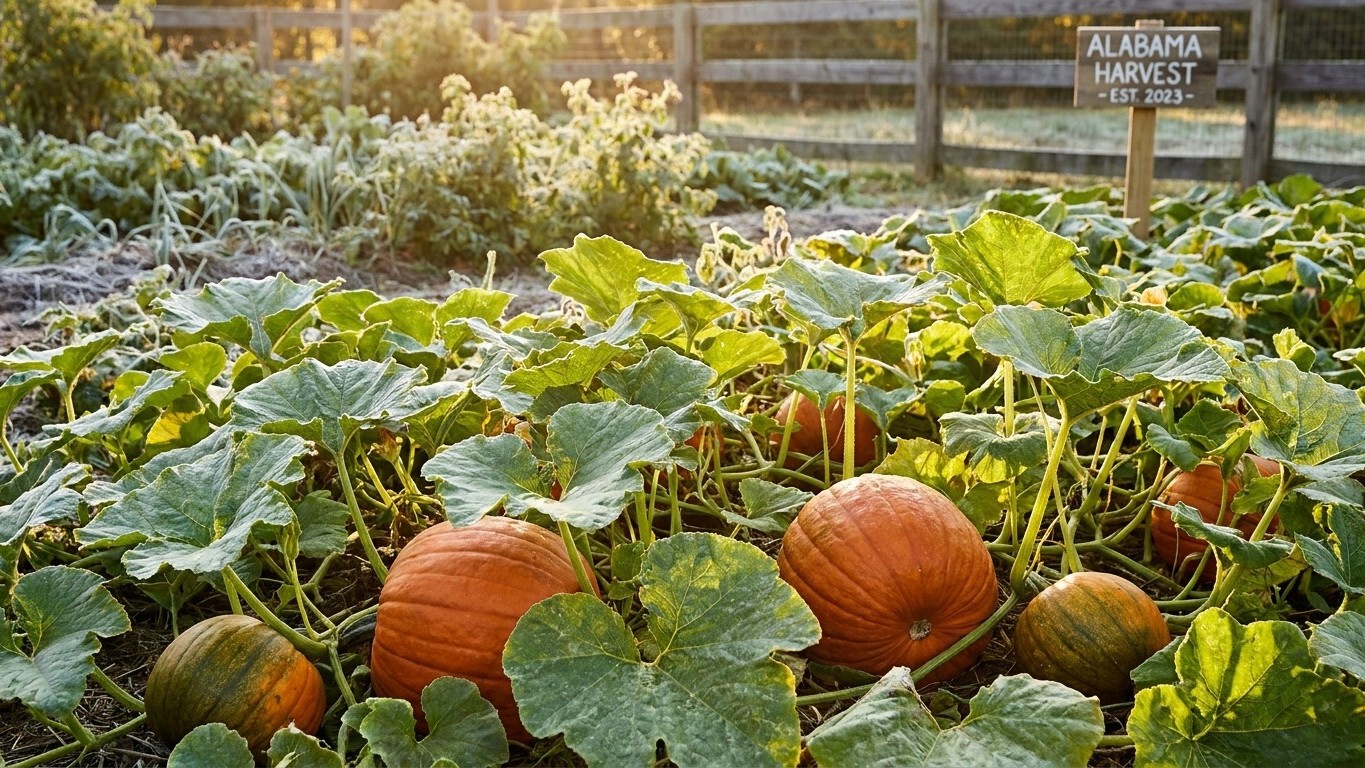

Yes, in most Connecticut gardens a pumpkin planted on a normal schedule has time to ripen before frost, but the margin is thin, especially inland. The state’s first fall frost lands between October 28 and November 10, and a pumpkin needs 45 to 55 days of good weather after its flower opens, not after the seed goes in, to turn from green to fully colored. That timing gap is where most Connecticut pumpkin failures actually start.
The short answer
Connecticut’s first fall frost falls somewhere between October 28 and November 10, with the earlier end typical inland and in the northwest hills, and the later end limited to the mild coastal strip along Long Island Sound. Utah State University Extension sets pumpkin maturity at 45 to 55 days after the flower opens, a figure that has nothing to do with the sowing date. Run that window backward from the frost dates and you land on the number that actually decides whether a pumpkin ripens or stays green on the vine: the last date a flower can open and still finish.
Pair the earliest frost date, October 28, with the longer 55-day maturation stretch, and the last safe flower needs to open by around September 3. Pair the latest frost date, November 10, with the shorter 45-day stretch, and that last flower can hold off until roughly September 26. Most Connecticut gardens sit somewhere between those two edges, which means the honest answer is a window, not a single cutoff: aim to have your last blooms open in early September if you garden away from the shoreline, and treat late September as the risky edge rather than the target.
What makes this tricky is that nothing in the pumpkin-clock math accounts for how long it takes a seed to reach its first flower, and that stretch varies by plant and by season. So the calendar date you sowed on tells you almost nothing useful once summer is underway. What matters is walking the patch in late August and September and watching for the last new blooms. If a flower opens well inside that early-September to late-September window, the fruit behind it has a real shot. If it opens well after, especially in a town that tends to freeze on the early side of the state’s range, that fruit is likely to still be green when the frost hits.
Coastal towns near Bridgeport get the benefit of the latest frost dates in the state and the most forgiving version of this math. Inland and northwest Connecticut gardens should plan around the earlier frost date and the longer 55-day maturation figure at the same time, which squeezes the safe flowering window from both directions.
When to sow here
- Start with the last spring frost window for your town. Statewide it runs from April 2 to April 12, though higher elevations and inland valleys tend to sit at the later end of that range. This date only tells you when the air has stopped freezing, nothing about the ground.
- Wait for the soil, not the calendar. Utah State University Extension sets the sowing threshold at 65 F soil temperature. Soil holds onto cold far longer than air does, so that 65 F mark typically doesn’t arrive until several weeks after the last spring frost has already passed, which in practice pushes most direct-seeded pumpkin plantings in Connecticut into May rather than April.
- Measure at planting depth instead of guessing. Push a soil thermometer about 2 inches down at the actual planting spot, ideally mid-morning. A run of warm, sunny days can feel like spring in the air while the soil a few inches down is still cold enough to rot seed rather than sprout it.
- Use row covers to close the gap. Laying row cover or dark mulch over the bed traps solar heat in the soil and can move that 65 F date up by roughly two weeks compared with bare, uncovered ground. In the shorter seasons typical of inland and northwest Connecticut, that two-week head start can be the difference between a flower opening in early September and one opening in late September.
- Then work forward from the real sowing date. Once seed actually goes in, on soil temperature rather than the frost date, track the vines through summer and watch for the point when flowering stops paying off, using the ripening window described above as the real checkpoint.
What goes wrong here
- A late flower that never colors up. This happens when a bloom opens after the safe window, commonly on second or third flushes of flowers in August, and the fruit behind it never gets its full 45 to 55 days of warmth before frost cuts the season short. The fix is to stop new blooms from setting fruit once you’re past the safe window for your area; pinching later flowers redirects the plant’s energy into fruit that already has a chance.
- A fruit caught by frost before it’s ready. A pumpkin can be full-sized and still not fully colored when a cold night arrives. Utah State University Extension’s guidance is to harvest with the stem attached before frost hits, even if the color isn’t complete, and to keep the fruit somewhere it will not freeze rather than leaving it on a dying vine hoping for a few more warm days.
- A vine that dies back before the skin hardens. Foliage can collapse early from a cold snap or from pest pressure, and Connecticut gardens deal with both squash bugs and cucumber beetles that can hasten vine decline well before frost. Either way, once the leaves are gone the rind stops toughening. The remedy is the same as above: harvest what’s on the vine right away, stem intact, and move it out of freezing temperatures rather than waiting for a rind that’s no longer going to harden on its own.
Common questions
How late can a pumpkin flower and still ripen in Connecticut?
Based on the state’s first fall frost window (October 28 to November 10) and the 45-to-55-day maturation figure after flowering, the last safe bloom generally needs to open somewhere between early September and late September, earlier if you’re inland or in the northwest hills, later only along the mild coastal strip.
Does soil temperature matter more than air temperature for planting pumpkins?
Yes. The sowing threshold given by Utah State University Extension is a 65 F soil temperature, and soil warms up weeks after the air does. Treating the last frost date (April 2 to April 12) as the sowing date skips over that lag entirely.
Can I ripen a green pumpkin after picking it?
The available guidance only says to harvest with the stem attached before frost and to store the fruit where it will not freeze. No storage temperature, humidity level, or keeping time beyond that is published here, so anything more specific than “keep it from freezing” isn’t something this guidance covers.
Should I plant earlier if I garden inland rather than on the coast?
Yes. Inland and northwest Connecticut sit at the earlier end of the state’s frost range, closer to October 28 than November 10, which shortens the safe flowering window from the far end. Getting soil to 65 F sooner, with row covers if needed, and watching for the last acceptable flowering date earlier in the fall both help offset that shorter season.