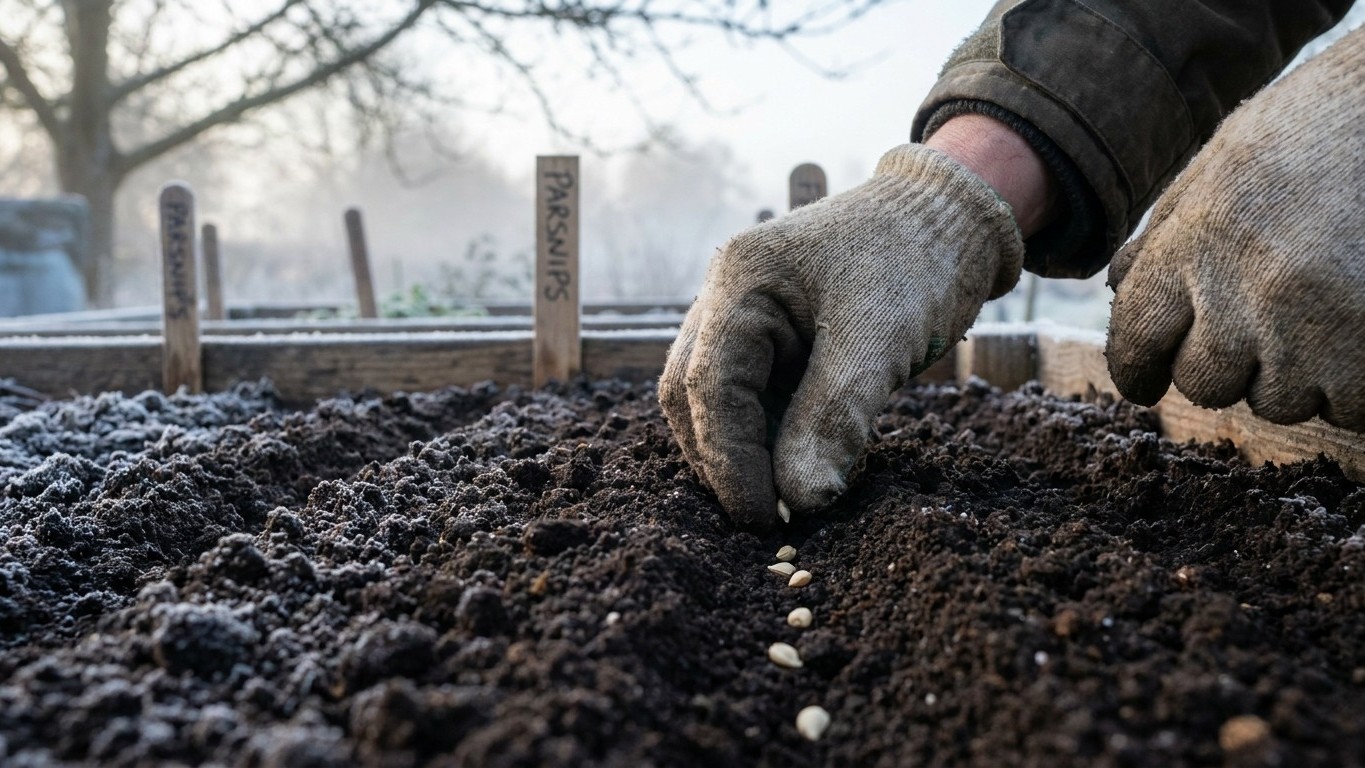

Yes, Indiana delivers real winter cold, an average minimum of 20.9°F in the coldest month, which means parsnips sown here won’t just mature, they’ll sweeten. Sow seed directly in the ground 2 to 3 weeks before the last spring frost, expect germination in 14 to 21 days, and count on 100 to 120 days to root maturity before frost turns starch to sugar.
The short answer
Start with the number that actually matters: 20.9°F. That’s the mean minimum temperature for the coldest month at the Indianapolis reference station, drawn from NOAA’s 1991-2020 Climate Normals. It’s not a record low, and it isn’t the average temperature for the whole month either. It’s the typical low a parsnip root sitting in Indiana ground will face on an ordinary cold-month night. That number is the whole story for this crop, because parsnips don’t sweeten from a mild autumn or a comfortable hardiness zone rating. They sweeten from actual exposure to frost, repeated frost, over several weeks, which converts stored starch into sugar.
Cold enough, and cold for long enough
A coldest-month minimum sitting well below freezing tells you this isn’t a marginal, one-frost-and-done climate. Indiana gets sustained cold stretches through the winter months, not just a token dip. That distinction matters more than most gardeners realize. A parsnip grown in a region with only an occasional light frost will size up into a perfectly edible root that never develops the sweetness the crop is known for. Indiana doesn’t have that problem. Once the first fall frost arrives and cold settles in through the following weeks, the roots left in the ground get the sustained chill they need.
So the short answer holds on both counts. The growing season, once you sow at the right time, is long enough to bring roots to maturity before the ground goes hard. And the winter that follows is cold enough, for long enough, to do the sweetening work that separates a good parsnip from a bland one. Neither piece works alone. A long season with a soft winter would give you size without flavor. A brutal winter arriving too early, before the roots matured, would give you flavor potential wasted on undersized roots. Indiana’s calendar, sowing in late March or early April, harvest window opening in October and stretching into the cold months, lines both pieces up.
Does the season fit?
Parsnips are sown directly in place, never transplanted, and the 100 to 120 days to maturity are counted from the day seed goes into the soil, not from any later stage. Laying Indiana’s frost dates against that requirement shows exactly how much room there is to work with.
- Set the sowing date. The last spring frost at the Indianapolis reference station falls between April 9 and April 21. Sowing 2 to 3 weeks ahead of that puts seed in the ground somewhere in the last week of March through roughly the first week of April.
- Add the germination lag. Parsnip seed is slow, 14 to 21 days before anything visible breaks the soil surface. A gardener who sows in late March won’t see seedlings until mid to late April. This is the point where impatient gardeners dig up the row and re-sow, thinking the seed failed. It hasn’t; it’s just slow.
- Count forward 100 to 120 days for root maturity. From a sowing date in late March or early April, that lands maturity somewhere between early July and early August.
- Compare against the first fall frost. That frost arrives at Indianapolis between October 21 and October 30. Between an early-August maturity date and a late-October frost, there’s a stretch of roughly ten to twelve weeks of margin, unused growing time that simply lets the roots hold in the ground, sizing up further and waiting for cold.
- Account for the sweetening period after frost. Because parsnips are typically left in the ground through the first hard frosts rather than pulled the moment they mature, that October frost date isn’t a harvest deadline. It’s the start of the flavor-building stretch. With the coldest month sitting at a 20.9°F average minimum, there are weeks of real cold still ahead once that first frost hits, plenty of time for the starch-to-sugar conversion to finish before digging.
What the arithmetic says
Put together, the season fits comfortably, not tightly. Sowing in the recommended window leaves ten weeks or more of slack before the first frost even arrives, and the frost itself isn’t a race against time, it’s the beginning of the payoff. Purdue’s freeze-probability data carries one caution worth keeping in mind: there’s roughly a 10% chance of a freeze event after the published spring date, so seedlings emerging in that early-to-mid-April window can still meet a late cold snap. Parsnip seedlings tolerate that reasonably well, but it’s worth knowing the risk exists rather than assuming the calendar date is a hard guarantee.
What goes wrong here
- Forked or split roots from heavy, stony ground. Parsnips send a single taproot straight down, and anything that root meets, compacted clay, a rock, a hardpan layer, forces it to split or twist. Indiana’s clay-heavy soils in many areas are exactly the kind of ground this happens in. The remedy is working the bed to a full spade’s depth or more before sowing, breaking up compaction, removing stones, and working in enough organic matter that the root can drive straight down without resistance. Utah State University Extension recommends double digging heavy soil for this exact reason.
- Forked roots from overwatering. This is a separate cause from soil texture, and it’s easy to confuse the two. Roots sitting in consistently soggy ground can also fork or rot at the tip, even in soil that was well prepared. The fix is watering deeply but infrequently, letting the top inch or two dry between waterings rather than keeping the bed constantly wet.
- A season that runs out before roots size up. This happens almost exclusively when sowing gets delayed, waiting too long past the recommended 2-to-3-weeks-before-last-frost window, or when a second attempt follows a failed slow germination that a gardener mistook for dead seed. Sow promptly in the late March to early April window and resist digging up the row before the full 14 to 21 germination days have passed.
- Roots that size up fine but never taste sweet. This is less likely in Indiana than in a milder climate, given the 20.9°F coldest-month minimum, but it can still happen if roots are harvested too early, right at the first fall frost, without giving them the following weeks of sustained cold to finish converting starch to sugar. The fix is patience: leave roots in the ground well past that first frost date and dig after several hard freezes rather than at the first one.
Common questions
When exactly should I sow parsnip seed in Indiana?
Aim for 2 to 3 weeks before the last spring frost, which at the Indianapolis reference station falls between April 9 and April 21. That puts sowing in the last week of March through roughly the first week of April, adjusted earlier in southern Indiana and later toward the north.
Why haven’t my parsnip seeds sprouted after a week or two?
Parsnip germination normally takes 14 to 21 days, slower than most garden vegetables. Bare-looking soil at the one-week mark isn’t a failed sowing, it’s still within the normal window.
Can parsnips stay in the ground over winter in Indiana?
Roots can be left in place well past the first fall frost, which arrives between October 21 and October 30 at the reference station. The cold that follows, with a coldest-month average minimum of 20.9°F, is exactly what converts stored starch to sugar, so leaving roots in the ground through several hard frosts improves flavor rather than risking the crop.
Why did my parsnip roots come out forked?
Two separate causes produce this, and it helps to know which one applies. Heavy, compacted, or stony soil physically blocks the taproot, forcing a split; the fix is deep working of the bed before sowing. Overwatering is the other cause, unrelated to soil texture, and the fix there is deeper, less frequent watering rather than keeping the bed constantly damp.