
The short version: soil needs to hit 65°F before pumpkin seed goes in the ground, which lands well after Kentucky’s last spring frost of March 24 to April 4. From there, the crop needs its flowers open by early-to-late September at the latest, since pumpkins take 45 to 55 days after flowering to ripen and the first fall frost arrives between November 2 and November 12.
The short answer
Start at the frost, not the seed packet. Kentucky’s first fall frost lands somewhere between November 2 and November 12, based on NOAA’s 1991-2020 Climate Normals for the station covering the state. That window is the hard stop for this crop. Everything about timing works backward from it.
Working the frost backward
Utah State University Extension puts pumpkin maturity at 45 to 55 days measured from the day a flower opens, not the day the seed goes into the ground. Subtract that stretch from Kentucky’s frost window and the latest safe flowering date comes into focus. Take the earliest possible frost, November 2, and subtract the longer maturity estimate of 55 days, and the cutoff lands around September 8. Take the latest possible frost, November 12, and subtract the shorter estimate of 45 days, and the cutoff slides out to around September 28. The real deadline sits somewhere inside that three-week band, and which end applies depends on how the fall actually unfolds, not on anything decided back in April.
Why the window moves
The NOAA station behind these dates sits in an urban setting, and NWS Louisville has flagged that this kind of station tends to warm later in spring and cool earlier in fall than the rural county surrounding it. A garden outside city limits should expect a tighter frost window than the published one, which makes September 8, not September 28, the more careful working deadline for the last flower. Gardens closer to the warmer urban station get more room to work with, but there’s no way to know in advance which side of that band a given year will land on. Building in the cushion costs nothing; running out of season does.
When to sow here
Kentucky’s last spring frost falls between March 24 and April 4, but that date has almost nothing to do with when pumpkin seed should go into the ground. Utah State University Extension is specific on this point: pumpkins are sown once the soil itself reaches 65°F, and soil warms on its own schedule, lagging behind the air above it by weeks rather than days.
The gap between frost and soil temperature
A garden bed can sit in the 40s well after the air has stopped freezing, because soil holds cold the way a stone does, releasing it slowly rather than tracking the thermometer outside. In much of Kentucky that lag typically pushes a steady 65°F soil reading into late April or into May, a good stretch after the frost window closes on April 4. Treating the frost date as planting day is the most common mistake this crop invites here, because the frost date answers a different question than the soil thermometer does.
- Let the frost window pass first. March 24 to April 4 needs to be behind you before soil temperature even becomes the relevant number.
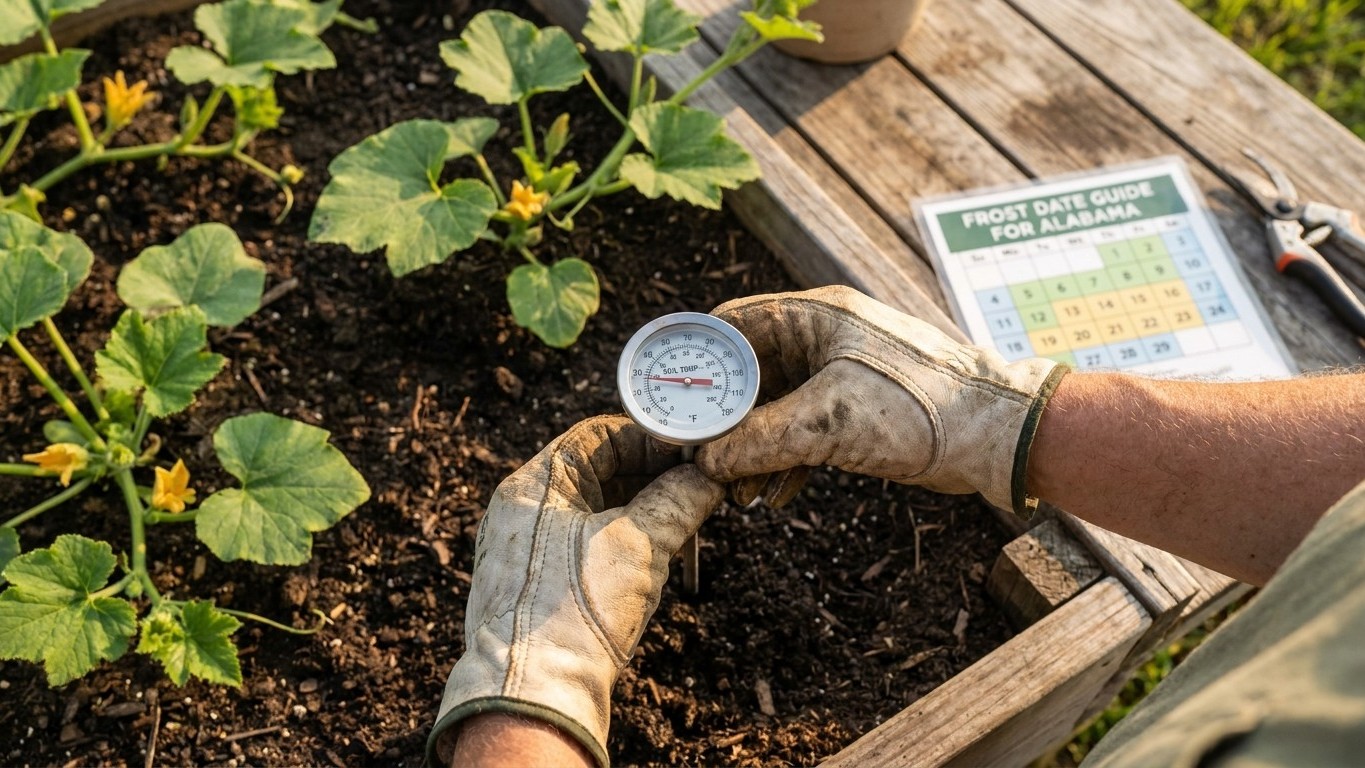
- Check soil, not the calendar. Push a thermometer two inches into the bed and wait for a steady 65°F reading, which in Kentucky usually doesn’t show up until several weeks after that frost window closes.
- Use row covers to buy roughly two weeks. A cover trapping daytime heat over the bed can pull that 65°F reading about two weeks earlier than bare soil would reach it on its own, without pretending the risk of a cold snap has disappeared.
- Count forward from sowing toward flowering. Utah State University Extension doesn’t publish a seed-to-flower interval, so this stretch depends on watching the plants directly rather than reading it off a chart.
- Confirm the 45- to 55-day maturity clock still fits once flowers appear. Check that date against the September 8 to September 28 cutoff set by the fall frost window. Flowering that starts after that band closes is racing a clock it’s likely to lose.
What goes wrong here
Kentucky’s season length causes a specific handful of failures, and each one traces back to the gap between when a flower opens and when frost shows up.
- A late flower that never colors. When the first female flower doesn’t open until early October, the fruit behind it is still working through its 45- to 55-day clock as the November 2 to November 12 frost window closes in. The fix sits upstream of the flower itself: sow as soon as soil reliably holds 65°F instead of waiting for a calendar date that feels safe, and lean on row covers early in the season rather than late.
- A fruit caught green by frost. A pumpkin can be sizing up nicely and still get caught by the first freeze if its flower opened too close to the September cutoff. Utah State University Extension’s guidance is to harvest with the stem attached before frost arrives, even if the fruit hasn’t finished coloring, rather than leave it exposed through the frost window.
- A vine that collapses before the skin hardens. Squash bugs and cucumber beetles can take a vine down weeks before the fruit is ready, stopping the ripening process outright no matter what the calendar says. Kentucky’s squash bug pressure and cucumber beetle activity both build through mid-summer, and scouting for them early protects the maturity clock more than adjusting the planting date can once the damage is already done.
Common questions
Should pumpkin seed go straight into the ground in Kentucky, or start indoors first?
Either can work, but the deciding factor is still soil temperature. Starting seed indoors and transplanting out once outdoor soil holds 65°F sidesteps the risk of seed rotting in cold, wet ground, which is common if planting is rushed right after the March 24 to April 4 frost window rather than waiting for the soil itself to catch up.
What happens if pumpkins are still green when the first frost hits?
Utah State University Extension’s advice is to harvest with the stem attached before frost, rather than leave fruit exposed to it. The source doesn’t publish a storage temperature or keeping time for pumpkins, only that they should be kept somewhere they won’t freeze, so anything beyond that general guidance isn’t something this page can confirm.
How late can a pumpkin flower and still ripen in Kentucky?
Working from the November 2 to November 12 frost window and the 45- to 55-day maturity clock, the safe range for a flower to open runs roughly from September 8 to September 28. Gardens outside urban areas, where frost tends to arrive earlier, should treat the earlier end of that range as the real deadline.
Do all pumpkin varieties mature at the same rate in Kentucky?
Utah State University Extension’s variety list doesn’t attach a days-to-maturity, size, or color figure to any of the varieties it names, so the 45- to 55-day window measured from flowering is the only maturity figure this page can apply across the board. Picking a variety by an assumed shorter season isn’t something the source data here supports.