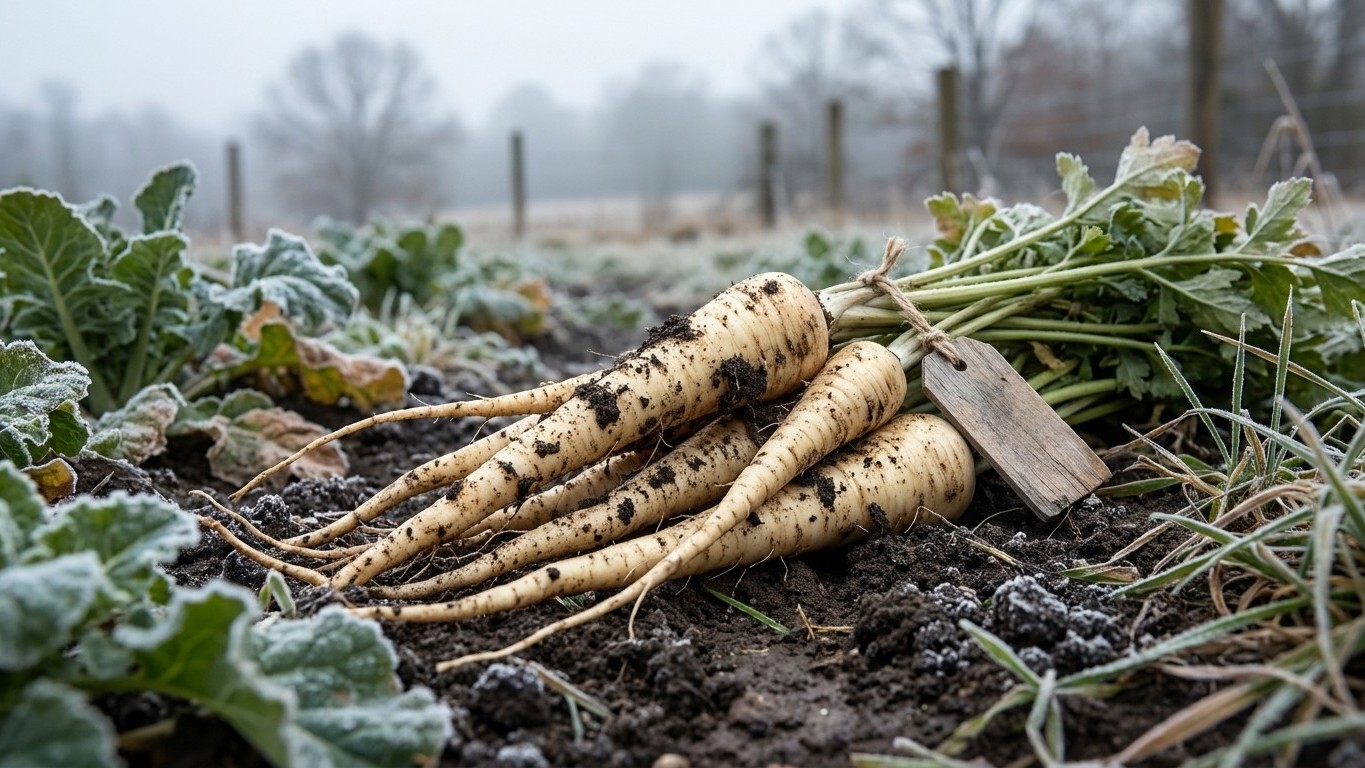

Louisiana can grow a full-sized parsnip almost every year, but sweetening it is a separate question entirely. At the New Orleans reference station, the coldest month averages a nightly low of 46.1°F, mild enough that a hard, sustained frost isn’t guaranteed each winter. Root size: reliable. Sugar conversion: dependent on a cold winter this climate doesn’t always deliver.
The short answer
Does south Louisiana deliver several frosty weeks in a row? That’s the test that decides whether a parsnip pulled from Louisiana dirt tastes sweet or just tastes like a parsnip. At the New Orleans reference station, the coldest month averages a nightly minimum of 46.1°F, according to NOAA NCEI Climate Normals covering 1991-2020. That’s the mean low across the whole month, not a record cold snap, and it sits well above freezing.
That number matters more than any hardiness zone label ever could. A hardiness zone describes the worst single night of the worst year, useful for deciding whether a shrub survives, but useless for a root vegetable that sweetens through many cold nights strung together. Parsnips convert starch to sugar through prolonged exposure to frosty conditions, according to Utah State University Extension, and a mean minimum in the mid-40s tells you those prolonged stretches are the exception here, not the rule.
Add the freeze record: a 32°F freeze shows up in only 86.8 percent of years at this station. Turn that around and roughly one winter in seven brings no freeze at all to south Louisiana. In those years, a parsnip left in the ground never crosses the threshold that triggers sugar conversion. In the other years, freezes do happen, but they tend to cluster into a narrow stretch rather than stacking into the “several weeks” Utah State describes as ideal.
Growth and sweetness split into two separate outcomes here. A parsnip sown in workable soil, given its full 100 to 120 days, sizes up into a normal, harvestable root almost every year in south Louisiana. Whether that root tastes sweet is closer to a coin flip tied to how cold that particular winter runs, and even a cold winter here rarely matches the sustained frost of a northern climate. North Louisiana, which freezes far more reliably than the coastal south, gives the crop better odds at real sweetness, though the figures cited here center on the New Orleans station and don’t quantify how much better.
The honest expectation: treat Louisiana-grown parsnips as a savory root crop first, a sweet one only in years the state’s brief, mild winter cooperates. Gardeners chasing dependable sweetness may do better pulling roots right after any hard cold snap the forecast offers, rather than waiting on a calendar date that assumes weeks of frost this climate doesn’t reliably supply.
Does the season fit?
Parsnips are sown directly in the ground where they’ll grow, never started indoors and transplanted, and Utah State University Extension puts the timeline at 100 to 120 days from seeding to a mature root, with germination alone taking 14 to 21 days before any seedling even shows. The standard guidance calls for sowing 2 to 3 weeks before the last frost. Lay that rule over Louisiana’s numbers and the arithmetic runs like this:
- Start with the frost window. NOAA NCEI’s 1991-2020 Climate Normals put the last spring frost for this part of Louisiana between January 18 and February 8, an unusually early date compared with most of the country.
- Back up 2 to 3 weeks for sowing. That lands a spring sowing somewhere around late December into mid-January, meaning gardeners following this rule are sowing parsnip seed in the dead of what passes for winter here, not the early spring most other regions picture.
- Add 14 to 21 days for germination. Seedlings won’t break the surface until roughly mid-to-late January at the earliest, sometimes into early February, since parsnip seed germinates slowly no matter the climate.
- Add the full 100 to 120 days to maturity. Counting from a seeding date in late December through mid-January, the root reaches full size sometime between mid-April and late May.
- Compare that maturity date with the next frost window. The first fall frost doesn’t arrive again until December 17 at the earliest, roughly seven months later. A root maturing in April or May sits through the entire Louisiana summer, the hottest and most humid stretch of the year, with no frost anywhere in sight.
- Read the mismatch. The season is long enough in raw days: Louisiana’s frost-free stretch runs roughly from early February to mid-December, far more than the 100 to 120 days parsnips need. But the standard sow-before-last-frost timing delivers a mature root in late spring, months away from the cold snaps that would sweeten it.
That makes the fit tight in one sense and loose in another. Length of season: comfortable, with months to spare. Timing against frost exposure: it doesn’t line up at all unless sowing dates are set against the fall frost window instead of the spring one, aiming for a root that finishes sizing up as December’s cold arrives rather than as summer heat sets in.
What goes wrong here
- Forked roots in heavy or stony ground. Louisiana’s clay-heavy soils resist a taproot that wants to drive straight down 12 inches or more. When the root hits compacted clay or a buried rock, it splits into two or three legs instead of growing as one long, tapered root. Utah State University Extension recommends deep, sandy soil for parsnips and calls for double digging heavy ground before sowing, loosening it well past the depth the root will eventually reach.
- Forked roots from overwatering. This is a separate cause from heavy soil, and the two get lumped together too often. Too much water, especially in a humid climate where rain rarely runs scarce, softens the growing tip unevenly and encourages the root to branch instead of pushing down as one shaft. The fix is watering deeply but less frequently, letting the top few inches of soil dry between waterings rather than keeping the bed constantly damp.
- A season that runs out before the root sizes up. Sow on the standard spring schedule and the root is still filling out when Louisiana’s summer heat arrives, months before it should stop growing under normal conditions. Roots can stall, turn woody, or bolt to seed under sustained heat stress. Shifting sowing toward the cooler months, so most of the 100- to 120-day growth period falls outside the peak of summer, keeps the root filling out under milder conditions instead.
- A winter too mild to sweeten. Even a parsnip that reaches full size can finish the season starchy rather than sweet. With the coldest month averaging a nightly low of 46.1°F and freezes missing entirely in roughly one year out of seven, the sustained cold that converts starch to sugar simply doesn’t show up on schedule. The workaround isn’t a fix so much as a strategy: leave roots in the ground through any cold snap the forecast offers before pulling them, since a few sharp nights right before harvest do more than a whole mild season ever will.
Common questions
Can parsnips grow in Louisiana at all?
Yes. Sizing up a root isn’t the problem here. Louisiana’s long frost-free stretch, running from roughly early February to mid-December, gives parsnips far more than the 100 to 120 days they need to mature. The uncertainty is sweetness, not survival.
Do parsnips need a hard freeze to sweeten, or does a light frost do it?
Utah State University Extension describes the process as needing several weeks of cool, frosty weather, not a single overnight dip. The figures published for this territory don’t break frost into separate light and hard thresholds, so treat a sustained cold stretch, rather than one cold night, as the real target.
Should Louisiana gardeners sow parsnips in fall instead of spring?
Timing sowing so the root matures closer to the December-through-February frost window, rather than following the standard sow-before-last-frost schedule, puts root maturity closer to the cold Louisiana actually gets instead of stranding it in late spring. That’s a reasonable read of the local frost calendar, even though it isn’t the timeline the standard guidance was written around.
Does north Louisiana sweeten parsnips better than south Louisiana?
North Louisiana freezes far more reliably than the coastal south, which points toward better sweetening odds. The coldest-month and frost-window figures cited here come from the New Orleans reference station, though, so they describe south Louisiana specifically and don’t quantify how much of an edge the northern part of the state actually holds.