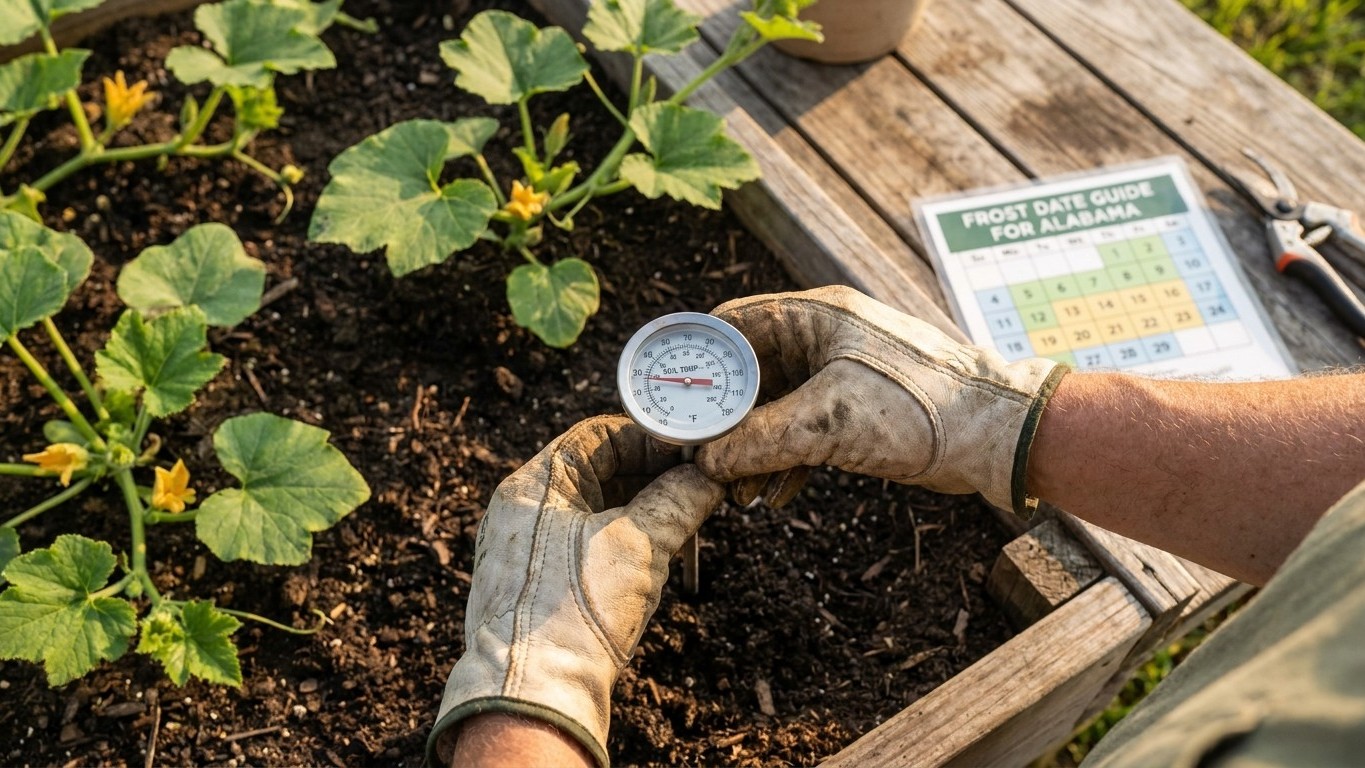

Sow pumpkin seeds outdoors once your soil has warmed to 65°F, which in most of New Hampshire lands somewhere between late May and early-to-mid June. That timing gives vines enough runway to flower by mid-to-late August and finish the 45-to-55-day ripening clock before the first fall frost, which arrives between October 13 and October 26 depending on where in the state you garden. Miss that window and the last blooms simply won’t color before the vine collapses.
The short answer
New Hampshire’s first fall frost falls somewhere between October 13 and October 26, based on 1991-2020 climate normals recorded at the state’s reference weather station. That’s a wide band, and it matters which end of it applies to your yard. Working backward from it is how you find the real deadline for this crop, because pumpkins don’t count their maturity from the day you drop a seed. They count it from the day the flower opens: 45 to 55 days from bloom to a fully hardened, colored fruit.
Push that window back from the earlier end of the frost range, October 13, and the last flower that has any chance of finishing needs to open between August 19 and August 29. Push it back from the later end, October 26, and you get more breathing room: a flower opening as late as September 1 to September 11 could still make it. The trouble is you don’t know in advance which end of the range your particular garden will get.
This is where the caution about the underlying data matters. The frost dates above come from an airport weather station. Suburban yards and rural gardens, especially at elevation or in low-lying frost pockets common across the state’s interior and North Country, tend to see their first fall freeze arrive earlier than the station record, sometimes by a week or two. That pushes the practical deadline toward the conservative end. Treat August 19 to August 29 as the real cutoff for the last usable flower unless you have several years of your own frost records saying otherwise.
None of this is about when you sow. It’s about when the flower opens, and that distinction is the one point where most backward-planning goes wrong. A vine sown too late can still put out blossoms in September, and every one of them is a wasted flower in a garden with an average first frost in mid-October. The fruit behind that late bloom will still be green, sized like a softball, when the vine goes down.
When to sow here
Sowing date and frost date are not the same conversation, even though gardeners often collapse them into one. The last spring frost across the state’s reference window runs from April 16 to April 27, and again, rural and elevated sites typically see frost linger later than that, sometimes by a week or two. But even once frost has cleared for good, the soil hasn’t caught up. Air temperature swings fast; soil temperature lags behind it by weeks, not days, and pumpkin seed won’t germinate reliably in cold ground even if the thermometer says frost season is over.
- Note your local last spring frost. Use the April 16 to April 27 window as a baseline, and shift it later if you garden at elevation, in a low frost pocket, or in the North Country.
- Don’t sow the moment frost clears. Soil needs to reach 65°F, and in New Hampshire that threshold typically isn’t hit until well into the second half of May at the earliest, often not until early-to-mid June depending on soil type and how much sun the bed gets.
- Check soil temperature directly. A simple soil thermometer pushed to seed depth, read in the morning over several consecutive days, beats guessing from the calendar or the air temperature on the weather app.
- Use row covers if you want to move earlier. They can buy roughly two weeks, letting you get seed into ground that’s still a touch shy of 65°F while shielding sprouts from a lingering cold snap.
- Aim for late May through early-to-mid June for most of the state. Southern tier and seacoast gardens often reach 65°F soil sooner; higher elevations and the North Country run later.
- Check that date against the flowering deadline. Vines typically need several weeks after sowing before the first blooms open, so sowing much past early-to-mid June starts eating into the safety margin described in the short answer above.
What goes wrong here
- A late flower that never colors. When a bloom opens after early September on a vine that’s running behind schedule, the fruit behind it can run out of its 45-to-55-day window before the season’s first frost blackens the vine. The pumpkin stays green or pale even after everything else has died back. Track when female flowers open through late summer, and if you count fewer than 45 days between a new bloom and your expected frost date, pinch off further blossoms so the plant puts its remaining energy into fruit that’s already sizing.
- A fruit caught by frost before it finishes. Even a well-timed flower can get overtaken if the season’s first freeze arrives on the early side of the October 13 to October 26 range, or earlier still if your garden runs cooler than the reference station. Watch the forecast closely once you’re inside the last two weeks of the ripening window, and throw a tarp or old blanket over developing fruit during the season’s first light frosts to buy a few extra days. If a hard freeze is coming, harvest early rather than gamble on the vine surviving another week.
- A vine that dies back before the skin hardens. Frost kills foliage well before a pumpkin’s rind has fully toughened, and a dead vine can’t finish that job for the fruit still attached to it. Cut the pumpkin with the stem intact and move it somewhere it won’t freeze; that’s the full extent of the published storage guidance, with no specific temperature or humidity target given, so don’t assume a cellar or garage setting used for other winter squash applies here. Frost isn’t the only thing that can take a vine down early, either. Squash bugs and cucumber beetles can hollow out stems well before any freeze touches the garden. This site’s New Hampshire guides to squash bugs and cucumber beetles cover identification and control specific to this state’s growing season.
Common questions
Can I start pumpkin seeds indoors in New Hampshire?
You can, though pumpkins resent having their roots disturbed, so keep any indoor head start short. If you go this route, time the transplant so seedlings go into the ground once soil there has reached the same 65°F mark you’d be waiting for with direct-sown seed, not before.
What happens if I plant pumpkins too early in New Hampshire?
Seed sown into soil colder than 65°F tends to rot or germinate slowly and unevenly, and any seedlings that do emerge are vulnerable if a late frost lingers past the state’s April 16 to April 27 reference window, which happens more often at elevation or in low-lying sites.
How do I know when my soil has actually reached 65°F?
Use a soil thermometer inserted to seed depth, take a reading in the morning, and repeat it over several consecutive days rather than relying on a single warm afternoon or the calendar date.
Can I still get pumpkins if I missed the ideal sowing window?
It’s tighter, not impossible. Sowing late shortens the margin against the October 13 to October 26 frost window, so watch the forecast closely as the season winds down, harvest early if a freeze looks certain, and cure the fruit indoors with the stem attached, keeping it simply where it won’t freeze.