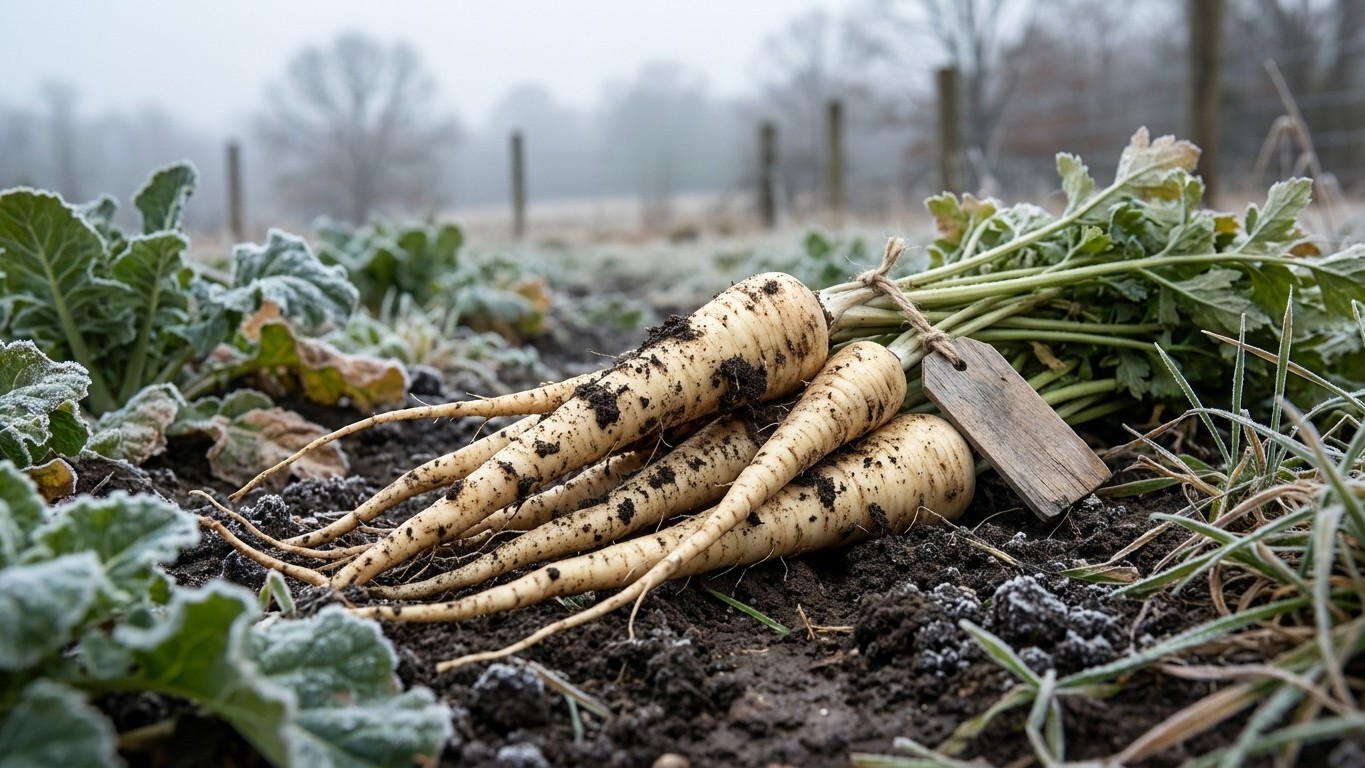

Yes, Ontario’s winters run cold enough to sweeten parsnips left in the ground. The reference climate for the province, drawn from the Toronto area, shows temperatures that drop well below freezing for weeks on end each winter, exactly the kind of sustained cold spell that turns stored starch into sugar. That’s a separate question from whether the growing season itself is long enough to raise a parsnip in the first place, which is what the rest of this page works out, along with the mistakes that trip up gardeners here most often.
The short answer
Does this territory deliver several frosty weeks, or just a light chill that fades by noon? That’s the question that decides whether a parsnip grown here turns sweet or just grows. For the Toronto reference station, the mean daily minimum of the coldest month sits at 13.6 F, according to Environment and Climate Change Canada’s Canadian Climate Normals for 1981 to 2010. That figure describes the average low on a typical day in the coldest month, not a record low and not a monthly average temperature. It tells you how cold the air routinely gets, night after night, once winter sets in.
A mean minimum of 13.6 F is well below the 32 F freezing line, and it stays there for weeks, not days. That matters because parsnip sweetening isn’t triggered by a single cold snap or by the hardiness zone a map assigns to a region. Utah State University Extension is clear on the mechanism: parsnips taste best after several weeks of cool, frosty weather, which is what converts the root’s stored starch into sugar. A mild zone rating can sit on top of a climate that never delivers that sustained frost, and in that case the parsnip stays starchy no matter how the map colors the region. Ontario’s numbers don’t have that problem.
With a coldest-month mean minimum this far under freezing, the reference climate here isn’t offering a marginal frost, it’s offering an extended freeze that repeats through the winter months. That’s the exposure the crop needs. So the short answer for Ontario, at least for the districts the Toronto Pearson station represents, is that parsnips left in the soil past the first hard frosts will sweeten, not just size up. Gardeners farther north or on higher ground within the province should expect the cold to arrive earlier and run at least as deep, which if anything makes the sweetening more assured, though it also shortens the workable season on the other end, a tradeoff the next section walks through.
Does the season fit?
Parsnips are sown directly in place, never transplanted, and the clock for maturity starts the day the seed goes into the soil. Utah State University Extension puts the crop at 100 to 120 days from seeding, sown 2 to 3 weeks before the last frost, with germination itself taking a slow 14 to 21 days before anything visible breaks the surface. Matching that timeline against Ontario’s frost window shows how much room a gardener actually has.
- The mean last spring frost for the Toronto reference station falls on April 30. Since that’s an average, not a guarantee, treat it as the midpoint of a window rather than a safe date, and remember that in one year out of two, frost arrives later than this.
- Sowing 2 to 3 weeks ahead of that mean date puts seed in the ground somewhere between April 9 and April 16.
- Add the 14 to 21 days parsnip seed needs to germinate, and seedlings won’t show above ground until roughly the last week of April into the first week of May.
- Count forward 100 days from the earlier sowing date and the crop reaches its minimum maturity around mid-July. Count 120 days from the later sowing date and full maturity lands closer to mid-August.
- The mean first fall frost for the same station falls on October 16, again an average rather than a fixed date. Roots that matured by mid-July or mid-August are sitting in the ground fully grown for two to three months before that first frost even arrives.
- That gap between maturity and the first frost is exactly the buffer the crop needs for the second part of the job: staying in the ground through several frosty weeks afterward so the starch converts to sugar, with harvest reasonably stretching into November before the ground locks up hard.
Set against a frost-free window that runs roughly 169 days, from the April 30 mean last frost to the October 16 mean first frost, even the longer 120-day maturity requirement leaves close to seven weeks of spare time before frost risk returns. That’s a comfortable fit, not a tight one, and it’s the extra margin that makes room for the frosty weeks the crop needs after it’s already grown.
What goes wrong here
- Forked roots from heavy or stony ground. Parsnip taproots push straight down, and clay or rock-studded soil splits them into forks around any obstruction. Utah State University Extension recommends deep, sandy soil for this crop, and where the native ground is heavy, double digging the bed before sowing is the fix, working it loose well beyond the depth the root will eventually reach.
- Forked roots from overwatering. This is a separate cause from soil texture, not the same problem in different words. Excess moisture around the developing taproot encourages side roots to branch off instead of one clean root going down. Watering on a steady, moderate schedule, rather than flooding the bed then letting it dry out, keeps the root growing in one direction.
- A season that runs out before the roots size up. This shows up when sowing is delayed past the recommended window of 2 to 3 weeks before the last frost, or when a cool, slow spring stretches germination toward the long end of that 14 to 21 day range. Sowing promptly within the recommended window, and not waiting for warmer soil out of caution, protects the 100 to 120 day clock from running into the shorter end of the season.
- Harvesting before the frost has done its work. Pulling roots as soon as they look mature skips the part of the process that actually makes them sweet. The fix is patience: leave the crop in the ground through the first fall frost and the several frosty weeks that follow before digging.
- Insulated microclimates that block the cold from reaching the root. A heavily mulched bed, a sheltered courtyard, or a raised bed against a warm wall can keep soil temperatures milder than the open-ground reading the regional average describes. Where that’s the setup, pulling mulch back once several hard frosts have passed lets the cold reach the root the way the crop needs.
Common questions
What’s the last frost date in Ontario for sowing parsnips?
The mean last spring frost for the Toronto reference station is April 30, based on Environment and Climate Change Canada’s 1981 to 2010 climate normals. That’s an average, not a promise: in one year out of two, frost falls later than this date, so treat it as the middle of a window rather than a fixed sowing deadline.
How long do parsnip seeds take to sprout?
Germination runs 14 to 21 days according to Utah State University Extension. That’s a slow start compared with many garden vegetables, and gardeners who expect faster results sometimes dig up perfectly good seed beds thinking nothing took, when the seedlings simply hadn’t broken the surface yet.
When should parsnips be harvested for the best flavor?
Once the roots have matured, typically 100 to 120 days from seeding, leave them in the ground through the first fall frost, which falls around October 16 on average at the Toronto reference station, and for several frosty weeks afterward. That exposure is what converts the stored starch to sugar, and harvest can reasonably extend into November before the ground freezes solid.
Does a mild hardiness zone rating mean parsnips won’t sweeten?
A hardiness zone describes how cold a region gets at its extreme, but it doesn’t measure whether that region delivers the sustained, weeks-long frost exposure parsnips need to convert starch to sugar. The mean minimum of the coldest month is the figure that matters for this crop, and for the Toronto reference station it sits at 13.6 F, comfortably cold enough for that conversion to happen.