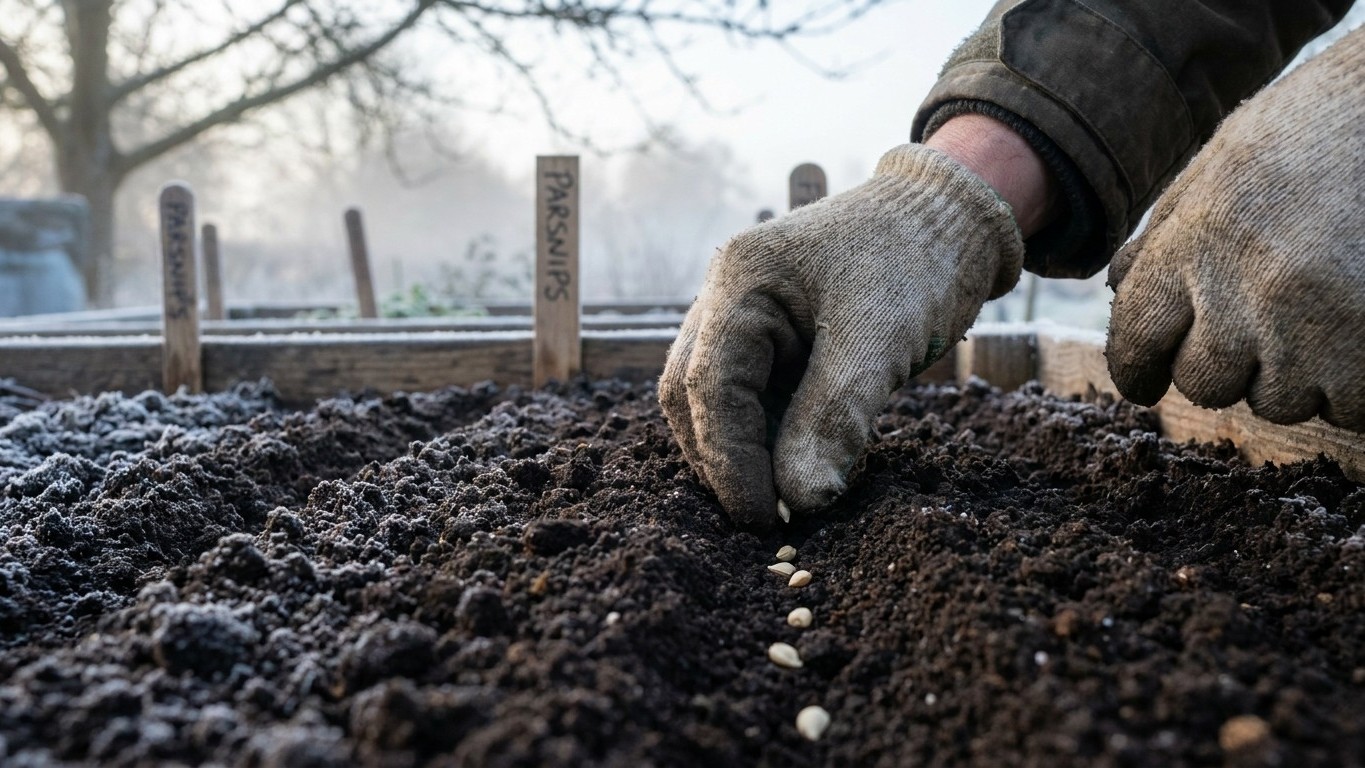

Sow parsnip seed in Prince Edward Island roughly two to three weeks before the mean last spring frost of May 16, which lands most sowings in the last week of April through the first few days of May. That timing gives the crop its full 100 to 120 days before the mean first fall frost on October 17, with weeks of margin left over for the cold exposure that turns a bland root sweet.
The short answer
Every parsnip question here comes down to one thing: does this island give you weeks of hard frost, or just a few overnight dips? In Charlottetown, the reference station for the province, the mean daily minimum temperature in the coldest month sits at 10.3°F, according to Environment and Climate Change Canada’s 1981-2010 Climate Normals. That is not a record low pulled from a single freak night, and it is not a monthly average smoothed by a few warm days. It is the typical overnight low across the coldest stretch of winter, and it says plainly what the ground and the air are doing for weeks at a time.
Ten degrees below freezing, night after night, is not a marginal frost. It is a sustained cold season, the kind that keeps soil and stored roots sitting near or below freezing for long stretches rather than one cold snap that comes and goes. That distinction matters because parsnip flavor does not come from the calendar or from a hardiness zone rating; it comes from direct exposure to cold. Utah State University Extension notes that parsnips taste best after several weeks of cool, frosty weather, because the cold converts the starch stored in the root into sugar. A zone number tells you whether the plant survives the winter. It says nothing about whether the crop turns sweet.
On Prince Edward Island, those two questions land on the same answer for once. The winters are cold enough, and long enough, that a parsnip left in the ground through the season gets far more than a few weeks of frost exposure. Between the average first fall frost on October 17 and the depths of a Maritime winter, PEI sits among the more reliably frosty growing regions in this part of the country. A parsnip sown at the right time here, and left in place into the cold rather than pulled early, is set up to sweeten, not just to reach size and stop.
A mean of 10.3°F is a provincial reference figure from one station, though. Coastal pockets sheltered by the strait, or low spots that trap cold air, will vary the timing of the first hard freezes even if the season-long cold is not really in question across the island. Treat the coldest-month figure as the general character of the climate here, not a guarantee for any one backyard.
Does the season fit?
Parsnip seed needs 100 to 120 days from sowing to reach a harvestable root, according to Utah State University Extension, and that clock starts the day seed goes into the ground, not after it sprouts. Germination itself is slow: 14 to 21 days is normal, and gardeners who dig up the row before three weeks are usually just impatient, not unlucky. Laid against Prince Edward Island’s frost dates, here is how the arithmetic works out.
- Start with the sowing window. Sowing 2-3 weeks before the mean last spring frost of May 16 puts seed in the ground somewhere between roughly the last week of April and the first days of May.
- Count forward to germination. Add the 14 to 21 days parsnip seed typically takes to sprout, and even the earliest sowings are only showing green rows by mid to late May, right around when the mean last frost itself occurs.
- Count the full growing season. From that same late-April to early-May sowing date to the mean first fall frost of October 17 is roughly five and a half to six months, working out to something in the neighborhood of 168 to 175 days.
- Compare that to the 100 to 120 days the crop needs. Even the slower end of that maturity window leaves a cushion of roughly seven to eight weeks between when the root would be ready and when the average first frost arrives.
- Put the cushion to work. That extra six to eight weeks lines up with the several weeks of cool, frosty weather Utah State University Extension points to for sweetening, so the surplus is not wasted time, it is the part of the season doing the flavor work.
One caution worth repeating: May 16 is a mean date, not a guarantee. In roughly half the years on record, the last frost falls later than that, sometimes by a week or two. A gardener who sows right on the mean date rather than a bit earlier is not in danger of missing the season altogether, given how much slack this island’s growing season carries, but it does trim the cushion. Sowing on the early side of the recommended window, rather than the late side, keeps that margin intact.
What goes wrong here
- Forked, hairy roots in heavy or stony ground. Parsnips push a single taproot straight down, and anything that splits its path, clay, compacted soil, buried stones, sends it forking into two or three legs instead of one. Fields across the province run from fine sandy loam to heavier, stonier ground, and the heavier pockets are exactly where this shows up. Utah State University Extension recommends deep sandy soil for parsnips and says heavy soil needs to be double dug before sowing, working the bed a full spade’s depth or more and clearing stones along the way.
- Forked roots from overwatering. This is a separate cause from soil texture, and the two get blamed on each other more than they should. A root growing in perfectly decent soil can still fork or throw shaggy side roots if it sits in consistently soggy ground, since excess moisture encourages the kind of erratic, branching growth a taproot shouldn’t have. The fix is steady, moderate watering rather than heavy soaking, especially once the seedlings are established.
- A season that runs out. Given the roughly 168 to 175 days between an April to May sowing and the mean October 17 frost, this island rarely comes up short on season length. The real risk is a gardener who sows late, waiting for warmer soil that never really pays off, and then pushes the harvest window right up against the first hard freeze with no room to spare. Sowing on the early side of the recommended window guards against this better than watching the thermometer does.
- A winter too mild to sweeten. This is a real failure mode in milder parts of the region, but a low risk on Prince Edward Island specifically. With a coldest-month mean minimum of 10.3°F, the province gets far more sustained cold than the several weeks of frosty weather the crop needs to convert starch into sugar. The exception is a sheltered coastal garden running noticeably warmer than the Charlottetown reference station; in that kind of pocket, leaving roots in the ground through more than one hard freeze, rather than pulling them at the first frost, is the safer habit.
Common questions
When exactly should I sow parsnip seed in Prince Edward Island?
Aim for two to three weeks before the mean last spring frost of May 16, which puts seed in the ground roughly between the last week of April and the first few days of May. Sowing on the earlier side of that window builds in more cushion, since May 16 is only a mean date and later frosts happen in about half of all years.
Is it too late to sow parsnips if I miss early May?
Not necessarily. Prince Edward Island’s growing season runs roughly 168 to 175 days between an early sowing and the mean first fall frost of October 17, well beyond the 100 to 120 days parsnip needs to mature. A sowing into late May or even early June still has a reasonable shot at reaching maturity, though it trims the frosty weeks left for sweetening before harvest.
Why haven’t my parsnip seeds sprouted after a week?
That is normal. Parsnip seed germinates slowly, typically 14 to 21 days according to Utah State University Extension, and rows that look empty at seven or ten days often fill in over the following week or two. Digging up the bed and re-sowing before three weeks have passed is one of the more common ways gardeners waste a second round of seed.
Should parsnips be left in the ground over winter in Prince Edward Island?
Leaving roots in place through several hard frosts, rather than harvesting at the first cold night, lines up with how the crop develops its sweetness, since the flavor comes from sustained cold exposure rather than a single frost event. Given the province’s cold winters, that exposure is rarely in short supply, though gardeners should still plan the harvest before the ground freezes solid enough to make digging impractical, since no soil-freezing date for the province is published in the source data used here.