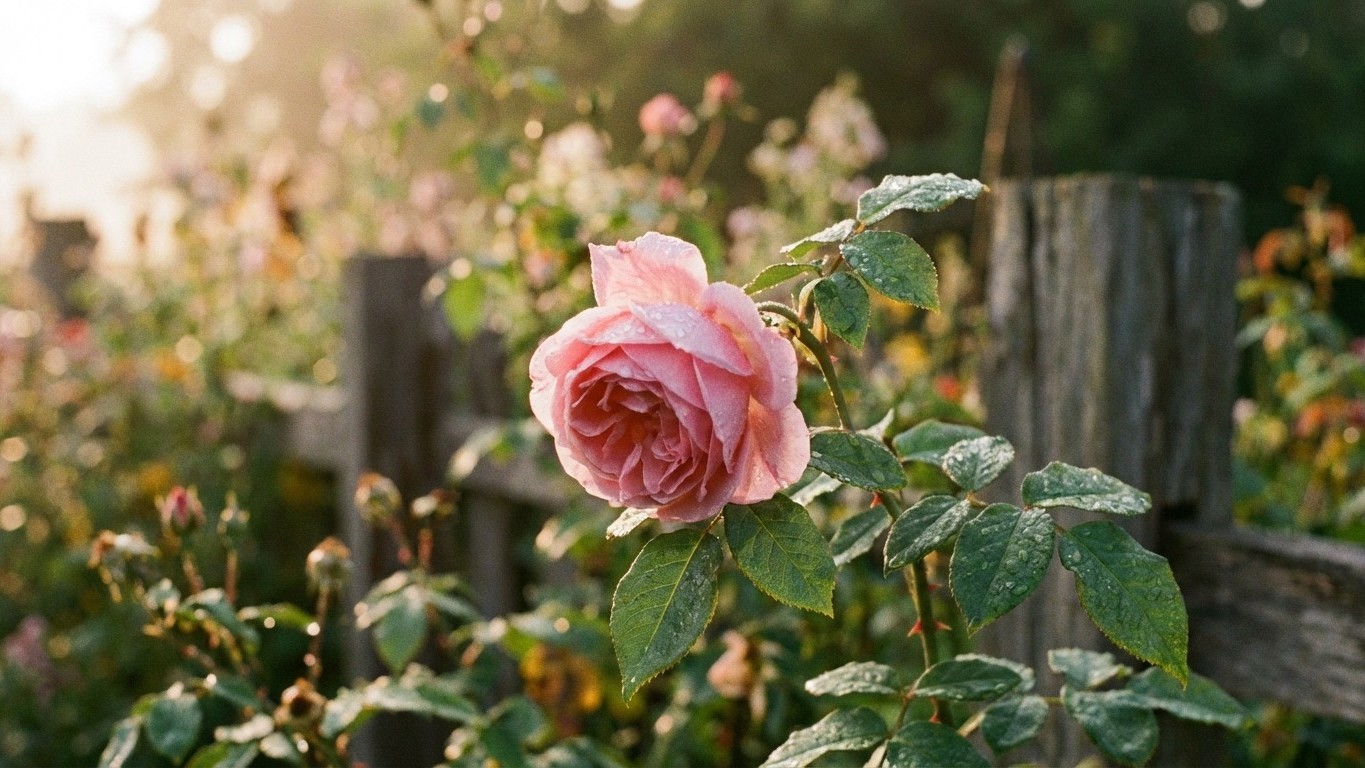

Rugosa roses, the Explorer series and tough shrub roses such as Hansa and Therese Bugnet come through Island winters with little fuss. Knock Out and New Dawn usually make it too, though sometimes they lose canes. Most hybrid teas, floribundas and other grafted roses on garden-center racks need real winter protection, and some die even with it. The label and the type of rose tell you most of what you need to know before you pay.
Which roses survive a Prince Edward Island winter
Charlottetown sits in Canadian hardiness zone 5b, according to Natural Resources Canada’s plant hardiness site. That is a Canadian rating, and it does not convert to a USDA zone. A rose tag that says “zone 5” may well have been written for the US system, so treat it as a rough guide only.
The two systems measure different things. The Canadian map draws on seven climate variables, while the USDA map uses one, the average coldest night. Natural Resources Canada says there are no simple conversions between them. Its own example: Canadian zone 4a overlaps nine USDA zones, from 3a to 7a. A rose rated for a US zone can therefore behave differently on the Island, where winter wind, thaw-and-freeze swings and snow cover all matter.
Which rose types clear zone 5b without help?
Rugosas sit at the cold end of the range. Rosa rugosa already grows wild along Atlantic Canada’s shorelines, taking salt spray and sandy soil without complaint, and its garden hybrids inherit that toughness. The Explorer series comes next. Agriculture Canada (now Agriculture and Agri-Food Canada) bred these roses for cold Canadian winters, so a Charlottetown winter is mild for most of them. Many hold their canes through the cold and bloom on them the following summer.
Modern repeat-blooming shrub roses sit in the middle. They are generally hardy here, but a hard winter may kill them back to snow level, after which they regrow from the base. Hybrid teas sit at the other end. At 5b and colder they need mounding and wind cover, and many do not make it through even with that.
How do frost dates affect roses?
At the Charlottetown A weather station, the average last spring frost is May 16 and the average first fall frost is October 17. Both dates are midpoints of a window. In about one year out of two, the last spring frost falls later than May 16, so that date is not a safe one. The fall date is the middle of a range too, and a first frost can come ahead of it or after it. Districts away from the station can run later in spring and earlier in fall.
Spring frost after leaf-out burns the tender red shoots on any rose. A hardy shrub rose regrows from buds lower on the cane, while a grafted hybrid tea that has already lost its top has less to fall back on. In fall, an early hard frost catches roses still pushing soft growth, which is one more reason not to fertilize late.
Named roses that hold up here
The roses below are sold in Canada and the US, and each has a track record in cold climates. They are listed from the toughest down to the ones that may need a little help.
| Rose | Type | What it handles on the Island |
|---|---|---|
| Hansa | Rugosa shrub | Rated hardy far colder than 5b, takes wind and salt spray, fragrant double blooms, large hips |
| Therese Bugnet | Rugosa hybrid shrub | Bred in Alberta, rated hardy far colder than 5b, long-blooming, tall and open in habit |
| William Baffin | Explorer climber | Canes generally survive without wrapping, trained on a fence or trellis |
| Knock Out | Repeat-blooming shrub | Usually hardy, but a hard winter can kill it to the ground and it regrows from the base |
| New Dawn | Climber | Does well on a sheltered wall, tips and canes may die back in an exposed spot |
Which shrub roses are the safest bets?
Hansa is one of the safest choices if you want little winter worry. It is a rugosa with wrinkled leaves, a strong clove scent and big orange-red hips in fall. Therese Bugnet, also a rugosa hybrid, was bred in Alberta, where winters are generally far colder than on the Island. It blooms in flushes through the season on long, reddish canes. Neither normally needs wrapping or mounding. Rugosas also tolerate wind and salty air better than most roses, which matters on coastal lots.
What about Knock Out and New Dawn?
Knock Out is sold everywhere and generally does well here, but it is not bulletproof. In a hard winter, canes can die back, sometimes to the ground. Roses on their own roots regrow true to name from the base, which is a point in their favor (more on that below). With either Knock Out or New Dawn, wait until the buds swell in spring before pruning out dead wood. Cutting early removes canes that may still be alive, and the live wood is easy to spot once growth starts.
New Dawn is a vigorous climber with pale pink, scented blooms. It does best on a sheltered wall, where the masonry holds a little warmth and the wind stays off the canes. Its main early flush comes on older wood, so any cane lost to winter means fewer early blooms that summer.
If you want a climber with less risk, William Baffin, an Explorer rose, handles cold better than New Dawn. For more on getting any of these started, see our guide to growing roses in Prince Edward Island.
Sold here, but not for this zone
Many garden centers in Canada and the US buy from the same large growers, so the racks hold roses chosen for a national market rather than a Maritime winter. A few clear Island winters only with work. Check what the tag says about cold before the plant goes in your cart.
Which garden-center roses need winter protection?
Hybrid teas lead the list. The tall, single-stem roses with long-stemmed cut-flower blooms are the classic rose of florist shops, and most are grafted onto a hardier rootstock. They need real protection at 5b. Grandifloras and floribundas are crossed from hybrid teas, so they share much of that tenderness. Many English-style roses and tender climbers are also sold widely and need the same care.
Potted miniature roses sold as Mother’s Day gifts or grocery-store gifts are a separate trap. These are grown for indoor display and flowering, and they often fail when planted out and left through a winter. Treat them as annuals unless the tag says they are rated for outdoor cold.
The work itself is simple but has to happen on time. After the ground begins to freeze, mound soil or compost over the crown of each grafted rose, deep enough to cover the crown. That protects the graft union, the swollen point where the top meets the rootstock. A burlap screen on the windward side keeps canes from drying out in winter gales. Skip the mounding and a hard freeze can kill the graft, leaving only the rootstock to regrow, usually a different and less attractive rose.
A hybrid tea in the right spot, mounded and screened, can last for years. It simply costs more effort than a rugosa, and in a cold winter it will lose canes either way.
What to check on the label before buying
Three things on a rose label matter more than the photo: the grade, whether the plant grows on its own roots or is grafted, and where the hardiness rating comes from.
Grade applies to bagged and bare-root roses. Grade 1 is the top tier and, for hybrid teas, means the strongest canes of the grade. Grade 1½ and Grade 2 have thinner, shorter canes. Buying a lower grade saves a little money but gives a smaller plant to bring through its first winter. Potted roses may not be graded at all, so look at the canes themselves. Several thick, green, firm ones are what you want.
Own-root versus grafted matters more the colder it gets. A grafted rose is a named variety budded onto a different, sturdy rootstock. If winter kills it down to the graft, the rootstock regrows and the named rose is gone. An own-root rose grows from its own cuttings, so if the top dies, whatever sprouts from the base is still the rose you paid for. That is why own-root plants are worth looking for in a zone like 5b. Tags often say “own root” outright, or the seller will tell you. When the label does not say, ask before you buy, or assume the rose is grafted and plan to mound it.
Finally, check where the hardiness number comes from. A tag from a US grower uses USDA zones, and those do not convert to the Canadian 5b of Charlottetown. Treat a US tag as a rough guide only and rely on the rose’s type and reputation.
Checking this against your own county
Prince, Queens and Kings counties each have their own microclimates. The frost dates above come from the Charlottetown A station and the zone is the one for Charlottetown, so a farm lot near the north shore or a sheltered garden inland can differ by days or weeks. The provincial Department of Agriculture is a place to start for local advice on which roses suit your district. Ask them about your exact location before spending on a bed of tender roses, and treat May 16 as the middle of a spring frost window, never as the end of frost risk.
Common questions
Is Knock Out hardy enough for Prince Edward Island?
Usually, yes. It is generally hardy in zone 5b, and a hard winter may kill it to the ground. Roses on their own roots regrow from the base, so in most years you get blooms again by summer.
Do hybrid teas survive an Island winter?
Some do, but only with work. They need soil mounded over the graft union after the ground freezes and a windbreak against winter gales. Even then, some die. A rugosa or Explorer rose is the lower-risk choice.
Is Canadian zone 5b the same as USDA zone 5b?
No. The Canadian system uses seven climate variables and the USDA system uses one. Natural Resources Canada says there are no simple conversions, so US tags are only a rough guide here.
Can I trust May 16 as the last frost date?
No. It is the average at the Charlottetown A station, and in about one year out of two the last frost falls later than that. Hardy roses shrug off a late frost, but tender new growth on any rose can be burned by it.