
Yes, will sweet corn ripen in Virginia? It does so reliably, but the calendar most gardeners check isn’t the one that decides it. The last frost date tells you when the air is safe. It says nothing about when the ground is warm enough for seed to sprout, and that gap is where a lot of spring plantings go wrong before they’ve even broken the surface.
The short answer
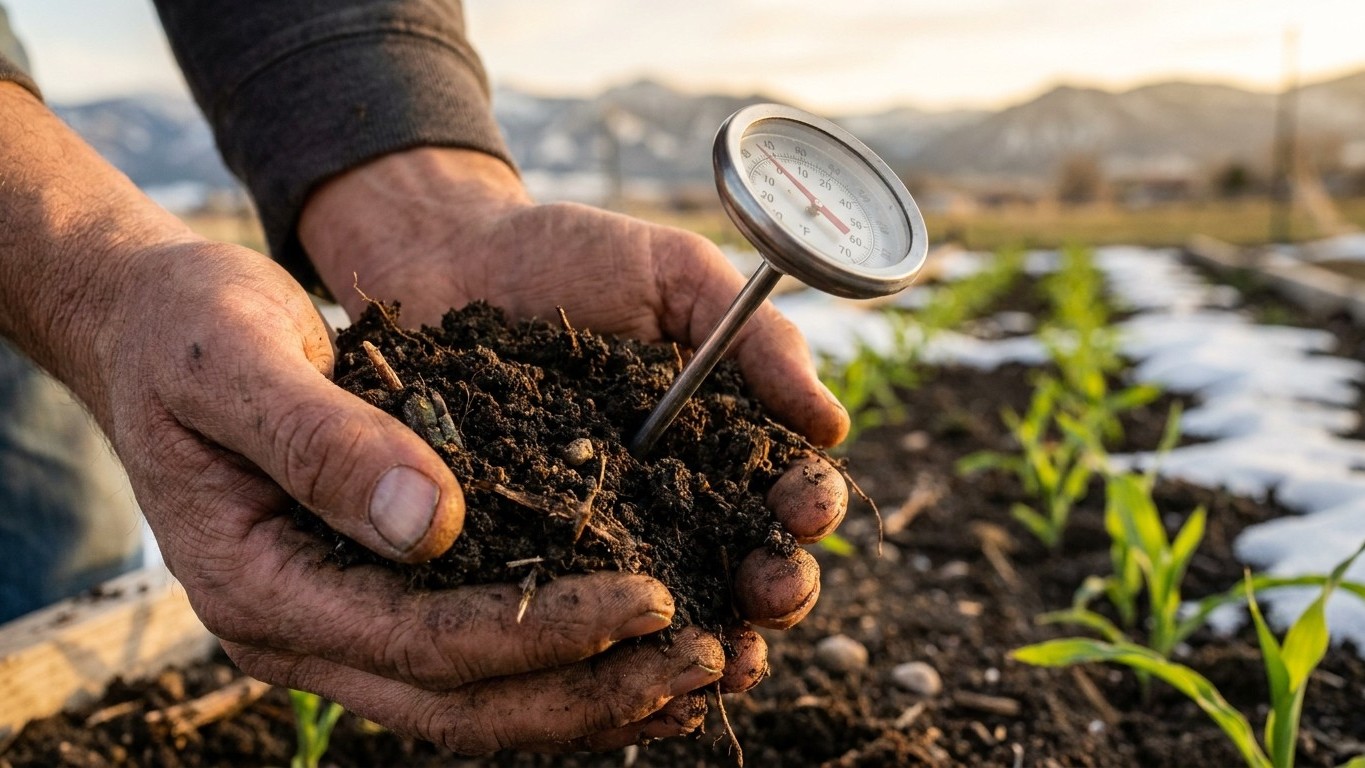
Sweet corn needs soil above 60°F to germinate well, and that threshold arrives well after the last frost clears, not alongside it. At the NOAA reference station near Virginia Beach, the last spring frost typically falls between March 20 and April 3. Soil doesn’t jump to 60°F on that same day. Ground warms on its own schedule, lagging behind the air by a stretch that can run deep into April in a cool, wet spring, and gardeners who plant the week frost ends are usually planting into soil that’s still too cold for the seed to do anything but sit and rot. Knowing exactly When to Sow Sweet Corn in Virginia means watching soil temperature rather than the frost calendar alone.
Once the soil does cross that line, the question becomes whether 60 to 90 days of growing time fit before the first fall frost. At that same coastal reference station, the first fall frost lands between November 10 and November 24. Run the arithmetic from the latest safe spring frost date, April 3, to the earliest fall frost date, November 10, and you get roughly 221 days of frost-free ground before winter threatens again. Even after subtracting the weeks it takes soil to actually reach 60°F, gardeners are left with something on the order of 200 days to work with. A sweet corn crop needs 60 to 90 days from planting. That’s less than half the available window, even in the most conservative case.
The margin matters because summer heat here isn’t gentle. The reference station averages 26 days a year at 90°F or hotter, a real load on water demand and on pollination during the short window when silks are receptive. It’s not a threshold that stops corn from ripening, but it’s a reason to keep soil moisture steady through tasseling rather than assume the season length alone guarantees a good ear. Season length and heat stress are two different risks, and Virginia’s long frost-free window mostly solves the first one without touching the second.
One more distinction worth keeping straight: the 60 to 90 day figure counts from planting and tells you whether the crop fits the season at all. A separate window, 17 to 24 days from when silks first appear, tells you which week to actually go pick. Confusing the two leads to either pulling ears too early or leaving them on the stalk until the sugar has already started turning to starch.
Does a late variety fit here?
The answer splits depending on where in Virginia the garden sits. Coastal and much of central Virginia have room to spare. The mountains and the southwest corner of the state are a different conversation entirely, running weeks later in spring and weeks earlier in fall than the coastal reference numbers above.
A 60-day variety
Plant once soil is reliably above 60°F, and a 60-day type is ready roughly two months later, landing somewhere in mid-summer at the coastal reference site. That leaves months of buffer before the earliest fall frost date of November 10. This is the safest bet across the entire state, including the Blue Ridge and southwest counties where the season runs shorter on both ends. It also opens the door to a second planting a few weeks behind the first, stretching the harvest instead of getting it all at once.
A 90-day variety
At the coastal reference station, a 90-day type planted after the soil warms still ripens in late summer, weeks ahead of the November 10 to 24 fall frost window. There’s enough slack here that the longer variety fits comfortably. But that comfort doesn’t travel to the mountains and southwest Virginia. There, spring soil warms later, fall frost arrives earlier, and both ends of the season are squeezed at once. Stack a slow-to-warm spring on top of a 90-day variety in one of those higher, colder counties, and the math stops working. In that part of the state, the late variety does not fit reliably, and a 60-day type is the safer call.
What goes wrong here
Most disappointing sweet corn harvests in Virginia trace back to one of three specific mistakes, and each has a fix that doesn’t require a different garden, just different timing.
- Soil sown too cold. Planting the week the last frost clears feels safe, but if the ground hasn’t reached 60°F yet, seed sits in cold, damp soil and rots before it sprouts, or comes up thin and uneven. The fix is to check soil temperature directly rather than counting days since the frost date, and hold off until it’s consistently above that line.
- A variety too late for the season. This is a mountains-and-southwest problem more than a coastal one. A 90-day type pushed against a later spring soil-warm date and an earlier fall frost can run out of time, especially if a cool, wet spring delays planting by even a couple of weeks. The remedy is choosing a shorter-season type in those higher, colder counties, or planting the moment soil conditions allow rather than waiting for a calendar date.
- Sweetness lost to timing, not weather. Sweet corn comes in different sugar types, and if two of them tassel at the same time nearby, cross-pollination flattens the sweetness in both. This has nothing to do with Virginia’s climate and everything to do with what’s planted close by and when. The fix is staggering planting dates so different types don’t tassel together, and growing each type in a block of three or more rows rather than a single thin row, which protects pollination quality regardless of what else is in the garden.
Checking this against your own county
Every number here comes from a single coastal reference station near Virginia Beach, and the caution attached to it is real: that’s the mild end of the state. A garden in the Piedmont, the Shenandoah Valley, or the far southwest can see frost dates weeks apart from what’s listed above, in both directions. Before committing to a variety or a planting date, it’s worth calling the local office of Virginia Cooperative Extension, which can give frost records and soil temperature guidance specific to the county rather than a single statewide estimate. That call is a five-minute way to avoid guessing with a whole season’s planting.
Common questions
When should I plant sweet corn in Virginia?
Once soil temperature is reliably above 60°F, not on the last frost date itself. In coastal Virginia that point comes later in spring than the frost date suggests; in the mountains and southwest it comes later still.
Can I grow a 90-day variety in the mountains of Virginia?
It’s a tighter fit there than in coastal or central parts of the state. Spring soil warms later and fall frost arrives earlier in those higher counties, and a 90-day type can run short on time in a cool spring. A 60-day variety is the safer choice in that part of the state.
How do I know sweet corn is ripe and ready to pick?
Look for three signs together, not just one: silks that have turned dry and brown, husks that are still moist and green, and a milky juice when a kernel is punctured. That combination, roughly 17 to 24 days after silks first appear, marks the picking window.
Why did my sweet corn turn out starchy instead of sweet?
It’s usually not a growing problem. If different sugar types (su, se, or sh2) tasseled at the same time nearby, cross-pollination can flatten the sweetness in the ears. Staggering planting dates between types, and keeping each type planted in a solid block rather than a single row, avoids the overlap.