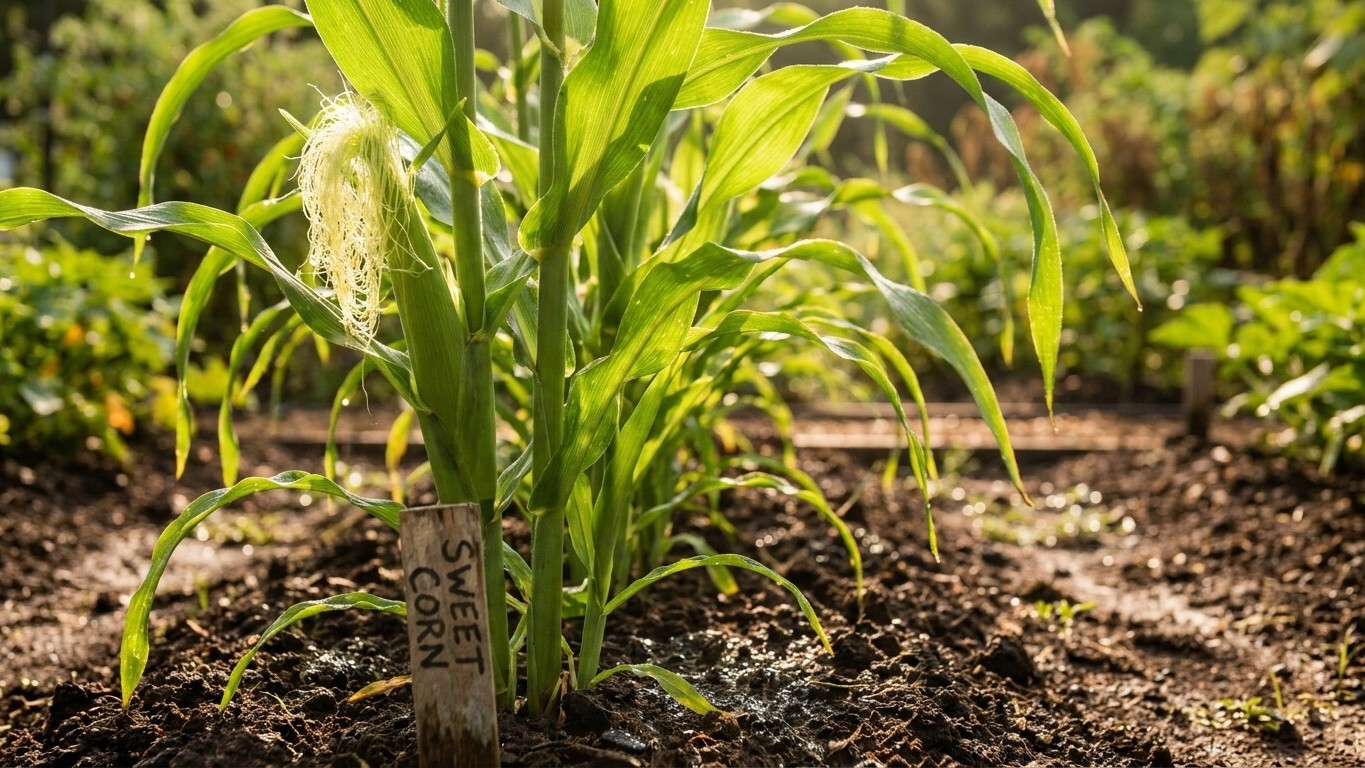

Yes, sweet corn ripens reliably in Mississippi. The state’s frost-free stretch runs long enough for even the slower varieties, and the real work isn’t whether the crop matures, it’s timing the planting so seeds go into soil that’s actually warm enough, and keeping different corn types from crossing while they tassel.
The short answer
Sweet corn seed doesn’t care what the calendar says about frost. It cares about soil temperature, and it needs that soil above 60 F before germination even starts moving in the right direction. That threshold arrives well after the last frost date, not on the same week. Near the Jackson reference station, the last spring frost falls somewhere between March 6 and March 22, based on NOAA’s 1991-2020 climate normals for that airport. But soil doesn’t flip to 60 F the day frost stops. It warms gradually over the following weeks, and in a shaded or clay-heavy garden that lag stretches longer than in a sandy, sun-exposed bed. There’s no published soil-temperature date for Mississippi specifically, so the only honest advice is to check the dirt yourself with a soil thermometer rather than trust a date on a seed packet.
On the other end of the season, the first fall frost near that same reference station lands between November 7 and November 22. That’s the finish line. Between a soil that’s finally warm enough in spring and a frost that ends the season in fall, Mississippi gardeners typically have somewhere in the neighborhood of six months to work with, comfortably more than the 60 to 90 days sweet corn needs from planting to harvest.
Two cautions matter here. First, those frost dates come from one airport weather station. Suburban and rural gardens across the state commonly see the last spring frost arrive later, and the first fall frost arrive earlier, sometimes by one to two weeks, more if you’re gardening at higher elevation. Second, even trimming the season by two or three weeks on each end still leaves a window comfortably over 90 days. That’s the mechanical reason the short answer stays yes: even a conservative, worst-case adjustment to those station dates doesn’t threaten a sweet corn crop here.
Heat is the other variable worth flagging early. The Jackson reference station averages 71.1 days a year at 90 F or hotter. That’s not a threat to whether the crop ripens, it’s a driver of water demand and heat stress during pollination. A long season solves the frost math. It doesn’t solve the problem of tasseling corn during the hottest stretch of July, which is a timing decision within that season, not a season-length decision.
Does a late variety fit here?
Because the frost-free window runs so long in Mississippi, both quick and slow sweet corn varieties fit without much drama. The difference between them isn’t whether they’ll ripen, it’s how much flexibility they leave for succession planting and for dodging the worst heat.
A 60-day variety
A fast-maturing type reaching harvest around 60 days from planting is the easiest fit imaginable in this climate. Planted once soil is confirmed above 60 F, even a conservative planting date in mid-to-late spring leaves months of slack before the first fall frost arrives in November. That slack is useful: it means a 60-day variety can go in the ground, come out, and be followed by a second planting of the same or a different type later in summer, as long as the two plantings are timed so their tassels don’t overlap (more on that below). It’s the variety that gives Mississippi gardeners the most room to experiment with timing.
A 90-day variety
A slower variety needing a full 90 days from planting to harvest still fits comfortably here. Run the numbers conservatively: even if a home garden sees frost two weeks later in spring and two weeks earlier in fall than the reference station suggests, the remaining stretch between a warm-enough soil and that earlier fall frost still clears 90 days with room left over. The late variety does not run out of season in Mississippi. What it does run into is the heat load: a 90-day planting timed for a normal spring start will likely tassel during some of those 71.1 average days above 90 F, which can stress pollination more than a shorter variety timed to tassel earlier. The fix isn’t switching climates, it’s nudging the planting date to move tasseling away from the hottest weeks where possible.
What goes wrong here
- Soil sown too cold. Mississippi’s spring frost dates end well before the soil actually reaches 60 F, and gardeners who plant by the frost date instead of by soil temperature often see poor, patchy germination. The remedy is simple: use a soil thermometer at planting depth for several consecutive days before sowing, and don’t trust the frost date as a planting signal on its own.
- A variety pushed too late for the season. The window here is generous, but it isn’t unlimited. A gardener who delays planting into midsummer for a late succession crop, or who tries to squeeze a 90-day variety in after an already-late start, can still run the count right up against the first fall frost in November. Count backward from your area’s expected fall frost, add the full 60 to 90 days your variety needs, and treat that as the last safe planting date, not a soft guideline.
- Sweetness lost because two types tasselled together. This one has nothing to do with Mississippi’s climate and everything to do with garden layout. Sweet corn comes in su, se, and sh2 types, and if plants of different types tassel at the same time nearby, cross-pollination turns sweet, tender kernels starchy and dull. There’s no published isolation distance to lean on here, only the timing rule: don’t let different types tassel together. Stagger planting dates so their tasseling windows don’t overlap, or grow a single type per season if you want to keep it simple. Either way, plant in blocks of three or more rows rather than a single skinny row, since that shape improves pollination regardless of timing.
Common questions
When is the earliest I should plant sweet corn in Mississippi?
Not on a fixed calendar date. Plant once soil at planting depth has held above 60 F for several consecutive days, which typically comes some weeks after the last spring frost (March 6 to March 22 near the Jackson reference station, later in many home gardens). Check the soil directly rather than counting days from frost.
Can I plant a second succession crop later in summer?
Usually yes, given how much season Mississippi has to spare. Count backward from your local first fall frost (November 7 to November 22 near the reference station, often earlier in home gardens) and make sure the full 60 to 90 days your variety needs still fits before that date, with a buffer for a two-week-earlier frost.
Does Mississippi’s heat affect corn pollination?
It can. The reference station averages 71.1 days a year at 90 F or above, and that heat load stresses pollination more than it threatens whether the crop has enough season to mature. Timing planting so tasseling avoids the hottest stretch of summer helps more than choosing a shorter variety alone.
How do I know when the corn is actually ripe?
Look for three signs together, not just one: dry, brown silks; husks that are still moist and green; and milky (not clear, not thick) juice from a punctured kernel. All three need to line up before you pick.