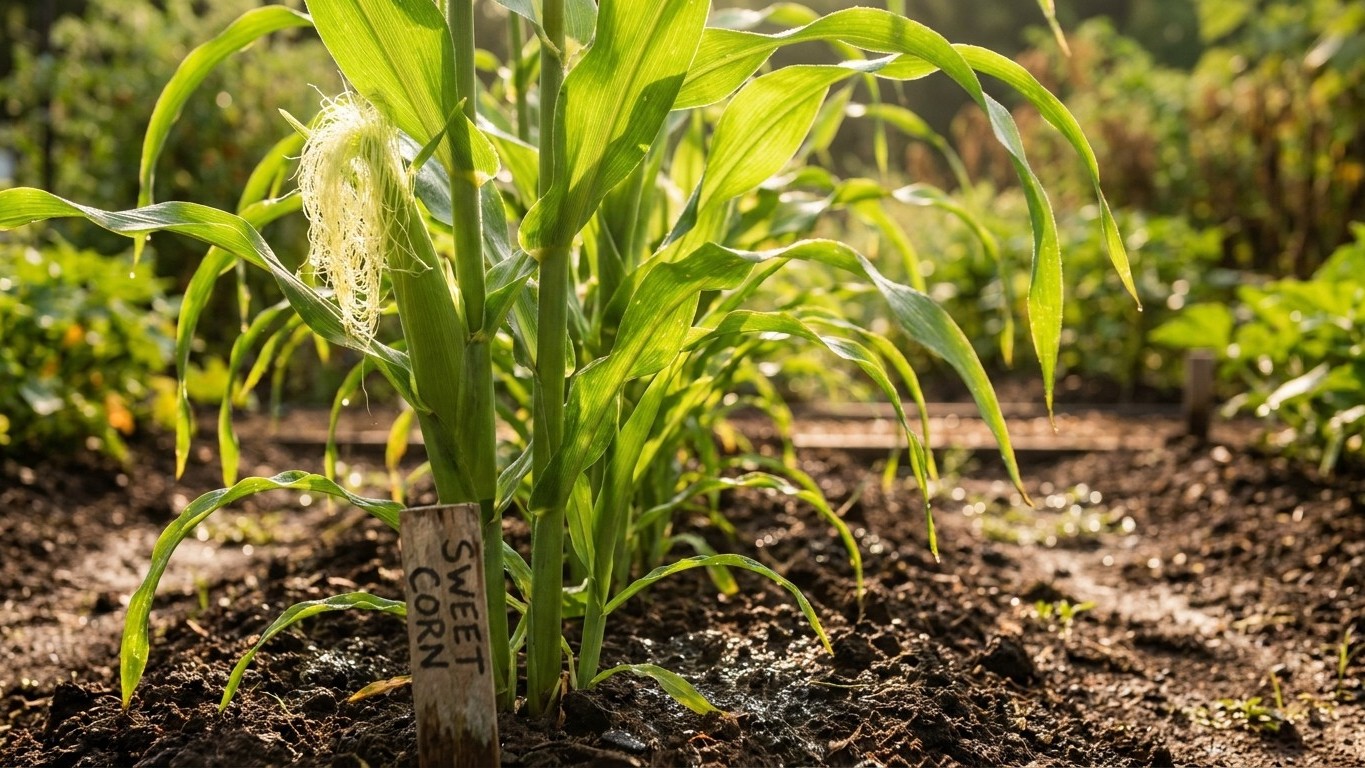

Yes, in most seasons sweet corn ripens well in New Hampshire gardens. The growing window here is generous enough for both early and mid-season varieties, provided the soil is properly warm before seed goes into the ground. The real question isn’t whether the state’s climate allows it, but whether a gardener starts the clock at the right moment, and picks a variety that matches the number of frost-free weeks actually available.
The short answer
Sweet corn doesn’t start counting days until the soil itself reaches 60 F, and that’s a threshold that arrives well after the last spring frost, not on the same date. At the reference weather station used for New Hampshire’s climate normals, the last spring frost typically falls between April 16 and April 27. Soil doesn’t jump to 60 F the moment the air stops freezing at night. It takes sustained daytime warmth and settled nights to bring the top few inches of garden bed up to that mark, and in this part of New England that commonly pushes the safe sowing window into mid or late May, sometimes later in a cool, wet spring or in a shaded, heavy-clay bed that warms slowly.
That gap matters because a gardener who plants on the last-frost date, treating it as the green light, is very likely planting into soil still in the 40s or low 50s. Sweet corn seed sitting in cold, wet ground doesn’t just germinate slowly, it often rots before it sprouts, or comes up thin and uneven. The frost date tells you when the risk of a killing freeze drops off. It says nothing about whether the soil is ready to receive seed.
Once the soil clock actually starts, the math turns favorable. Sweet corn needs 60 to 90 days from planting to reach harvest, depending on the variety. The reference station’s first fall frost falls between October 13 and October 26. Even counting from a soil-warmup point in late May, that still leaves roughly four and a half to five months before the first frost risk arrives in mid-October. That’s comfortably more than the 90 days a longer-season variety needs, with weeks to spare as a buffer against a cool spring or an early autumn chill.
Summer heat load backs this up. The reference station averages 10.9 days a year at 90 F or hotter, which is enough warmth to keep corn’s growth steady through July and August, the stretch when the plant is tasseling, silking and filling out ears. Corn is not a crop that stalls in a cool summer here; it’s a crop that can stall if it’s started too early in cold soil, or if a variety runs longer than the season allows. Neither of those is a climate problem. Both are timing problems, and both are fixable with a soil thermometer and a look at seed packet days-to-maturity.
One caution worth repeating: these dates come from a single airport weather station, and gardens in surrounding towns, especially at higher elevation or in low-lying frost pockets, commonly see their last spring frost run later and their first fall frost arrive earlier, sometimes by a week or two. Anyone gardening outside the immediate area of the reference station should treat these figures as a starting point, not a guarantee, and check conditions locally before setting a planting date.
Does a late variety fit here?
The days-to-maturity number on a seed packet counts from the day seed goes into warm soil, not from the last frost date and not from silk emergence. That distinction decides whether a given variety has room to finish before fall frost shuts the season down. With the reference station’s frost window running from October 13 to October 26, and soil typically ready sometime in mid-to-late May, there’s a stretch of roughly 20 weeks to work with in most years. Here’s how that plays out at the two ends of the sweet corn spectrum.
A 60-day variety
A short-season sweet corn, maturing in around 60 days from planting, fits this territory with room to spare. Planted once soil is reliably above 60 F, even a late start in the first week of June would still reach harvest by early August, leaving more than two months before the first fall frost risk begins. This is the safest choice for anyone gardening at higher elevation, in a known frost pocket, or simply wanting a wide margin of error. It also opens the door to a second planting a few weeks after the first, since there’s enough season left to stagger harvests into late summer.
A 90-day variety
A longer-season variety, needing a full 90 days from planting, still fits the window at this reference station, but with a narrower margin. Planted as soon as soil crosses 60 F, likely sometime in May, a 90-day corn would mature around the third week of August or into early September, well ahead of the mid-October frost window. The margin only tightens if planting is delayed into June, whether from a cold, wet spring or from waiting too long to check soil temperature. A late start pushes harvest into late September or early October, right up against the first-frost window, with little buffer if autumn arrives early. For most home gardens in this territory, a 90-day variety is workable, but it rewards planting promptly once the soil is actually warm, rather than waiting for a convenient weekend.
What goes wrong here
- Soil sown too cold. Planting on the last-frost date rather than waiting for 60 F soil is the single most common failure in this region. Seed sits in cold, damp ground, rots before sprouting, or produces a patchy, uneven stand. The fix is simple: check soil temperature with a basic thermometer at planting depth for several consecutive days before sowing, rather than going by the calendar alone.
- A variety too late for the season. A long-season corn planted late, after a cool spring delayed soil warmup, can run out of season before the first fall frost, especially in a garden that sees frost earlier than the reference station’s mid-October date. The remedy is matching maturity length to planting date: if soil doesn’t warm until June, lean toward a shorter-season variety rather than gambling on a long one finishing in time.
- Sweetness lost because two types tasselled together. This failure has nothing to do with climate. Standard (su), sugary-enhanced (se) and supersweet (sh2) types cross-pollinate if their tassels shed pollen at the same time nearby, and the result is starchy, less sweet kernels on what should have been a sweet harvest. There’s no published isolation distance to rely on here, the safeguard is timing and planting arrangement: stagger planting dates so different types don’t tassel in the same window, and grow sweet corn in blocks of three or more rows rather than a single thin row, so pollination stays within the intended planting.
Common questions
Is it safe to plant sweet corn right after the last spring frost in New Hampshire?
Not by soil temperature standards. The last frost date only marks when freezing air becomes unlikely; the soil itself typically needs several more weeks of warmth to reach the 60 F mark sweet corn requires. Planting on the frost date alone often means seed goes into ground that’s still too cold.
How do I know when my soil has actually reached 60 F?
A basic soil thermometer, checked at seed depth over several consecutive days, is the most direct way. Since the region’s soil-warmup timing isn’t captured by a single published date, checking locally is more reliable than estimating from the calendar.
Can I grow both a sweet variety and an early one in the same garden?
Only if their tasseling windows don’t overlap. The failure comes from different types (su, se, sh2) shedding pollen at the same time near each other, not from growing them in the same yard. Stagger planting dates so tasseling doesn’t coincide, and keep each type in its own block of rows.
Does New Hampshire get hot enough for corn to fill out properly?
Yes. The reference station averages nearly 11 days a year at 90 F or above, enough sustained summer heat to carry corn through tasseling, silking and ear fill without the stalling that can affect cool-summer regions.