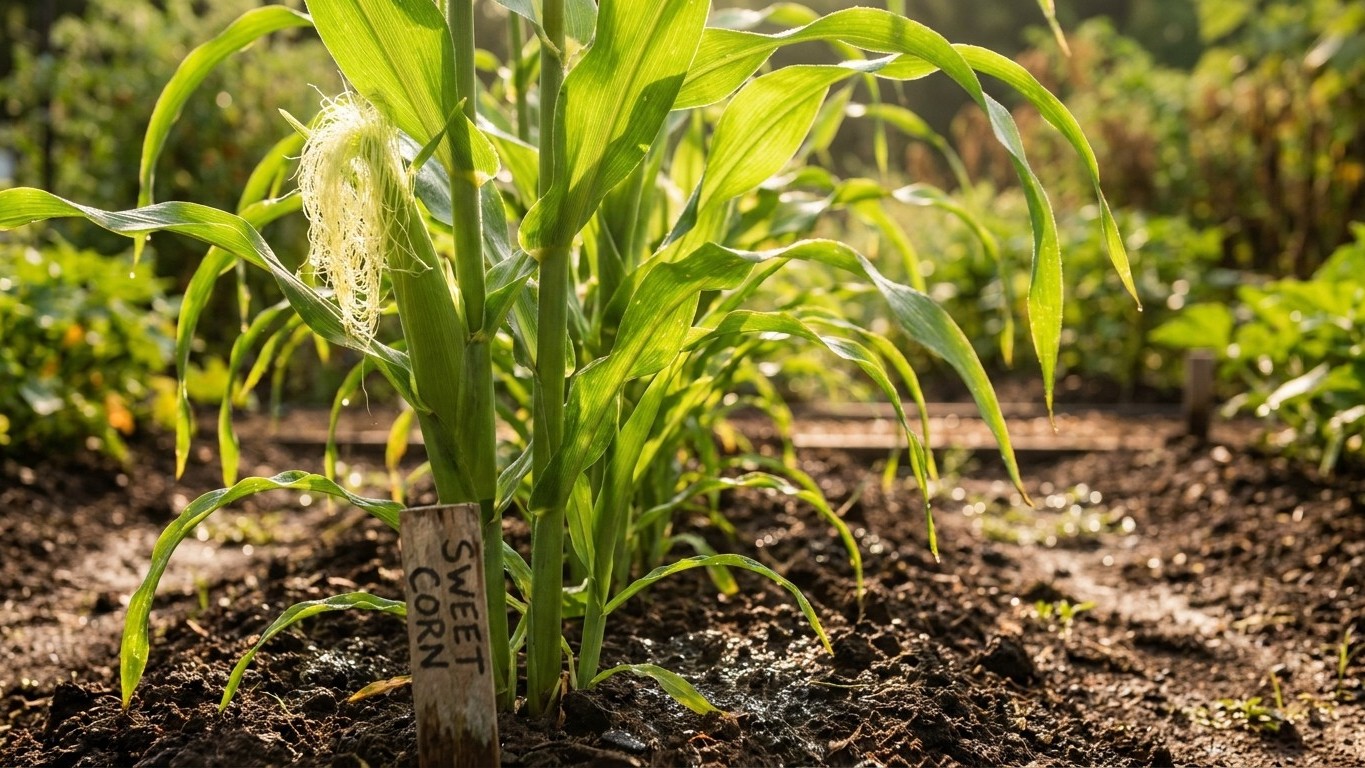

Yes, sweet corn ripens in New York, but the calendar that matters isn’t the frost date most gardeners circle in April. It’s soil temperature, and it arrives later than people expect. Once the ground catches up, the local frost-free window is long enough to carry a 60 to 90 day crop to harvest almost anywhere in the state, though upstate and Adirondack growers work with a noticeably tighter margin than the city does.
The short answer
Frost date isn’t the number that decides when to plant sweet corn. Soil temperature is. In the New York City area, the last spring frost usually lands somewhere between March 23 and April 3, according to NOAA’s 1991-2020 climate normals. That date tells you when the killing cold is statistically gone. It says nothing about whether the ground is warm enough for a corn seed to germinate.
Sweet corn needs soil above 60°F to sprout reliably, according to Utah State University Extension. That threshold arrives well after the last frost, not the same week. Cold soil in early spring, even once frost has cleared, will rot seed or leave it sitting dormant, inviting disease before a shoot ever breaks the surface. The practical lesson: treat the frost date as the earliest possible marker on the calendar, then wait for the soil itself to catch up before dropping seed.
Once that soil threshold is met, the math turns favorable. Sweet corn needs 60 to 90 days from planting to harvest, depending on variety. The first fall frost in the New York City area falls between November 14 and 27, per the same NOAA dataset. That’s a long backstop. Even accounting for the delay between the last frost and 60°F soil, there’s a wide cushion sitting between a realistic planting date and that November frost line, comfortable room for a 60 to 90 day crop, not a tight squeeze.
Heat matters too, in a different way than frost does. The New York City area averages 12.2 days a year reaching 90°F or hotter. That’s the measure of summer heat load, the kind of stretch that speeds up water use and stresses plants during pollination. It’s not the same thing as an average summer temperature, and it’s why watering during a hot stretch matters more than the date on a calendar does.
Put together, the pieces answer the question plainly: sweet corn ripens in New York, provided the soil has actually warmed before seed goes in the ground, and provided the chosen variety doesn’t push its days-to-maturity right up against the fall frost line. The season here is long enough to work with, not a constraint that rules corn out.
One note carries real weight for anyone outside the city itself: these NOAA figures come from a dense urban reference site that runs warmer than much of the state. Upstate New York and the Adirondacks see frost arrive earlier in fall and linger later in spring, compressing the whole window. A planting plan comfortable near the city deserves a second look further north.
Does a late variety fit here?
The 60 to 90 day range covers a lot of ground, and the gap between those two ends decides how much risk a grower takes on. Checking each side against the local frost calendar shows where the margin gets thin.
A 60-day variety
An early, 60-day sweet corn is the low-risk choice almost anywhere in New York. Once soil reaches 60°F, typically well into spring, a 60-day crop reaches harvest with months to spare before the first fall frost, which lands November 14 to 27 in the New York City area. Even allowing for a slow, cool start or a stretch of cloudy weather that stalls growth, there’s enough buffer that a 60-day variety rarely runs into trouble from the calendar alone. It’s the safer pick for a first sweet corn planting, or for a second succession sown later in the same season.
A 90-day one
A 90-day variety asks more of the season, and the answer here depends on where in the state the garden sits. Using the New York City reference dates, a planting made once soil has warmed, even into late spring, still reaches maturity with real room before that late-November frost line. In that specific location, a 90-day variety fits.
That math holds for the city’s climate data, though, not the whole state’s. Upstate regions and the Adirondacks see frost close in from both directions, arriving earlier in fall and lingering later in spring, based on the same NOAA station showing how much colder inland sites run than the city. Stack a delayed planting, one waiting on slow-to-warm soil, against an earlier upstate fall frost, and the 90-day window narrows fast, sometimes past the point of safety. In the coldest parts of New York, a 90-day sweet corn does not reliably fit the season, and a shorter-maturity variety is the more realistic choice.
What goes wrong here
Most sweet corn failures in New York trace back to one of three causes, and only two of them have anything to do with the climate.
- Seed sown into cold soil. Planting right after the last frost, before the ground has actually warmed above 60°F, leaves seed sitting in soil too cold to germinate. It rots or sprouts weeks late, throwing off the entire 60 to 90 day clock. The remedy is simple: check soil temperature directly rather than trusting a calendar date, and wait until it’s reliably above 60°F before planting.
- A variety too late for the season. Choosing a 90-day variety in a region where fall frost arrives early, upstate and in the Adirondacks in particular, can leave ears still filling out when the first hard cold hits. The remedy is matching the variety to the region: a 60 to 75 day corn for colder inland areas, reserving a full 90-day variety for locations with the longer, milder window the New York City data shows.
- Sweetness lost when types tassel together. This one has nothing to do with frost or soil. Sweet corn comes in several genetic types, su, se, and sh2 among them, and if two different types tassel and shed pollen at the same time nearby, cross-pollination ruins the sweetness and texture of the harvest. Utah State University Extension gives no specific isolation distance for this, so the fix isn’t measured in feet: it’s timing. Stagger planting dates so different types don’t tassel together, or grow only one type per season. Either way, plant sweet corn in blocks of three or more rows rather than a single thin row, since block planting improves pollination regardless of type.
Common questions
When should sweet corn be planted in New York?
Not on the last frost date itself. Wait until soil temperature reads reliably above 60°F, which comes well after the last spring frost (March 23 to April 3 in the New York City area, later inland). Planting into cold soil is the most common early-season mistake.
How do you know sweet corn is ripe?
Look for three signs together, not just one: silks that have turned dry and brown, husks that are still moist and green, and juice that runs milky (not clear, not thick) when a kernel is punctured. Utah State University Extension also notes a second, narrower clock: roughly 17 to 24 days from when silks first appear to when ears are ready, a different measurement than the 60 to 90 day planting-to-harvest window and one that shouldn’t be confused with it.
Can different sweet corn types be planted together?
Not if they tassel at the same time. Su, se, and sh2 types cross-pollinate when their pollen sheds together nearby, and that cross ruins sweetness. No specific isolation distance is published for this; the workable fix is staggering planting dates so tasseling doesn’t overlap, or sticking to a single type per planting.
Does upstate New York have a shorter corn season than New York City?
Yes. The NOAA frost data cited here comes from a New York City reference station, and the city runs warmer than most of the state. Upstate New York and the Adirondacks see frost arrive earlier in fall and linger later in spring, which shortens the safe window for longer-maturity varieties in particular.