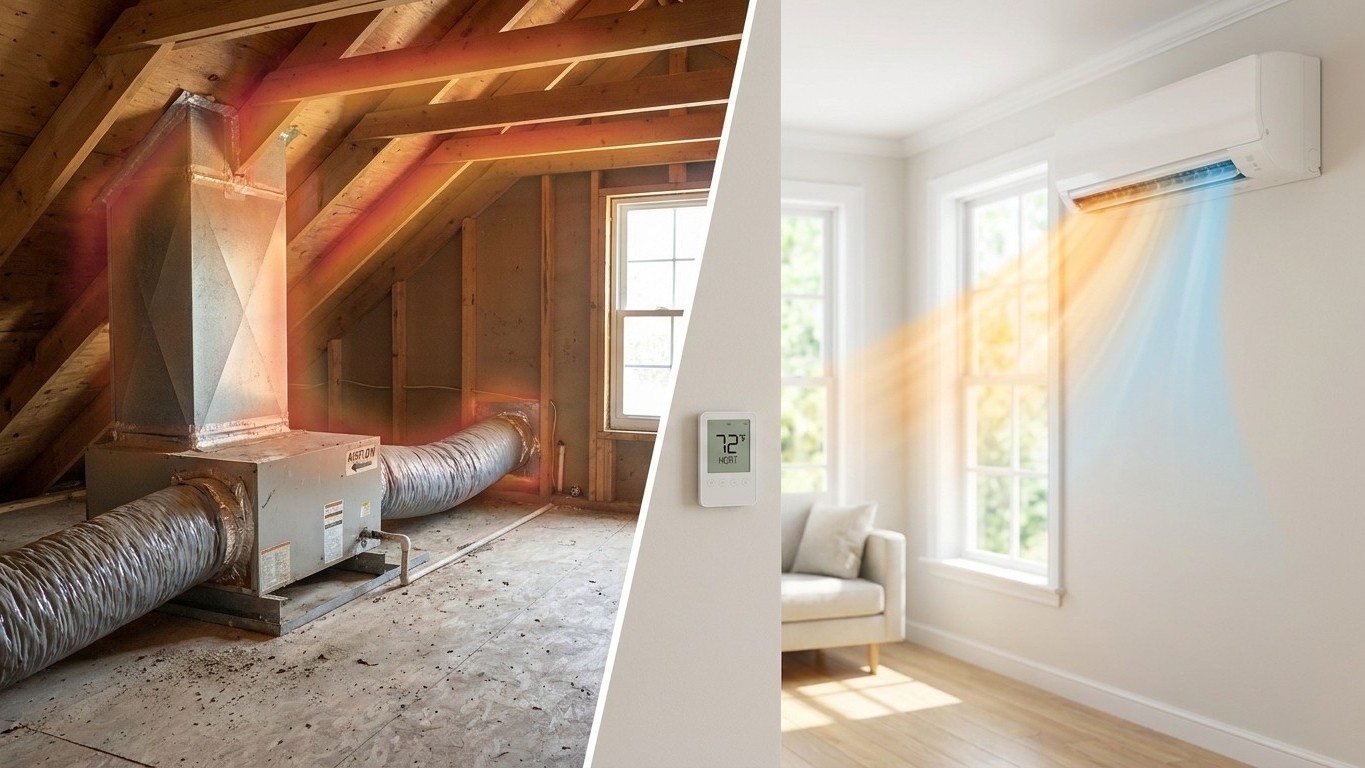

HSPF2 stands for Heating Seasonal Performance Factor 2, a measure of how much heat a heat pump produces over a full winter compared to the electricity it consumes. Ductless systems face a higher bar than ducted ones for the same efficiency label, because they skip a source of loss that ducted systems can’t avoid.
What HSPF2 Measures, and Why Ductless Asks for More
HSPF2 is a seasonal ratio, not a single snapshot reading. It totals the heat delivered to a home across a simulated heating season and divides it by the total electrical energy the system used to produce that heat. A higher number means more heat per unit of electricity, which is the whole point of running a heat pump instead of straight electric resistance heat.
Here’s where the ductless distinction matters. Under U.S. ENERGY STAR criteria, non-ducted split systems must hit at least 8.5 HSPF2 and 15.2 SEER2 to earn the label. Ducted split systems and single-package equipment only need 8.1 HSPF2 alongside that same 15.2 SEER2. Same badge, different threshold.
That gap isn’t a typo or an oversight. A ducted system has to push heated air through a network of metal or flex ducts, often running through unconditioned attics, crawlspaces, or garage ceilings. Every foot of that trip costs something: heat bleeds through duct walls, seams leak conditioned air into spaces nobody’s trying to heat, and the blower motor has to work harder to push air against that resistance. A ductless system, by contrast, delivers heat directly into the room through a wall- or ceiling-mounted head. There’s no duct run to lose heat along the way.
Because ductless starts with that built-in advantage, ENERGY STAR sets the bar higher for it. Asking a ductless unit to hit only 8.1 HSPF2, the same floor as a ducted system, would mean rewarding it for an efficiency gain it got almost for free, from having no ducts, rather than from genuinely better equipment. Raising the requirement to 8.5 forces ductless manufacturers to actually improve the compressor, the refrigerant circuit, or the controls to earn the label, instead of coasting on the absence of duct losses.
One more distinction worth keeping straight: SEER2 and HSPF2 aren’t interchangeable, even though they get quoted side by side. SEER2 measures cooling season performance; HSPF2 measures heating season performance. A unit with a great SEER2 number can still be an average heating performer, and vice versa. If you’re comparing two systems, make sure you’re lining up the same letter, HSPF2 to HSPF2, not SEER2 to HSPF2.
It’s also worth remembering these figures are minimum thresholds to qualify for a label, not typical operating numbers for any specific installed system, and not a stand-in for a load calculation on your particular house.
How to tell, in your own house
You don’t need a technician on-site to start answering whether your system is pulling its weight. Some of this you can check tonight, for free. The rest requires a professional, and the line between those two categories is worth drawing clearly.
- Pull the paperwork you already have. Check the equipment nameplate, the original invoice, or any energy label sticker still attached to the unit. Look specifically for HSPF2 (heating) and SEER2 (cooling) listed separately. If you only find one number, or an older “HSPF” without the “2,” you’re looking at a rating from before the current test method took effect, and it isn’t directly comparable to today’s figures.
- Note whether your system is ducted or ductless. This single fact tells you which ENERGY STAR threshold applies. A ductless (non-ducted) split system should clear 8.5 HSPF2 to carry the label; a ducted split or single-package unit only needs 8.1. Knowing which category you’re in prevents you from judging a ducted system’s number against the tougher ductless bar, or the reverse.
- Walk your ducts, if you have any, and look for obvious gaps. Check accessible sections in the attic, basement, or crawlspace for disconnected joints, crushed flex duct, or visible daylight through a seam. This costs nothing but your time and a flashlight, and it’s a plausible explanation if a ducted system feels weaker than its rated HSPF2 suggests it should be.
- Compare your heating bills across similar cold months, year over year. A steady climb in electricity use for heating, with no change in thermostat habits or weather severity, points to declining performance somewhere in the system, not necessarily the HSPF2 rating itself.
- Have a licensed HVAC technician measure actual performance in your home. This is where homeowner work ends, precisely. Confirming refrigerant charge, static duct pressure, airflow at the registers or heads, and actual delivered capacity requires gauges, a manometer, and training to interpret the readings safely. Refrigerant handling in particular is regulated: opening a sealed system without EPA certification is not a weekend project, it’s a compliance issue.
Notice the order isn’t arbitrary. Reading your existing paperwork costs nothing and takes five minutes; it either answers your question outright or tells you what to ask a contractor. Checking ducts by eye catches the most common, cheapest-to-fix problem. Bills tell you if performance is drifting. Only after those three steps does hiring a professional make sense, because now you can describe a specific symptom instead of asking someone to diagnose blind.
What it costs you to ignore it
Skipping this check doesn’t cause a dramatic failure. It causes a slow one, and slow failures are easy to normalize because you adjust to them without noticing.
Comfort erodes first. Rooms farthest from the ductless head, or the end of a duct run, start running a few degrees cooler than the thermostat claims, and you compensate by nudging the setpoint up, which raises consumption everywhere in the house, not just in the cold corner.
The equipment itself pays a price too. A compressor working against duct leakage, undercharged refrigerant, or blocked airflow runs longer cycles to deliver the same heat, and longer cycles mean more wear on moving parts over the same number of winters. That’s a mechanism, not a guess: components rated for a certain number of run-hours reach that limit sooner when every cycle is inefficient.
The bill absorbs the rest of the loss quietly. Because HSPF2 is a seasonal ratio, a system that’s underperforming its rating burns more electricity for the same heat output across the whole winter, not just on the coldest night. You won’t see one alarming spike, you’ll see a baseline that’s crept upward and stayed there, and it’s easy to attribute that creep to “electricity rates going up” instead of the actual cause sitting in your attic or on your wall.