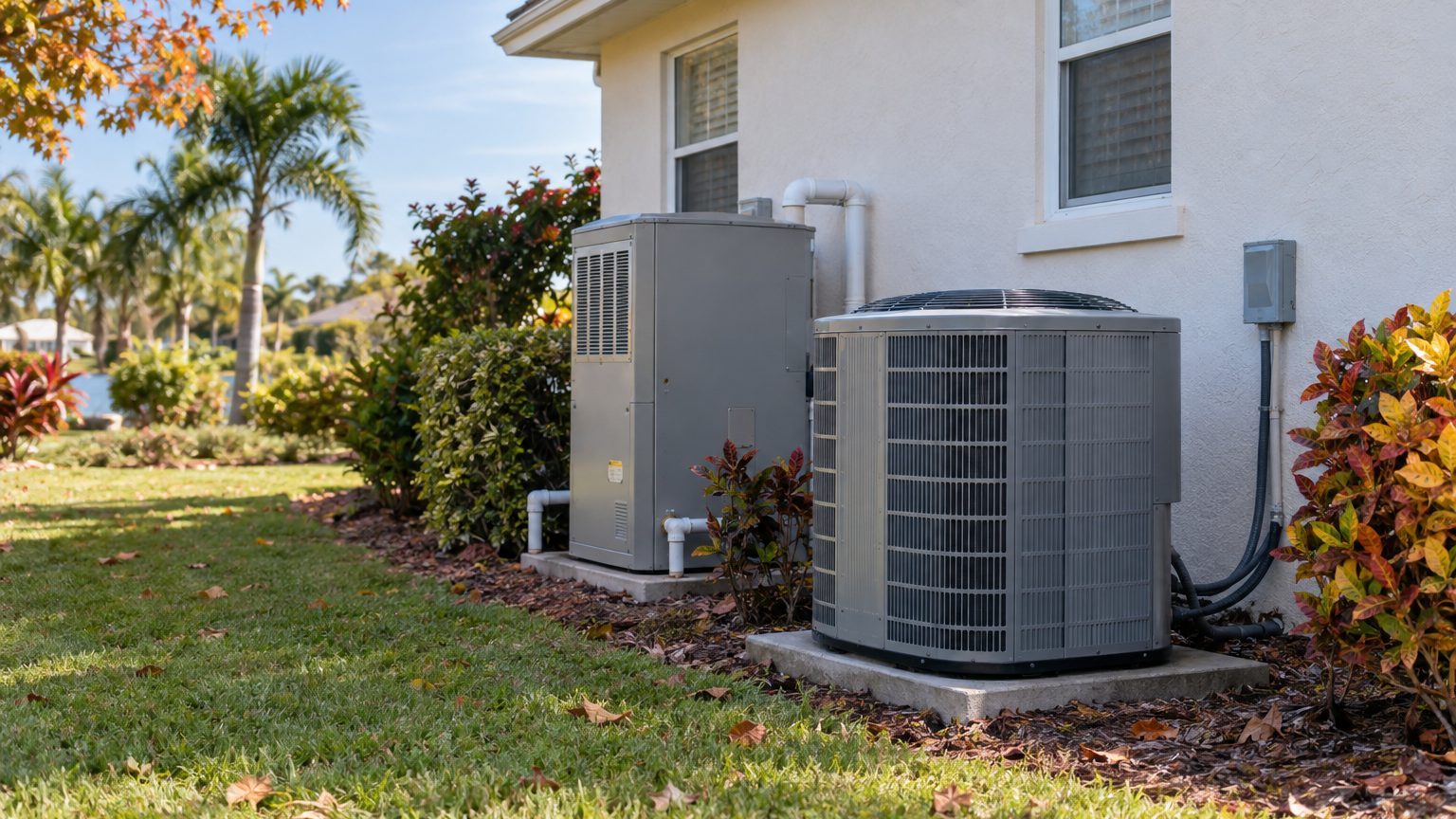

A gas furnace costs less to run in Nevada, though the margin is narrow. At 95% AFUE it delivers a million Btu of heat for $13.34, while a heat pump at 8.1 HSPF2 delivers the same amount for $16.70. That is $3.36 less with gas. Whether the gap decides anything depends on your gas service, your cooling needs and your local winter.
The short answer for Nevada
The comparison uses average residential prices from the U.S. Energy Information Administration and the efficiency levels ENERGY STAR sets for gas furnaces in Nevada (95% AFUE) and for ducted cold climate heat pumps (8.1 HSPF2). On that basis, natural gas is the cheapest way to make heat here. A heat pump comes second at $16.70 per million Btu. Electric resistance heat, the baseboard or strip kind, comes last at $39.65.
That last number matters more than it first appears. A heat pump moves heat instead of making it, and that is why it lands so far below baseboard heat on the same electric rate. Against gas it gives up $3.36 per million Btu. Against resistance heat it comes out well ahead.
These figures compare fuels on the same unit of delivered heat. They are running costs for identical output, not a yearly bill, because a yearly bill depends on the size of the house, its insulation, the thermostat and the weather. They also say nothing about what the equipment costs to buy and install, which can swing the lifetime math in either direction.
If a gas line already serves the house, the furnace is the cheaper system to run; if it does not, a heat pump beats electric resistance by a wide margin.
What each option costs to run in Nevada
| System | Efficiency used | Cost per million Btu delivered |
|---|---|---|
| Electric resistance (baseboard) | 100% efficient | $39.65 |
| Heat pump | 8.1 HSPF2 (seasonal COP about 2.4) | $16.70 |
| Natural gas furnace | 95% AFUE | $13.34 |
Electricity is priced at 13.53 cents per kWh, the average residential price for the year-to-date through July 2026 in the EIA’s Electric Power Monthly (Table 5.6.B). The gas figure comes from the EIA’s average residential natural gas price, converted at about 1,037 Btu per cubic foot, with electricity converted at 3,412 Btu per kWh. Nevada’s residential gas price also moves with the season (roughly $9 to $15 per thousand cubic feet between January and July 2026), so the gap shifts through the year. These are statewide averages. Utilities and rate plans differ, so your own bill may land above or below them.
Why does efficiency matter as much as the fuel price?
Because you pay for the fuel that goes in, and you want the heat that comes out. A 95% AFUE furnace turns 95 cents of every gas dollar into heat in the house. Resistance heat turns all of it into heat, but electricity costs more per Btu than gas, so it still loses. A heat pump with a seasonal COP of about 2.4 produces roughly two and a half units of heat for each unit of electricity, which is what pulls it down to $16.70.
The 8.1 HSPF2 used here is the ENERGY STAR cold climate minimum for a ducted split heat pump; the standard ENERGY STAR minimum for split systems is 7.8. For cold climate certification, ENERGY STAR asks for 8.5 from a non-ducted (ductless) split system. A unit well above the minimum would cost less to run than the table shows, and the closer reading of that rating is in What HSPF2 Measures, and Why Ductless Asks for More. When you compare two heat pumps, compare HSPF2 to HSPF2, since SEER2 only rates cooling.
How cold it gets, and what that does to a heat pump
Las Vegas, the reference city for Nevada climate data, records about 1,836 heating degree days a year (base 65°F). The mean daily minimum in its coldest month is 39.6°F. A heat pump spends most of those months in the kind of weather where it runs efficiently.
Cooling is the bigger load there, at about 3,720 cooling degree days. Heating degree days turn a climate into a cost, since twice the degree days means roughly twice the fuel for the same house. A low count means any heating system runs fewer hours, which also shrinks the dollar gap between fuels over a season.
What happens to a heat pump on the coldest nights?
The $16.70 figure rests on a seasonal average. Heat pump efficiency falls as outdoor temperatures drop, and in deep cold a backup carries the load, either resistance strips inside the unit or a furnace. At the Las Vegas station, check how your heat pump performs in the coldest month. Higher and more northern parts of Nevada can run far colder than the reference city, and there the seasonal average flatters the heat pump, the heating season stretches longer, and the backup runs more often.
The same logic applies to the house itself. A leaky, under-insulated building raises the heating load and the hours when the heat pump struggles, so insulation comes before any equipment decision in a colder part of the state. For how performance actually declines with temperature, read How Cold Is Too Cold for a Heat Pump. In the Las Vegas area check how a standard heat pump performs through the coldest month, while a mountain home should size the backup before choosing the system.
What homes in Nevada already heat with
The EIA’s 2020 Residential Energy Consumption Survey puts furnaces in 74% of Nevada homes as the main heating equipment. Central heat pumps are the main equipment in 7%. By fuel, natural gas heats 68% of homes and electricity heats 23%. The survey’s boiler and propane estimates were too unreliable to release, and the sample found too few oil households to report a figure, so it says nothing either way about those.
That distribution reflects what is installed, not what is cheapest to run today. It is not a recommendation. Most Nevada homes already have the ductwork and gas piping for a furnace, which is why replacing one with another is the easy path.
Among the 23% of homes heated with electricity, those that do not already have a heat pump are the group that changes the math. A house with baseboards or electric wall heaters pays $39.65 per million Btu, and a heat pump at $16.70 cuts that sharply without any new fuel line. A house with no gas service has no furnace option at all unless it adds propane or a new connection.
A hot-water boiler house would be a different conversion, since it has radiators and no ducts. A ductless heat pump is worth considering there, which is covered in Ductless or Central. Check which fuel your current system burns before you compare anything, because the choice that saves the most is often the one that replaces resistance heat. More on how the state’s seasons shape that decision is in heating season notes, and the wider picture sits in Heating a Home in Nevada.
When the other choice wins
Gas is cheaper per Btu, yet there are plenty of Nevada homes where the heat pump is the better call.
- No gas service at the address. The comparison becomes heat pump against resistance heat, and the heat pump wins.
- Air conditioning is needed anyway. Las Vegas logs about 3,720 cooling degree days, far more than its 1,836 heating degree days, so a unit that heats and cools replaces two machines.
- A dual-fuel setup suits a colder property, with the heat pump carrying mild days and the furnace taking over in deep cold.
- An older furnace still has useful years left, and a repair costs less than switching.
The air conditioning point deserves the most weight in the southern part of the state. A house that needs a new central AC unit and a new furnace in the same decade pays for two systems, where one heat pump covers both jobs. The $3.36 running-cost gap per million Btu is small beside that duplication.
An aging furnace that still heats the house reliably is a separate case. Repairs and an expected remaining life should drive that choice, and Repairing a Furnace or Replacing It walks through the decision. Keep a working furnace until it is genuinely failing, then price a heat pump alongside the replacement, especially if the house also needs air conditioning.
Common questions
Is a heat pump cheaper than a gas furnace in Nevada?
No, not per million Btu of delivered heat. A heat pump at 8.1 HSPF2 costs $16.70 while a 95% AFUE gas furnace costs $13.34, according to the EIA prices and ENERGY STAR efficiencies behind the comparison. It is cheaper than electric resistance heat at $39.65.
Does the $3.36 difference mean I will save that much a year?
No. It is a cost per million Btu delivered. Your yearly bill depends on house size, insulation, thermostat habits and local rates, so use it to compare fuels and then estimate with your own utility’s prices.
Do heat pumps work in colder parts of Nevada?
Yes, with limits. Efficiency drops in deep cold and a backup (resistance strips or a furnace) carries the coldest nights. The reference city of Las Vegas has a coldest-month mean minimum of 39.6°F, but higher elevations can run much colder.
Should I replace a working furnace with a heat pump?
Rarely on running cost alone, since gas is the cheaper fuel here. The switch makes more sense when you also need air conditioning or the house has no gas line, so waiting until the furnace fails is often a reasonable approach.