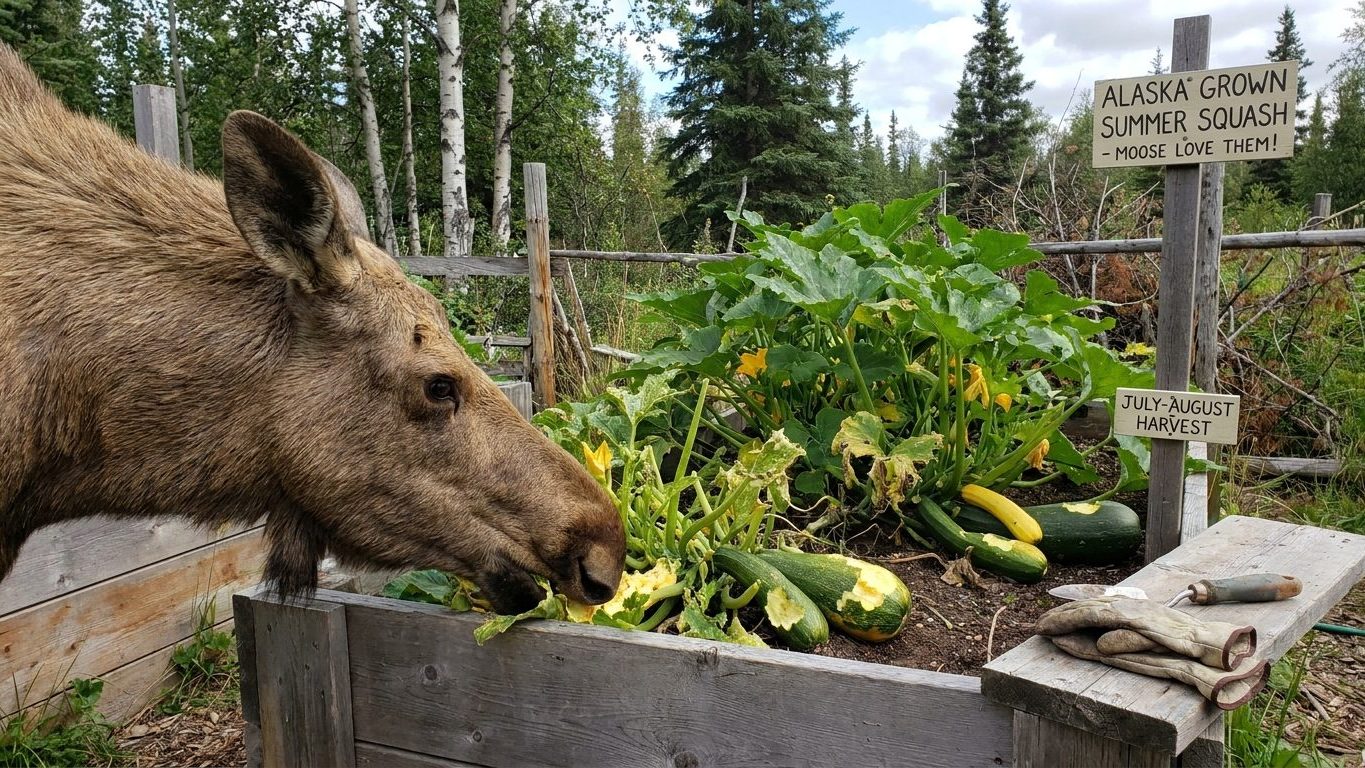

In Hawaii’s lowland gardens, summer squash mostly answers to melon fly, aphids, whiteflies, leafminers, and spider mites, all documented by University of Hawaii CTAHR Extension. These insects don’t wait for a season the way mainland gardeners think of one. Hawaii has no frost, so pest pressure tracks the plant’s own growth stage and the islands’ rain pattern instead of a calendar month.
Which pests attack Summer Squash in Hawaii
University of Hawaii CTAHR Extension documents a specific set of insects on vegetable crops across the islands, and only some of them have any business on a squash vine. Checking the underside of a leaf before assuming a pest is the fruit, not the foliage, is the habit that saves the most confusion, since several of the documented species work in different places on the plant.
Melon fly is the one that matters most on summer squash specifically. It’s a fruit fly that targets cucurbits directly, laying eggs inside young fruit, and it’s the reason a lot of Hawaii gardeners lose zucchini and yellow squash before they ever reach the kitchen. Aphids show up on new growth and the undersides of leaves, and beyond the direct feeding damage they matter because they spread plant viruses between cucurbit plants. Whiteflies, including the silverleaf, spiraling, and greenhouse types that CTAHR documents, cluster on leaf undersides, and the silverleaf species in particular is another virus vector on cucurbit crops. Leafminers tunnel visible pale trails inside squash leaves, feeding between the upper and lower leaf surfaces where nothing can reach them once they’re in. Spider mites work the same foliage, but from the outside, rasping cell contents from leaf surfaces until the leaf stipples and bronzes. Beet armyworm rounds out the group as a foliage chewer that can strip young plants when it arrives in numbers.
CTAHR’s documented list for the islands also includes several insects that have nothing to do with a squash vine, and it’s worth naming why they’re left off this page. Cabbage webworm feeds on cabbage-family leaves, not cucurbit vines, so a squash plant simply isn’t on its host list. Corn earworm targets corn ears and tomato fruit, and while it’s a serious pest in those crops, it doesn’t turn up as a cucurbit fruit feeder here. Bean fly is restricted to bean and other legume stems. Chinese rose beetle is a nocturnal chewer on roses and ornamentals like anthurium, not a vegetable-garden insect. Southern green stinkbug mainly works bean and legume pods in CTAHR’s documentation, distinct from the mites it’s sometimes listed alongside, which do feed on cucurbit foliage. None of that means Hawaii gardens have few pests. It means the list documented for this territory is specific, and padding it with insects that belong to other crops would only send a gardener chasing the wrong problem.
When each one shows up, and what it does first
Without a frost date to anchor a calendar, the more useful marker in Hawaii is the plant’s own growth stage, since squash here can go into the ground across most of the year in lowland gardens. The first two weeks after seedlings emerge is the window where aphids and leafminers establish, well before the plant has any fruit to protect, and that’s the stage where a quick look at new growth catches the least damage.
Aphids are usually the earliest arrival, clustering on tender new leaves and stems almost as soon as a seedling has true leaves. The first sign isn’t the insect itself but a curling or puckering of new growth, sometimes with a sticky residue on the leaves below where the aphids are feeding above. Leafminers follow close behind, and their damage is unmistakable once it starts: thin, winding pale trails etched into the leaf tissue, visible from either side of the leaf. Whiteflies tend to build as the plant develops more leaf canopy, since they favor the humidity and shelter a fuller plant provides; the first clue is often a small cloud of tiny white insects lifting off the underside of a leaf when it’s disturbed, followed later by a black sooty mold growing on the sugary honeydew they leave behind.
Spider mites and beet armyworm generally show up once the vine is running and putting on size, when there’s enough foliage to support either an outbreak or a feeding group of caterpillars. Mite damage starts as fine yellow stippling, easy to mistake at first for ordinary leaf aging, before the leaf takes on a bronzed, dusty look. Beet armyworm damage looks different from the start: ragged, irregular holes chewed through leaf tissue, often in a cluster where young larvae fed together before scattering. Melon fly arrives last in this sequence, because it needs fruit to attack. Once female squash flowers set fruit and the young squash begins to swell, that’s the stage where melon fly stings become the main risk, and it’s also the stage that decides whether a harvest happens at all.
Telling the damage apart from everything else
A lot of what looks like a pest problem in a Hawaii garden isn’t one. Squash foliage yellows from nutrient shortages, wilts from uneven watering, and tears from wind exposure on windward sites, and all three can resemble insect damage to someone scanning a leaf for the first time. Checking whether the damage sits on new growth or old growth is often the single fastest way to separate an insect problem from a soil or water problem, since pests like aphids and whiteflies concentrate on new tissue while nutrient shortages usually show up on the oldest leaves first.
| What you see | Likely cause | What settles it |
|---|---|---|
| Yellowing between leaf veins, oldest leaves first | Nutrient shortage (often nitrogen or magnesium) | Pattern moves from bottom of plant upward; no insects visible on close inspection |
| Wilting during the heat of the day, recovering by evening | Water stress, common given the region’s heat load | Soil feels dry at root depth; whole plant affected evenly, not just one leaf or branch |
| Thin pale winding trails inside the leaf | Leafminer tunneling | Trail is visible from both leaf surfaces and widens as it goes; no other explanation produces this pattern |
| Fine yellow speckling turning bronze, sometimes with faint webbing | Spider mites | Hold a white paper under the leaf and tap it; moving specks confirm mites rather than sun scorch |
| Torn or shredded leaf edges | Wind damage, common on exposed windward sites | Tears are ragged along leaf margins, not concentrated feeding holes, and match the direction of prevailing wind |
Fruit is its own category. A squash that collapses or rots from the blossom end usually points to a pollination or moisture problem, not an insect. A squash with a small puncture and a soft, discolored area developing around it is a stronger match for melon fly stinging, but a gardener working from a photo shouldn’t self-diagnose that call. That’s exactly the kind of sample a local extension office is set up to confirm.
What actually works here, and what is a waste of time
On a territory with no frost and a growing window that runs most of the year, timing still decides more than any single treatment does. Covering young squash plants with a physical barrier before flowers open, then removing it once female flowers appear, does more to block melon fly and leafminer damage than almost anything applied later, because it keeps egg-laying insects off the plant during the exact stage they need access to. The barrier has to come off for pollination, since squash depends on bees to set fruit, and leaving it on past flowering trades one problem for another.
Sanitation matters just as much for melon fly specifically. Picking up and destroying any fallen or visibly stung fruit, rather than leaving it on the ground or in a compost pile, cuts down the number of flies completing their life cycle in that same patch of garden. Skipping this step is one of the more common reasons melon fly pressure builds season after season in the same spot.
What tends to waste time is treating a leaf problem after the insect has already moved past that stage, or applying something broad-spectrum without knowing which pest is actually present, since a treatment aimed at a chewing insect does nothing for a sap-sucking one and can knock out the natural predators keeping aphids and mites in check. This site doesn’t recommend a specific product or active ingredient, because what’s registered for use on vegetables changes and varies by state. University of Hawaii CTAHR Extension is the source that knows what’s currently approved for this crop in this territory, and that’s the call worth making before buying anything.
Where to check this for your own county
University of Hawaii CTAHR Extension, reachable through its extension directory, is the source for what’s documented on summer squash across the islands, and each county office is the practical next step for a specific garden. Contacting the county office before buying a treatment, rather than after, is the step that keeps a gardener from guessing at what’s actually on their plant.
What’s documented at the state level doesn’t map evenly onto every yard. A garden on a windward slope with regular rainfall faces different pressure than one in a dry leeward pocket, and the islands’ range of USDA hardiness zones, from 9a up to 13a depending on elevation, reflects just how much conditions shift within a fairly small area. Melon fly pressure, whitefly buildup, and mite outbreaks all vary with that same local mix of elevation, wind exposure, and moisture, which is exactly why a state-wide list can point to the likely suspects without settling which one is actually in a particular garden.
The most useful next step for anyone seeing damage they can’t place is contacting the CTAHR office for their island or county directly, ideally with a sample or a clear photo of both the damage and the insect if one is visible. That’s the fastest route from a guess to an answer, and it’s also how the documented pest list for this territory keeps getting updated as conditions on the ground change.