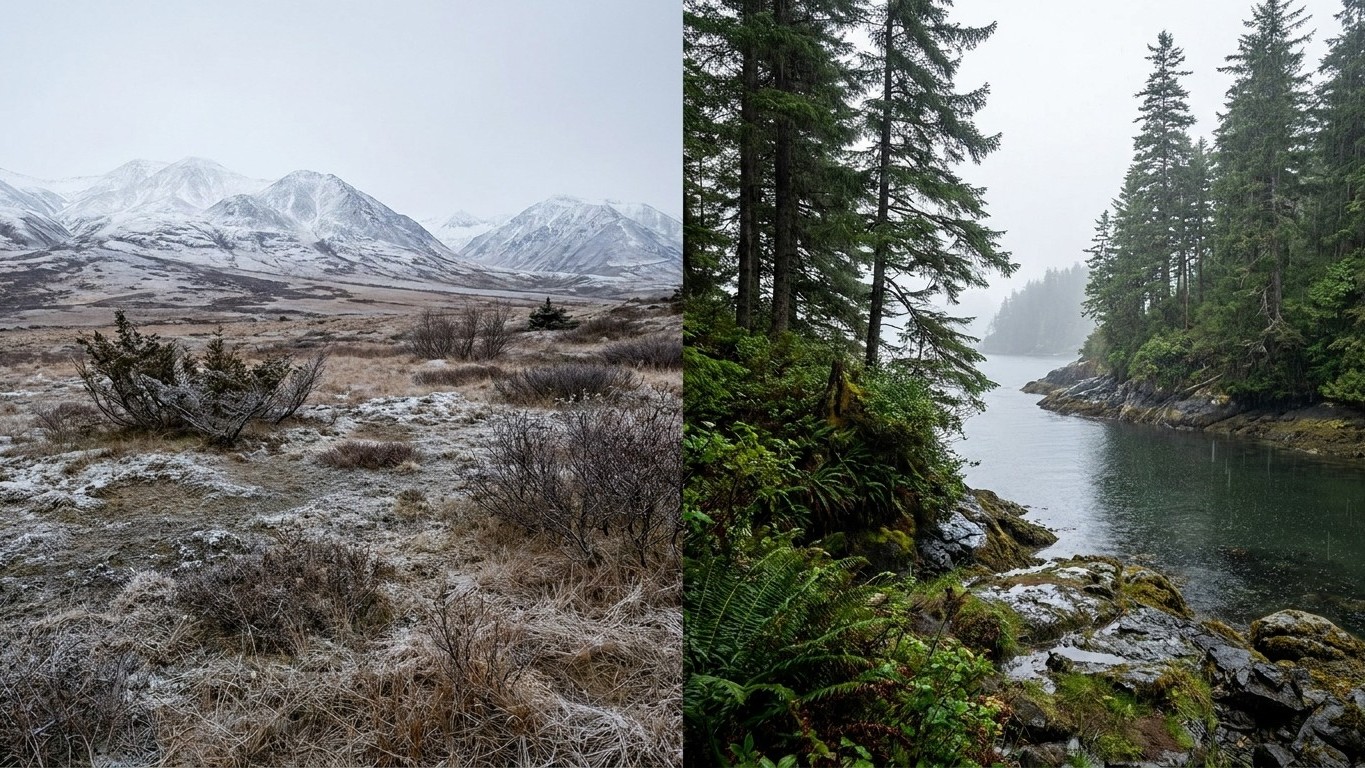

Missouri sits inside USDA zones 5b to 7b, a five-zone spread that runs from the cold shoulder near Iowa down through the Ozarks toward Arkansas. Of the 65 Trees, Shrubs and Perennials documented on this site, 59 are hardy across that entire range, six are hardy in only part of it, and none fail everywhere. The real question for most Missouri gardeners isn’t survival at all. It’s which of those six plants your particular county falls on the wrong side of.
What will not survive a winter in Missouri

Start with the number that matters most: of the 65 landscape plants this site tracks against Missouri’s 5b-7b hardiness range, zero fail across the whole state. That’s not a claim that Missouri can grow anything. It just means the plant list built for this territory was already filtered to species that clear the state’s cold floor somewhere within its borders.
That’s a different statement than “hardy everywhere is comfortable everywhere.” The USDA hardiness system, built from the reference station’s average annual extreme minimum temperature, measures one thing: how cold it gets in a bad winter. It says nothing about July. A plant rated hardy to zone 7b tolerates southern Missouri’s mild winters just fine, but the upper end of a hardiness range is frequently a heat ceiling in disguise, not a cold one, showing up as scorched leaves or rot in a wet, humid August rather than a frozen stem in January. Worth remembering before assuming a plant on the “hardy everywhere” list will look happy everywhere.
So this section, unusually, has no failure table to show. The 65 plants documented here were already screened against Missouri’s zone range before this page was built, and the crossing turned up no plant that fails across the state’s entire 5b-7b span. What the crossing did turn up is a middle group, plants that clear part of Missouri and not the rest, and that’s the more useful list for anyone gardening near the state’s northern or southern edge.
None of this means every plant sold at a Missouri nursery is safe. It means that among the 65 species this site has cross-checked against the state’s own hardiness range, the failure count came back at zero. A shopper working from a different list, or buying something rated for zone 8 and up because it looked good on a shelf, is outside the scope of what these facts can confirm one way or the other.
The plants that work in part of the state and not the rest
Six plants out of the 65 documented here are hardy in only part of Missouri’s zone range, and this is where a state-wide answer stops being honest. A reader gardening in the state’s coldest corner (zone 5b, roughly the northern tier) and a reader in the warmest corner (zone 7b, deep in the Ozark foothills) are not getting the same verdict on these six, and flattening it into one yes or no would be wrong for whichever one loses out.
Three of the six fail at the state’s cold end. Hydrangea macrophylla, Lagerstroemia indica (crape myrtle) and Magnolia grandiflora are all listed as not hardy in zone 5b, meaning they clear zones 6a through 7b but come up short in Missouri’s coldest pocket. Ficus carica (fig) fails across a wider cold-and-middle band, zones 5b, 6a and 6b, leaving it reliable only in the state’s 7a and 7b areas.
Two fail at the opposite end. Syringa vulgaris (common lilac) is not hardy in zone 7b, meaning it holds up through 5b to 7a but struggles in Missouri’s warmest slice. Weigela florida fails in both 7a and 7b, so it’s a plant for the cooler two-thirds of the state and not the warm southern edge.
| Plant | Hardiness range | Missouri zones it misses |
|---|---|---|
| Ficus carica (fig) | varies by cultivar | 5b, 6a, 6b (works in 7a-7b only) |
| Hydrangea macrophylla | varies by cultivar | 5b |
| Lagerstroemia indica (crape myrtle) | varies by cultivar | 5b |
| Magnolia grandiflora | varies by cultivar | 5b |
| Syringa vulgaris (common lilac) | varies by cultivar | 7b |
| Weigela florida | varies by cultivar | 7a, 7b |
Finding out which of these zones covers your own address takes one lookup, not a guess. This site’s insulation page for Missouri carries the county-level zone map for the state, and matching your county there against the lists above settles which of these six are safe bets and which aren’t.
The soil and the summer they will be planted into
Missouri’s representative soil, the Menfro series, is an Alfisol built under forest cover: a silt loam running about 4 percent sand, 19 percent clay and 77 percent silt, with surface pH near 6.2 (slightly acid) and organic matter around 2.0 percent. It’s well drained and holds nutrients reasonably well, which is a favorable starting point for woody roots. Winter wet, not winter cold, is what kills more perennials and young shrubs in a season, and a soil this silt-dominant drains steadily rather than pooling, provided nothing has compacted it.
That last caveat matters. The Menfro figures describe a mapped, undisturbed surface horizon, not the compacted, graded, or fill-heavy dirt around a newer house. A builder’s scraped lot or a low spot that collects runoff can behave nothing like the series values above, so a soil test on the actual planting site is worth more than any state average, including this one.
Summer rainfall across Missouri averages about 14.1 inches over June, July and August, out of 39.3 inches for the year, with August running driest at 4.24 inches (June 5.25, July 4.58). That’s a real number, but it isn’t a watering schedule and it isn’t a humidity reading on its own. The same inch of rain behaves differently depending on what it lands on: a silty, well-drained soil like Menfro tends to let water move through at a steady pace rather than sitting on the surface or vanishing in an afternoon, which is a different story than the same rainfall on heavy clay or loose sand. Cross the rainfall figure with your own soil texture before deciding a new planting needs supplemental water, and treat a rain gauge on the actual property as more useful than either number alone.
When to plant, here
Missouri’s average last spring frost falls between April 6 and April 20, and the average first fall frost runs October 18 to October 29, both figures from the same reference station used for the state’s temperature normals. Those two windows aren’t just calendar markers. They’re the boundaries a woody plant’s roots have to work inside before it’s asked to leaf out into a possible late freeze, or to face a hard frost with a root system that hasn’t had time to establish.
Spring planting, after that April frost window closes, gives roots a full growing season to spread before the plant has to survive its first winter in the ground. The tradeoff is summer heat arriving fast on top of a still-shallow root system, which raises watering needs early. Fall planting, once the heat breaks but before that October-to-late-October frost date, lets roots grow in cooler, often damper soil without the stress of top growth, but it hands the plant less time to establish before winter, especially in the state’s coldest zone.
| Window | Best suited to | Main risk |
|---|---|---|
| Spring (after April 6-20) | Most trees, shrubs, and perennials; a full season to establish | Late freeze on new growth; higher summer watering demand |
| Fall (before October 18-29) | Perennials and many shrubs that root well in cool soil | Less time to establish before frost, especially in zone 5b areas |
In the state’s coldest pocket (zone 5b, roughly the northern tier), that fall window closes fastest, leaving the least runway between planting and the first hard freeze. And these frost dates are averages for one reference station over 1991-2020, not a guarantee for any single spring or fall. Whatever a plant’s mature drought tolerance rating says, it describes an established root system. A newly planted tree or shrub needs regular water through its first full season regardless of how drought-tolerant it becomes later.
Where to read about each one
Among the trees hardy across all of Missouri’s zone range are Acer rubrum, Acer saccharum, Amelanchier canadensis, Betula nigra, Carpinus caroliniana, Cercis canadensis, Cornus florida, Ginkgo biloba, Juniperus virginiana, Liquidambar styraciflua, Nyssa sylvatica, Picea abies, Pinus strobus, Platanus occidentalis, Quercus alba, Quercus rubra, Thuja occidentalis and Tilia americana. Lagerstroemia indica and Magnolia grandiflora, covered above as partial fits, round out the tree list for warmer zones only.
Shrubs hardy statewide include Aronia arbutifolia, Buxus sempervirens, Clethra alnifolia, Fothergilla gardenii, Hydrangea paniculata, Ilex glabra, Ilex verticillata, Itea virginica, Kalmia latifolia, Physocarpus opulifolius, Spiraea japonica and Viburnum dentatum, with Hydrangea macrophylla, Syringa vulgaris and Weigela florida as the zone-limited exceptions detailed earlier.
On the perennial side, statewide picks include Achillea millefolium, Amsonia hubrichtii, Asclepias tuberosa, Baptisia australis, Anacis verticillata, Echinacea purpurea, Heuchera americana, Iris sibirica, Lavandula angustifolia, Monarda didyma, Phlox paniculata, Rudbeckia fulgida, Salvia nemorosa and Hylotelephium spectabile. This site also documents a separate group of fruiting plants for Missouri, tracked the same way but kept apart from the ornamental list above.
All of these hardiness ranges come from the North Carolina Extension Gardener Plant Toolbox, a university extension database, crossed here against Missouri’s own 5b-7b zone range. That’s a distinct dataset from the apple variety adaptation zones held elsewhere on this site: those describe how fruit varieties perform across climate zones, not whether a plant survives winter, and the two shouldn’t be read as interchangeable numbers.