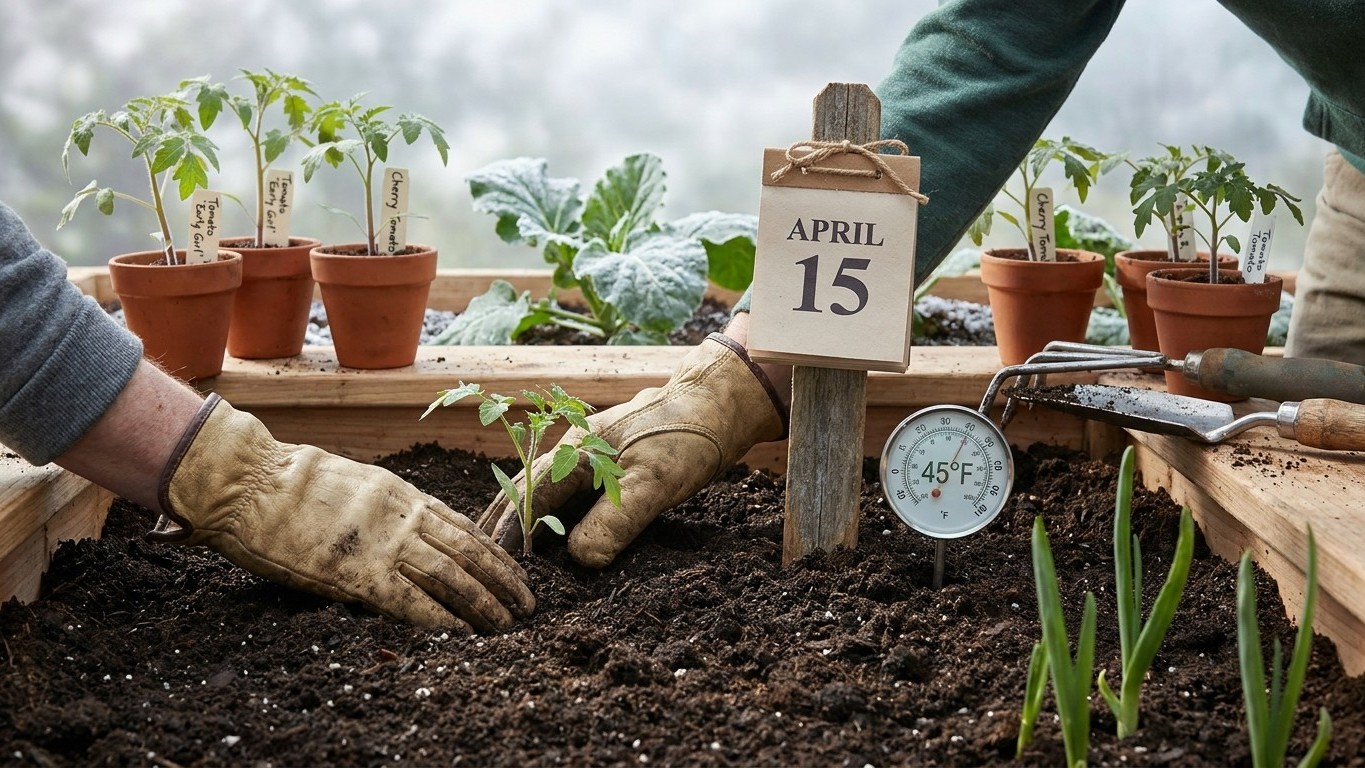

Missouri’s growing conditions swing hard between a short, cool spring and a long, punishing summer, and that swing is exactly what shapes what you can grow here. The state’s hardiness zone, frost dates, and heat load set the real boundaries. Here is what the numbers actually allow, and what they rule out before you plant a single seed.
How long your season really is

Missouri sits in USDA Hardiness Zone 5b-7b, a range wide enough to cover a lot of ground, literally. That figure comes from the USDA Plant Hardiness Zone Map, built on one variable only: the average annual extreme minimum temperature. It tells you what perennials and woody plants, from fruit trees to long-lived beds like those covered in Growing Asparagus in Missouri, can survive a normal winter here, not when to plant tomatoes.
The dates that matter more for annual vegetables are the frost dates. Around the Kansas City reference station, the average last spring frost falls between April 6 and April 20, and the average first fall frost lands between October 18 and October 29. Do the math on the shortest and longest combinations of those windows, and you get a frost-free season running roughly 181 to 206 days, call it six to seven months depending on where you are and how the year behaves.
That number is the one that decides everything else. A 180 to 205 day window is decent by national standards, but it is not infinite, and it is not guaranteed. Crops that need a very long run from seed to harvest, think certain dry beans, some pumpkin varieties bred for size over speed as detailed in Growing Pumpkins in Missouri, or late-maturing sweet potato slips, are pushing their luck if they need the full window with no margin for a late spring or an early fall. The same logic applies to Growing Potatoes in Missouri, where timing the planting date correctly determines whether the crop matures before the heat or frost cuts it short, and to cooler-season roots covered in Growing Carrots in Missouri, where the same frost-date math shapes when to sow. The margin runs the other way too for a hardy root that tolerates cold well past the first frost, as Growing Parsnips in Missouri shows, since that crop can stay in the ground long after other roots have to come out. A warm-season crop sits at the opposite end of that spectrum, since Growing Sweet Corn in Missouri depends on a solid run of frost-free, heat-loaded days to reach a good harvest, with no cold tolerance to fall back on if the window closes early. A similar cold-hardy pattern applies to another root crop, since Growing Beets in Missouri uses that same frost-date window to plan both a spring sowing and a fall crop. The same cold tolerance shows up above ground as well, since Growing Spinach in Missouri relies on that same frost-date math to time both an early spring crop and a second planting that survives well into fall. This is exactly why knowing When to Carve a Pumpkin in Missouri matters, since planting dates for those long-season pumpkins have to be timed against the fall frost, not just the harvest goal. In a shorter year, that margin disappears fast.
The bigger point is one gardeners skip past too often: these are averages, not promises. NOAA’s 30 to 70 percent freeze probability band means the dates above cover the years in the middle. Half of all years run colder or later than that band on one end or the other. Planting warm-season crops on the average last frost date is a coin flip, not a plan, and that risk is especially real for heat-loving transplants like peppers, where a late cold snap can set growth back for weeks; see Growing Peppers in Missouri for how that timing plays out. If you want a safer margin, especially for anything transplanted rather than direct-seeded, treat the later end of the spring range and the earlier end of the fall range as your working assumptions, not the midpoint.
One more wrinkle worth naming: the Kansas City reference station sits well north of the state’s midpoint, and the downtown station there runs about five days earlier in spring than the metro average. Southern Missouri is milder again. None of that changes the state-level range much, but it explains why a neighbor two counties south might already be planting while you’re still watching the forecast.
What the summer does to a garden here
Heat gets treated as a bonus in most garden advice, more sun, more growth, more tomatoes. That is not how it works past a certain point. Kansas City averages 32.7 days a year at or above 90F, and that number is not a curiosity, it is a limit. Above roughly 90F, tomato flowers drop without setting fruit, lettuce and other cool-season greens bolt to seed, and anything that prefers cool soil and mild air simply stalls or fails outright.
Thirty-two days above 90F, concentrated in July and August, means Missouri gardens do not run on one long, steady growing season. They run on two shoulder seasons, a spring push and a fall push, with a stretch in the middle where cool-season crops are off the table entirely and warm-season crops are working overtime just to survive, let alone thrive. Tomatoes planted for a June harvest often coast through the worst of the heat on fruit already set, but a second planting timed for fall needs to go in while it still feels like summer, precisely so it matures before the first frost window in October.
Winter sets the other boundary. The coldest month here averages a daily minimum of 19.5F, that is the mean low temperature across the coldest month, not a record low and not a casual average. It is the figure that decides whether a perennial, a shrub, or an overwintering crop actually survives here, and it lines up with why the hardiness zone sits where it does. A plant rated for zone 6 protection is gambling against nights that regularly dip into the high teens, not just the occasional cold snap.
Put the two together and the shape of a Missouri garden year becomes clear: plant early enough to beat the heat wall in June and July, hold or replant through the hottest stretch with heat-tolerant choices or simply less activity, then push a second round of cool-season crops into that long fall window before the October frost arrives.
What tends to go wrong in Missouri
The University of Missouri Extension’s IPM program flags a handful of pests that show up in home gardens across the state every year, and a few of them account for most of the damage gardeners actually report. The Japanese beetle is the one most people notice first, arriving in early-to-mid summer and skeletonizing leaves on roses, grapes, and a wide range of garden plants down to the veins, leaving a lacy, see-through look behind.
Squash vine borer works earlier and quieter. It shows up in late spring through early summer, and its larvae tunnel into squash and pumpkin stems from the inside, so a plant can look fine one week and collapse suddenly the next. The squash bug runs on a similar timeline and targets the same crops, sucking sap from leaves and vines until they wilt and blacken.
Later in summer, the tomato hornworm and its close relative the tobacco hornworm show up on tomato and pepper plants, stripping foliage fast enough that a well-grown plant can lose most of its leaves in a matter of days. Extension notes also flag cucumber beetles, bagworms, spider mites, brown marmorated stink bugs, and the hunting billbug as pressures Missouri gardeners deal with, though the calendar mentions on some of these are lighter and pressure varies a lot by region and by year.
None of this is a full inventory, and it is not a treatment schedule either. It is a short list of what a Missouri gardener is likely to actually encounter, worth recognizing early rather than misdiagnosing after the damage is done.
Where to check before you plant
Everything above is a state-level average, and Missouri is not a small state to average across. It spans several degrees of latitude and crosses more than one hardiness zone, which means a planting calendar built for the middle of the state can run three weeks off at either edge, too early for the north, too late for the south.
That gap is exactly what a land-grant extension service exists to close. The University of Missouri Extension publishes region-specific planting guidance, pest alerts tied to real-time reports, and soil testing services that a state-wide article like this one cannot replicate. Beyond the state office, county extension offices track local frost patterns, local soil conditions, and local pest pressure at a resolution no set of averages can match.
Before committing a planting date or a variety choice based on the numbers here, a quick call or visit to your county office is worth more than another article. Your county office will tell you what it allows on your specific piece of ground.
Three Crops Worth Planning Around
Missouri’s swing between hard winter cold and brutal summer heat doesn’t just shape what you can grow — it dictates exactly when you have to act, down to specific weeks on the calendar. Take garlic: the crop actually needs a stretch of cold, six to eight weeks below 40°F, to split into a proper bulb instead of one fat round, and Missouri’s frost timing makes that a near-guarantee rather than a gamble. Growing Garlic in Missouri lays out the planting dates and varieties that work with that chill instead of against it. Tomatoes run on the opposite clock, hinging on the last spring freeze — usually April 6 to April 20 around Kansas City — since a late frost will kill them outright; Growing Tomatoes in Missouri covers the planting dates, varieties, and local pests that follow from that window. And then there’s the lawn, caught between 90°F-plus days that fry cool-season grass and winter lows near 19.6°F — a spread that Missouri Lawn Care walks through, from what to plant to when to feed it.