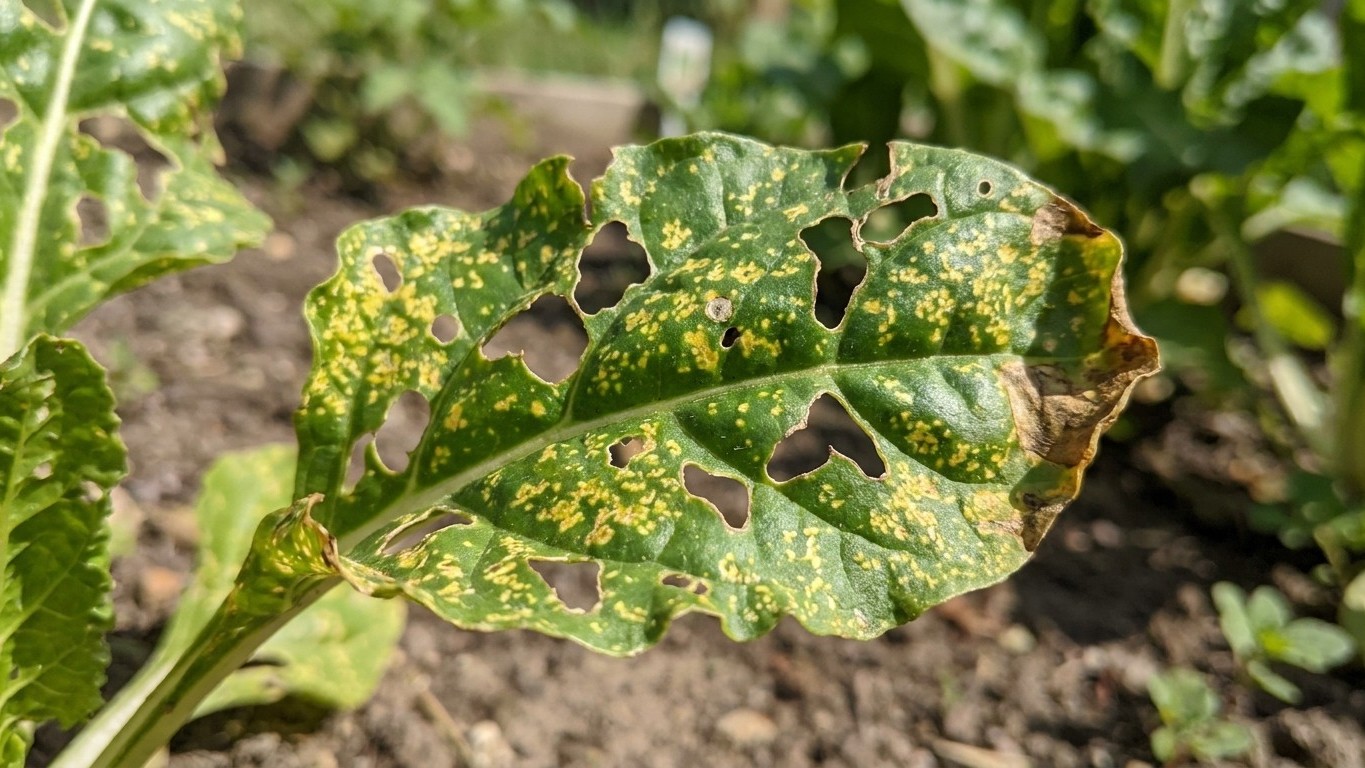

University of Nevada, Reno Extension documents nine insect pests statewide, but only five of them actually feed on summer squash: squash bugs, aphids, shield bugs (stink bugs), earwigs, and, in outbreak years, Mormon crickets. Squash bugs show up first, right as vines start to run; the others follow as the plant sets fruit and the season heats up.
Which pests attack summer squash in Nevada

University of Nevada, Reno Extension lists nine species for the state: aphids, cabbage moth, earwigs, elm leaf beetle, Japanese beetle, Mormon cricket (Anabrus simplex), shield bugs (stink bugs), squash bug (Anasa tristis), and tomato hornworm. Not all of them belong in a squash bed, and a gardener who spots the wrong one on a leaf and treats for it wastes a week chasing a problem that was never there.
Squash bug is the one built for this crop. It feeds by piercing stems and leaf veins with a needle-like mouthpart, and a heavy infestation can collapse a vine within days. Aphids follow close behind, clustering on new growth and the undersides of leaves, where they multiply fast once nights warm up. Shield bugs, the stink bug family, puncture developing fruit and leave sunken, discolored spots that never heal. Earwigs are the sleeper pest here: they mostly scavenge, but they will chew ragged holes in seedlings and tunnel into a squash blossom or a young fruit if the population is dense enough. Mormon cricket is the wild card. It is not a squash specialist, it is a rangeland insect that migrates in bands during outbreak years, but when a swarm crosses a garden it strips whatever is green, squash included.
Four species on the extension list have no business in this conversation. Cabbage moth targets the brassica family, cabbage, broccoli, kale, and its larvae have no interest in cucurbit leaves. Elm leaf beetle, as the name says, feeds on elm foliage and bark, not vegetable gardens. Japanese beetle chews ornamentals, roses, and turf grass roots as grubs; it is not a documented cucurbit feeder in this state’s extension records. Tomato hornworm is a nightshade specialist, tomato, pepper, eggplant, and it will strip those plants bare while ignoring a squash vine two feet away. University of Nevada, Reno Extension is the only source used here, and if a pest is not on its list for this territory, it does not belong in this article.
When each one shows up, and what it does first
Nevada’s frost-free window is not one date. Las Vegas clears its last freeze by early February in an average year, while Reno, Carson City, and anywhere at elevation stay frost-prone months longer into spring and start freezing again months earlier in fall. That range matters here because pest timing follows the plant’s growth stage, not a date on a calendar, so “two to three weeks after transplanting” is a more useful marker than any named month.
Squash bugs are usually the first sign of trouble. Adults overwinter in garden debris and move in as soon as young vines put out their first true leaves, laying clusters of bronze eggs on the underside of foliage. The first visible clue is rarely the insect itself; it is wilting that starts at the leaf edges and spreads inward, a symptom that looks like drought stress until the eggs turn up on a closer look.
Aphids build more gradually, tracking the rise in daytime heat rather than a fixed week after planting. The reference station for this state averages 131.3 days a year at 90°F or hotter, and that heat load is what drives aphid reproduction into overdrive once it arrives. The first sign is usually a sticky residue on leaves, honeydew, followed by curling new growth and, sometimes, ants patrolling the stems to farm the aphids for that sugar.
Shield bugs and earwigs both arrive once the plant is flowering and setting fruit, later in the sequence than squash bugs or aphids. Shield bug damage shows up as a cluster of pale, slightly sunken dimples on the fruit skin, often before the bug itself is spotted. Earwig damage looks more like random nibbling, small irregular holes in a blossom or a young fruit’s surface, usually discovered at night with a flashlight since the insects hide in soil cracks and mulch during the day.
Mormon cricket does not follow the plant’s calendar at all. It follows its own population cycle, and in outbreak years bands move through in late spring to early summer, stripping a garden in a single pass rather than building damage gradually like the other four.
Telling the damage apart from everything else
Squash grows fast and shows stress fast, which means a lot of things that are not insects get blamed on insects. Nevada’s summer climate makes that mix-up more likely, not less: this state’s reference station averages only about 0.7 inches of rain across June, July, and August combined, with June running as dry as 0.04 inches, so a plant that is simply thirsty can wilt in a way that looks a lot like squash bug damage.
Heat itself is another false alarm. With well over a hundred days a year at 90°F or above at the reference station, squash leaves commonly wilt at midday and recover by evening, a normal heat response that has nothing to do with pests. The way to tell it apart is timing: wilt that vanishes overnight is heat, wilt that stays limp at dawn points toward squash bug feeding or a vascular disease.
| Symptom | Likely cause | What tells them apart |
|---|---|---|
| Leaves wilt at midday, recover by evening | Heat stress, normal in high-heat summers | Plant looks fine again by morning |
| Leaves wilt and stay limp overnight | Squash bug feeding or vascular disease | Check leaf undersides for bronze egg clusters |
| Yellow, curled new growth with sticky residue | Aphids | Sticky honeydew and visible clusters on stem tips |
| Sunken pale dimples on fruit skin | Shield bug (stink bug) feeding | Damage stays localized, not spreading like rot |
| Ragged holes in blossoms or young fruit | Earwigs | Search soil and mulch at night with a flashlight |
| Yellowing between leaf veins, older leaves first | Nutrient deficiency, not a pest | Younger leaves stay green while older ones fade |
Mechanical damage, a snapped vine, a bruised fruit from a foot or a hose, can also mimic pest feeding at a glance, but it lacks the pattern: no eggs, no residue, no cluster of similar marks nearby. When the cause is not obvious, a county extension office can look at a sample or a photo and rule out disease before anyone reaches for a treatment aimed at the wrong problem.
What actually works here, and what is a waste of time
On a crop this fast-growing, the calendar matters more than any single treatment. A floating row cover set over young transplants before flowering, then pulled once blossoms open so pollinators can reach them, is the single most reliable move against squash bugs and earwigs because it blocks the adults from laying eggs during the exact window when the plant is most vulnerable and least able to compensate for lost leaf tissue.
Hand-picking works too, and it is not a lesser option for a home garden this size. Squash bug egg clusters are easy to spot on the underside of leaves and easy to crush or remove before they hatch; checking twice a week during the early growth stage catches most of a season’s population before it builds. Clearing garden debris and old vines at the end of the season removes the overwintering shelter that lets squash bugs return the following year in bigger numbers.
What tends to fail is timing treatment to the calendar instead of to the plant. Nevada’s frost-free window swings by months between the low desert and the higher valleys, so a neighbor’s schedule from a different part of the state, or even a different elevation nearby, can be weeks off from what a given garden needs. Waiting until fruit already shows stink bug damage is also too late for much to help, since the harm is done at the moment of feeding, not after. And treating for Mormon cricket the way one would for a resident garden pest rarely makes sense either, since outbreak years are driven by regional population cycles, not by anything happening in one backyard.
This site does not recommend specific products or active ingredients, since what is registered for home garden use changes and varies by state. That question belongs with the extension service, which tracks current label approvals for Nevada.
Where to check this for your own county
University of Nevada, Reno Extension, at extension.unr.edu, is the source for everything in this article, and it is also the right first stop for anything specific to one garden. The state’s USDA hardiness range runs from 4a up near the coldest mountain valleys to 10a in the low desert around Las Vegas, and a pest population that is heavy in one part of that range can be minor or absent in another.
A county office can confirm what is actually active locally this season, not just what is documented statewide. Statewide records say a species exists somewhere in Nevada; they do not say it is in a particular backyard, on a particular street, in a particular year. That gap is exactly what a local office fills, often with a quick look at a photo or a plant sample brought in during office hours.
The next useful step is not a broader search online. It is a call or a visit to the county extension office covering the property, with a description of what is showing up on the plant and, if possible, a leaf or a sample in hand. That single conversation settles more than another hour of comparing symptoms to a table ever will.