
Oak, hickory, and hard maple top the list for one simple reason: density. The heavier and denser the wood, the more energy it packs per log, and the longer it burns before you need to feed the stove again. Softwoods like pine and fir light fast and burn hot in a hurry, but they burn out just as quickly and leave more creosote behind. Species matters more than most people think when you’re stocking a woodshed for winter.
What Makes One Species Burn Better Than Another

Heat output comes down to wood density and moisture content, full stop. A cord of dense hardwood like shagbark hickory can produce roughly 27 million BTUs when properly seasoned, according to firewood BTU comparisons compiled by university forestry extension programs. A cord of white pine, by contrast, produces closer to 15 million BTUs. Same volume of wood, nearly double the heat difference. That gap is why a homeowner burning oak might load the stove twice a day while a neighbor burning pine is stuffing it every three hours.
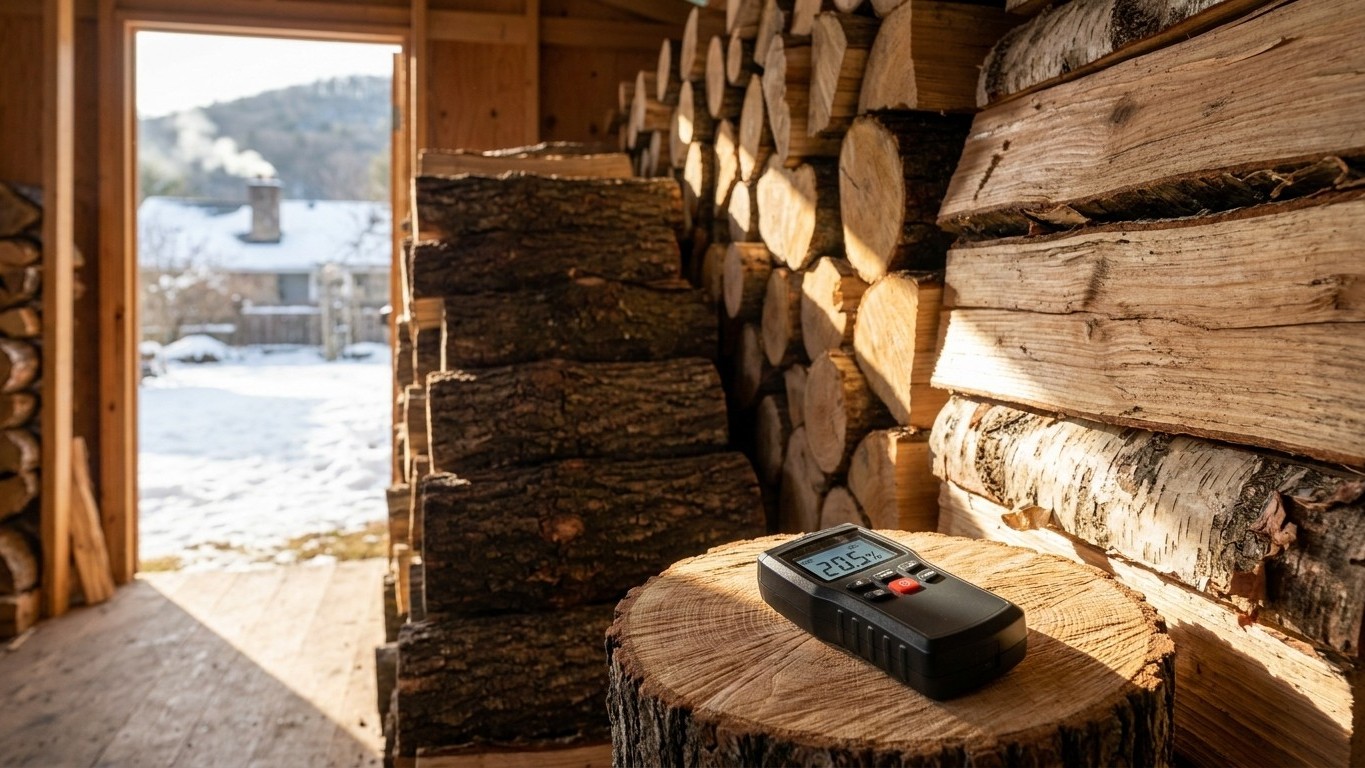
Moisture matters just as much as species. Freshly cut, or “green,” wood can be 45% water by weight. Burning it wastes energy boiling off that water instead of heating your living room, and it’s the single biggest cause of chimney creosote buildup. Seasoned wood, dried for six months to a year depending on species, should sit around 15-20% moisture. A cheap moisture meter from any hardware store settles the debate in seconds and costs less than a single delivered bundle of firewood.
Resin content is the third variable. Softwoods like pine, spruce, and fir carry more pitch and sap, which is why they crackle, pop, and throw sparks. That resin also builds creosote faster in a chimney flue, which is the main reason chimney sweeps warn against using softwood as your sole heat source in a wood stove or fireplace insert.
Best Hardwoods for Heat: Oak, Hickory, Maple, and Ash
Oak sits near the top of most regional firewood charts, and for good reason. It’s dense, widely available across the eastern and midwestern United States, and splits reasonably well once seasoned. The catch is drying time. Oak logs can take a full 12 months, sometimes longer, to season properly because the wood is so tight-grained that moisture escapes slowly. Buy oak a year ahead if you can, not the week before the first frost.
Hickory burns hotter than oak in most comparisons and has long been favored by smokehouse cooks for the same reason it works in a stove: consistent, long-lasting heat. It’s heavier to split by hand, though, and less common outside the eastern half of the country. If you’ve got a hickory tree coming down anyway, it’s worth every bit of the extra effort to buck and split it.
Sugar maple and hard maple deliver heat output close to oak with noticeably easier splitting and a shorter seasoning window, often six to nine months. Ash rounds out the top tier and has become more available in recent years, unfortunately for a grim reason: the emerald ash borer has killed tens of millions of ash trees across the Midwest and Northeast, leaving standing dead wood that many homeowners are cutting for firewood. Ash seasons faster than oak or hickory and splits cleanly, making it a practical choice if you have access to it.
Mid-Tier Hardwoods Worth Burning
Birch, cherry, and beech fall into a solid middle category. Birch lights easily thanks to its papery, oil-rich bark, burns hot, but goes through logs faster than oak, so you’ll need more volume for the same heating duration. Cherry brings decent heat output with a pleasant, mild aroma, though it’s often prized more for smoking meat or furniture lumber than for the woodpile. Beech burns comparably to maple but can be harder to find commercially outside the Appalachian and Northeast regions.
Softwoods: When They Make Sense and When They Don’t
Pine, fir, spruce, and cedar aren’t bad firewood, they’re just the wrong tool for an all-night burn. These species season fast, often in three to six months, and split easily even for beginners. That makes them genuinely useful for kindling, for shoulder-season fires in spring and fall when you don’t need maximum heat, or for outdoor fire pits where creosote buildup in a chimney isn’t a concern.
The mistake is relying on softwood as a primary winter heat source in an enclosed wood stove or fireplace with a flue. The higher resin content deposits creosote on chimney walls faster than hardwood does, and creosote buildup is the leading cause of residential chimney fires according to fire safety data tracked by the U.S. Fire Administration. If softwood is what’s available, burn it hot and burn it often, and get the chimney inspected at least once a season rather than the standard once a year.
Cedar deserves a specific mention because it’s popular for its pleasant smell, but it throws sparks aggressively and burns fast even by softwood standards. It’s a fine choice for a controlled outdoor fire pit on a calm evening, less ideal indoors where sparking against a glass stove door or open hearth screen becomes a real concern.
Species to Avoid or Use With Caution
Not every tree in the backyard belongs in the woodpile. A few species cause specific, documented problems:
- Elm is stringy and notoriously difficult to split, even with a hydraulic splitter, because of its interlocking grain.
- Cottonwood and willow are low-density woods that burn fast, produce little heat, and leave excessive ash for the volume of wood consumed.
- Black locust is actually excellent firewood with BTU output rivaling oak, but it’s often mistakenly lumped in with “junk” trees, so it’s worth recognizing rather than avoiding.
- Painted, treated, or pressure-treated lumber should never go in a stove or fireplace; burning it releases chemical compounds including arsenic compounds from older treated lumber, a genuine health hazard in an enclosed space.
- Poison sumac, poison oak, or poison ivy vines tangled around firewood can release irritating oils into the smoke, which has sent people to the emergency room with respiratory reactions.
Softwoods with heavy pitch, like some pine varieties, aren’t dangerous so much as inefficient when used exclusively. The real hazard category is anything treated, painted, or coated with chemicals, plus anything visibly moldy, which can trigger respiratory issues when burned in a home with poor ventilation.
Regional Availability Changes the Calculation
What “burns well” means depends partly on where you live. In the Pacific Northwest, Douglas fir and madrone are common choices, with madrone actually performing closer to a hardwood despite regional classification quirks. In the Southeast, oak and hickory dominate supply, while in the Upper Midwest and Northeast, ash has become unusually abundant and cheap because of the borer infestation mentioned earlier. Buying locally sourced, seasoned wood supports regional suppliers. Also, reduces the risk of transporting invasive pests like the emerald ash borer or spotted lanternfly across state lines, something many state agriculture departments actively discourage through firewood movement restrictions.
Checking with a local extension office or state forestry department before buying firewood from outside your county is a small step that prevents a much bigger problem. Several states, including Michigan, Wisconsin, and New York, enforce specific rules limiting how far firewood can travel before it’s sold or burned, precisely because pests hiding in bark can spread faster than most buyers realize.
A Practical Buying and Storage Note
Whatever species ends up in the woodpile, seasoning and storage do more for burn quality than most people give them credit for. Stack wood off the ground on pallets or rails, cover the top while leaving the sides open to airflow, and give it a full season, spring through fall at minimum, before burning. A moisture meter reading under 20% is the real test, not how long the wood has “looked” dry sitting outside. Mixing a dense hardwood like oak with a faster-igniting species like birch or pine kindling is a common and effective strategy: fast heat to get the stove going, sustained heat to carry through the night.