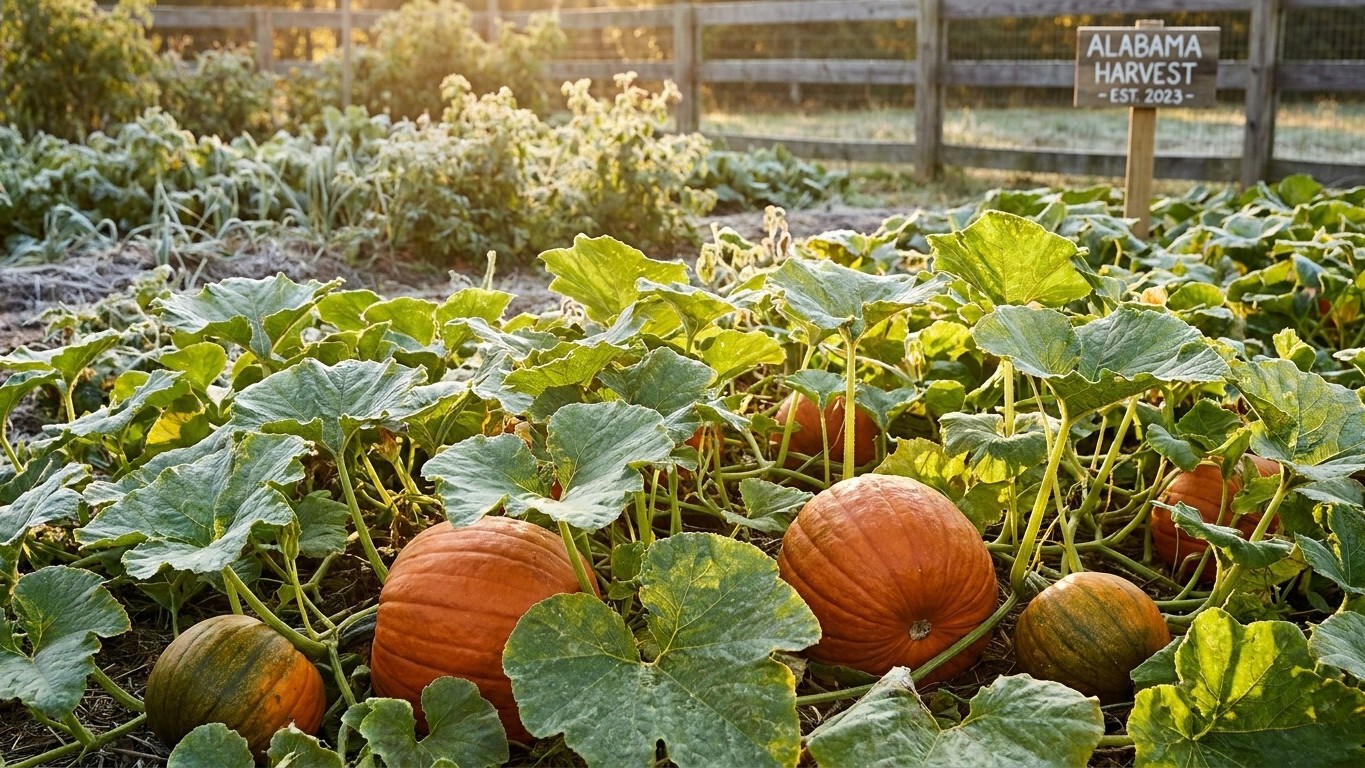

Yes, but only if the flowers open early enough. In coastal Virginia, first fall frost typically lands between November 10 and November 24. Count back the 45 to 55 days pumpkins need after flowering, not after seeding, and the last safe day for a flower to open falls somewhere between mid-September and mid-October. Inland and mountain gardens work with a tighter window: their frost arrives weeks earlier.
The short answer
Start with the frost window itself, because everything else in this calculation hangs off it. NOAA’s 1991-2020 climate normals for the Oceana station put the first fall freeze at 32 F somewhere between November 10 and November 24 for that part of the state. That’s not a single date to circle on the calendar. It’s a range built from three decades of weather, and any given year can land early, late, or anywhere between.
Now run the pumpkin clock backward from each end of that range. Utah State University Extension’s guidance on pumpkins puts fruit maturity at 45 to 55 days after the flower opens, not after the seed goes in the ground. If frost arrives on the early side, November 10, a flower needs to have opened between September 16 and September 26 to reach full color and a hardened rind in time. If frost holds off until the late side, November 24, that same flower gets until October 1 through October 10 before it’s racing the calendar.
That’s the real answer to the question in the title: pumpkins ripen before frost in Virginia when the flowering happens inside that mid-September to mid-October band, and the exact cutoff moves depending on which end of the frost window a given fall turns out to be. A grower near the coast, where frost tends to arrive closer to the later end of the range, has more room to work with than someone whose garden sits in a low spot or further inland where cold settles first.
This is also why the planting date alone never answers the question. Two gardens planted the same week in spring can flower two or three weeks apart depending on heat, water stress, and how the vines were managed. A vine that stalls in July from drought, then pushes new flowers in August, is working with a much shorter runway than one that flowered on schedule. The frost date doesn’t move for a slow vine. The flower has to hit its window, or the fruit behind it simply won’t finish.
Virginia’s geography adds another layer. The Blue Ridge and southwest Virginia run their frost dates earlier in the fall and their last spring frost later, which squeezes the flowering window from both sides. A garden in that part of the state working off the same 45-to-55-day math needs its flowers open sooner than a garden near the coast, simply because the season itself is shorter.
When to sow here
Working backward from the flowering window only helps if the sowing date actually produces flowers in time. That means starting with soil temperature, not the frost date, because the two rarely line up the way gardeners expect.
- Wait for the last spring frost first. NOAA’s normals put that at March 20 to April 3 for the coastal station. That date is the floor, not the green light.
- Let the soil catch up. Pumpkin seed wants soil at 65 F before it goes in the ground, and soil warms on its own schedule. Air temperature can clear the frost threshold while the ground underneath is still cold from winter, so the 65 F mark typically isn’t reached until well after that last frost date has passed. The soil lags the air by weeks, not days, so treating the frost date as the sowing date is the single most common miscalculation in this math.
- Check the ground, not the thermometer on the porch. A soil thermometer pushed a few inches into the bed gives a real reading. Guessing from how the air feels is how seed ends up sitting cold and rotting instead of germinating.
- Use row covers if the seed needs to go in early. Row covers can buy roughly two weeks of extra warmth over bare soil, which matters most for gardens further inland or at higher elevation where the spring frost date runs later and the growing season is already tighter.
- Count forward from the real sowing date, not the frost date. Once the soil is actually at 65 F and seed goes in, the vine still needs time to grow before it flowers at all. That growth period, plus the 45 to 55 days after flowering, is the arithmetic that decides whether a given fall’s frost arrives before or after the fruit is ready.
What goes wrong here
- A late flower that never colors up. This happens when sowing gets pushed back by cool, wet spring soil, or when the vine flowers late after an early setback. The fix is sowing as soon as soil actually reads 65 F rather than waiting for a date on a calendar, and using row covers to get a head start when the season is already tight.
- A fruit caught green when frost arrives. This is the direct result of a flower opening after the safe window, whether that’s mid-September for an early-frost year or into October for a later one. Once a fruit is caught this way, there’s no fixing it in the garden. Some gardeners bring green fruit indoors to see if it colors further, but that’s a different process from field ripening and isn’t something the maturity math here covers.
- A vine that dies back before the rind hardens. Vines can collapse from disease, drought stress, or simple exhaustion well before the fruit’s skin has toughened enough for storage. Because the rind needs the vine’s support to finish hardening, a vine that dies early can leave a fruit that looks ripe on the outside but bruises easily and won’t keep. Keeping the vine healthy through irrigation and disease management late in the season matters as much as the flowering date itself.
- Insect pressure that weakens the vine before fruit finishes. Squash bugs and cucumber beetles can both stress a vine enough to shorten its productive window, which pushes the whole timeline in the wrong direction. Identification and control for each are covered on their own pages: see the squash bug guidance and the cucumber beetle guidance for this region.
Common questions
Does the same 45-to-55-day window apply everywhere in Virginia?
The days-to-maturity figure itself doesn’t change, but the frost date it’s measured against does. Coastal areas work with the November 10 to November 24 window from the Oceana station; the Blue Ridge and southwest Virginia see frost arrive earlier in the fall, which shortens how late a flower can safely open.
Can I sow earlier just to be safe?
Only once soil hits 65 F. Sowing into colder soil doesn’t gain time, it usually costs it, since cold, wet seed is prone to rot and germinates unevenly compared to seed sown once the ground has actually warmed.
What if my flowers open right at the edge of the window?
That’s the situation where local conditions matter most. A fruit that sets right at the edge of the 45-to-55-day range is more exposed to whichever end of the frost window that particular fall lands on, and there’s no way to know in advance which end it will be.
Do row covers replace the need to wait for warm soil?
No. Row covers can add roughly two weeks of warmth on top of whatever the soil is already doing, but they don’t substitute for the soil reaching 65 F. They’re a way to shift the sowing date earlier within a season that’s already tight, not a way to skip the soil temperature step entirely.