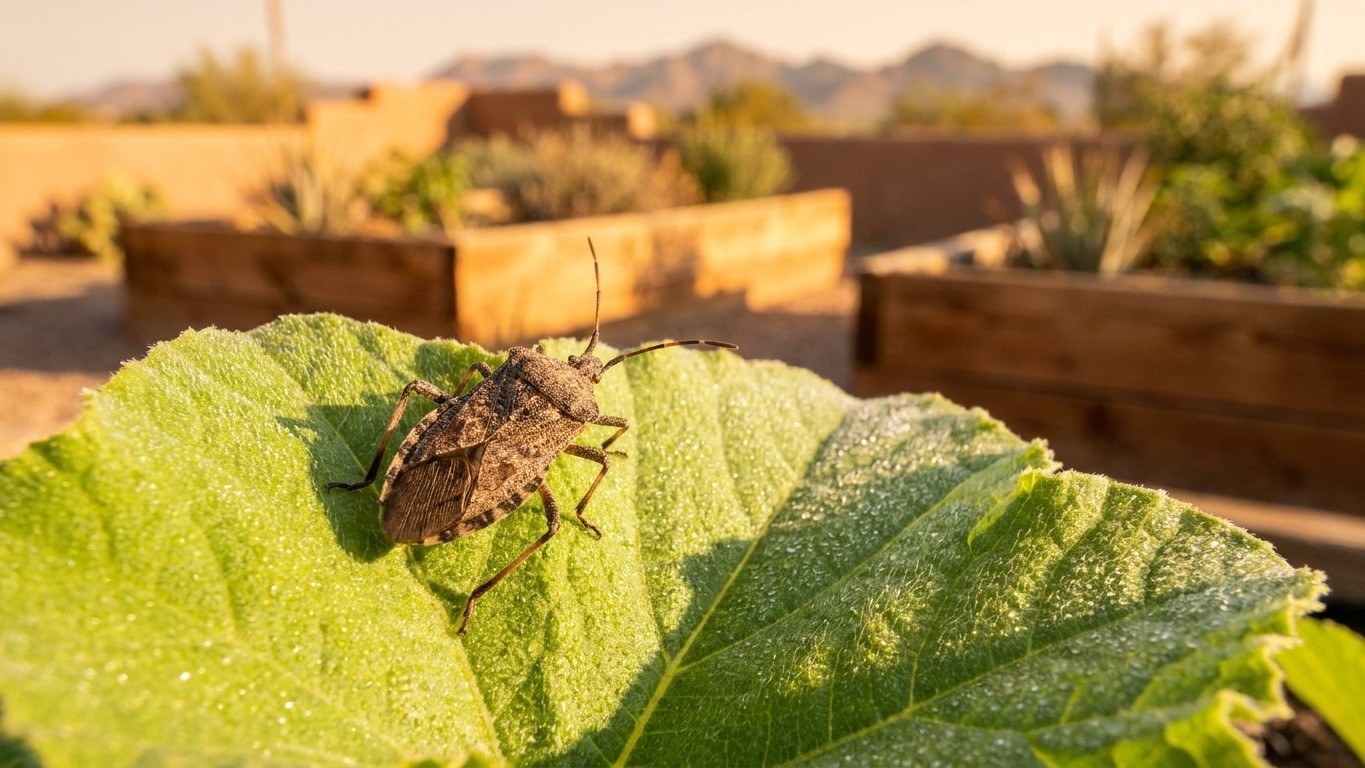

Squash bugs show up in Virginia once the vines start running, usually from late May into June as overwintered adults crawl out of leaf litter and mulch. Damage builds through summer as eggs hatch into nymphs. There’s no product to buy first: row covers, hand-picking, and clearing debris in fall do more than anything sprayed on late.
The weeks to watch
Adults emerge and start laying eggs as soon as squash and pumpkin vines put on real growth, not on a fixed calendar date. Virginia Cooperative Extension does not publish a specific emergence window for squash bug the way it does for some fruit pests, so the timing below follows the general pattern documented for the mid-Atlantic region rather than a Virginia-specific date.
First generation
The bulk of the damage each year comes from this single wave: overwintered adults mate and lay copper-colored egg clusters on the undersides of leaves through June, and those eggs hatch into nymphs over roughly one to two weeks depending on temperature. Nymph feeding through July is what causes the wilting most gardeners notice.
Partial second generation
In the warmer, longer-season parts of the state, particularly the coastal plain and Tidewater, a partial second generation can develop from late-summer eggs, adding a smaller wave of new adults in September. In the cooler ridge-and-valley and mountain counties, the season usually runs its course with one generation before adults head into leaf litter to overwinter.
Reading the calendar from your last frost
Squash bugs answer to soil and air warmth, not to a printed date, which is why the same pest shows up at different times depending on how early or late spring runs. The last spring frost near the coast, at the NAS Oceana station in Virginia Beach, falls between March 20 and April 3 based on 1991-2020 climate normals. That’s the mild end of the state; the Blue Ridge and southwest Virginia run weeks later in spring and earlier in fall, so a gardener there should slide this whole timeline back.
- Take your local last-frost date as a normal, not a guarantee, and count forward to when you actually transplant squash or pumpkin seedlings into warm soil.
- Add three to six weeks after transplanting: that’s the usual window before vines are established enough to draw adult squash bugs, and Before the First wilting or egg clusters typically appear.
That arithmetic gives a range, not a single day, because both the frost date and the pest’s response to soil warmth are themselves ranges. It’s still useful: it tells a gardener roughly when a row cover needs to go on right after transplant, and roughly when it has to come off for pollination once flowers open.
What it attacks, and what the damage looks like
The first sign is usually a wilting vine that looks a lot like bacterial wilt, a leaf or a whole runner going limp in the afternoon heat and not recovering overnight. Look closer and the leaves often show yellow speckling that turns brown and papery, sometimes described as looking scorched. That damage comes from piercing-sucking feeding, not from the insect chewing holes, so leaves can look shredded or lace-like in heavy infestations without any visible bite marks.
The crops most at risk include:
- Winter squash (acorn, butternut, hubbard), which squash bugs prefer over almost anything else in the garden
- Pumpkins
- Summer squash and zucchini
- Cucumbers, though damage there is usually lighter
- Melons, occasionally, when squash and pumpkins aren’t available nearby
Both nymphs and adults do the damage, injecting a toxin as they feed that causes the wilting even before populations are large. That matters for treatment: once nymphs have been feeding on a stem for a while, the vine’s decline is already set in motion, and killing the insects afterward doesn’t reverse wilting that’s already underway. Egg masses, laid in tidy clusters on leaf undersides, are the stage most gardeners can catch and remove before any feeding damage starts at all.
How Virginia sits in this pest’s range
Squash bug is present essentially everywhere squash and pumpkins are grown across the United States and southern Canada, which makes this one of the widespread pests where presence isn’t really in question. The difference between Virginia Beach and a garden in the mountains near Abingdon isn’t whether squash bug shows up, it’s when: coastal Virginia’s longer growing season means adults emerge earlier and sometimes squeeze in that partial second generation, while higher, cooler counties get a shorter single-generation season.
The frost-date figures available for this piece come from the NAS Oceana weather station in Virginia Beach, which sits at the mild, coastal edge of the state’s climate range. A gardener in the Blue Ridge or southwest Virginia should treat that date as a starting reference and expect their own local last frost, and their squash bug emergence, to run later.
What actually works against it
- Time the planting. Delaying transplant by a week or two past the earliest safe date, or choosing early-maturing varieties, can let vines get past the most vulnerable seedling stage before adult squash bugs are at peak numbers.
- Use row covers from transplant until bloom. A floating cover keeps adults from laying eggs on young plants. It has to come off once flowers open, because squash needs pollinators to set fruit, and that’s exactly the point where covers stop being useful anyway.
- Check leaf undersides weekly and crush egg clusters. This is the cheapest control that still works well into the season, since it removes the pest before nymphs ever start feeding.
- Hand-pick adults and nymphs, ideally in early morning when they’re slower, dropping them into soapy water. Squash bugs tend to cluster at the base of the plant and under mulch, so checking there is worth the extra minute.
- Rotate where squash and pumpkins are planted from year to year, since overwintering adults emerge near where last year’s crop grew and a short walk to a new bed reduces how many find the new planting.
- Clear vine debris after harvest. Squash bugs overwinter in old leaves, plant residue, and mulch, so removing that material in fall takes away their shelter before the next season starts.
Some gardeners lay boards or shingles near the base of plants overnight, since adults and nymphs will shelter under them and can be collected and destroyed the next morning; this is widely used but its effectiveness isn’t something formal trials have measured either way. Once larvae, meaning nymphs, have been established and feeding inside a wilting stem for more than a few days, none of these measures reverse the damage already done to that particular vine; they only protect what’s left of the planting.
Common questions
Do squash bugs come back every year in the same garden?
Yes, if overwintering sites like leaf litter, mulch, or old vine debris are left in place near the growing area, adults that sheltered there will emerge the following spring in the same spot.
Are some squash varieties less attractive to squash bugs?
Winter squash types like hubbard and butternut tend to draw the heaviest feeding, while some summer squash and cucumber varieties see comparatively less pressure, though none are immune once populations build up.
Can a garden have squash bugs without any visible wilting yet?
Yes, egg clusters and early nymphs can be present on leaf undersides well before any wilting shows, which is why checking leaves weekly catches the problem earlier than waiting for symptoms.