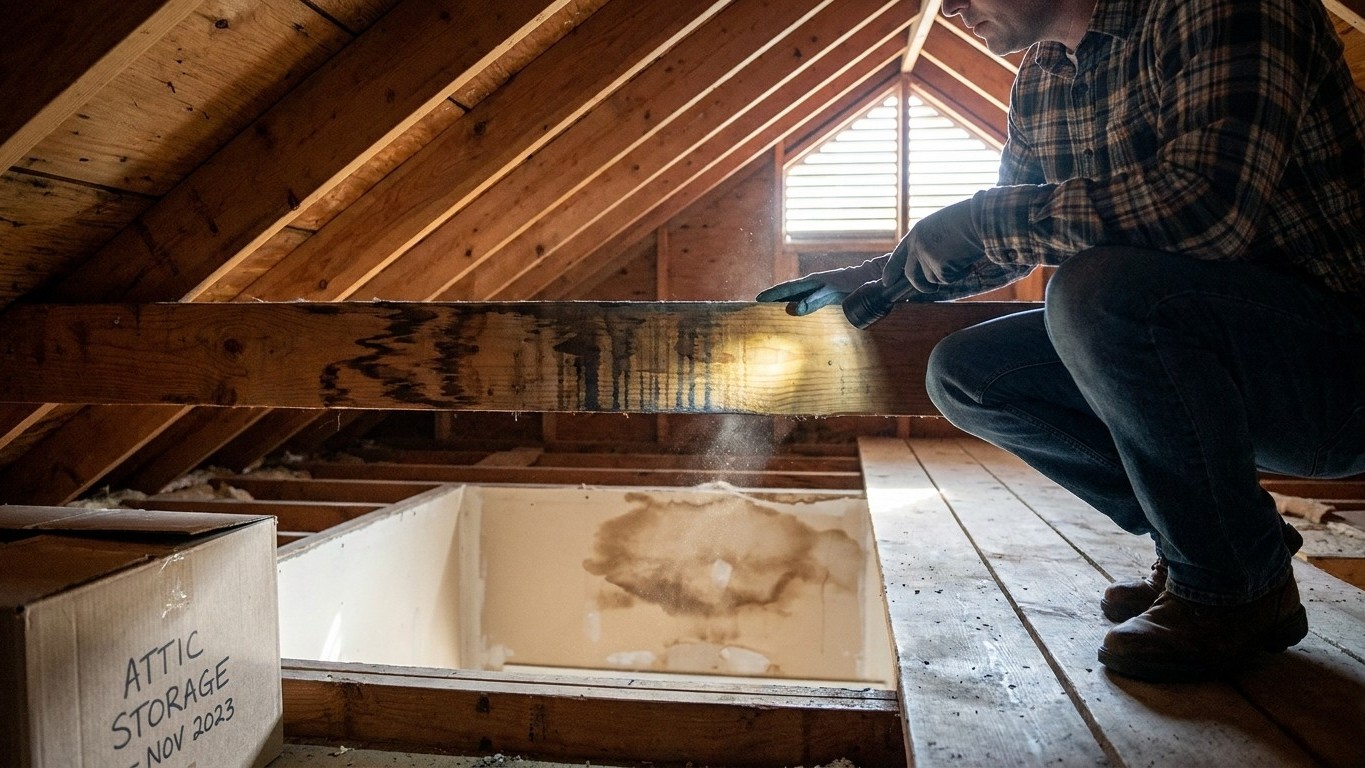

A ceiling stain marks where water finally let go, not where it came in. Roof water travels sideways along the underside of the deck, down rafters, across Insulation, before gravity finally pulls it through drywall or around a light fixture. The actual entry point, a cracked flashing, a lifted shingle, a nail hole, often sits several feet uphill or off to the side. Finding a roof leak means tracing that path backward, and that tracing starts in the attic, long before anyone thinks about a ladder.
What is actually happening
The thing to understand here is that water runs along rafters and sheathing before it drips, so the search starts uphill of the stain, not directly above it. Once rain gets past the outer roofing layer, it lands on the wood deck underneath. That deck isn’t flat and featureless. It has seams, framing members, nail heads, and a slight slope that guides water in whatever direction gravity and the roof’s own geometry allow. A drop that entered near a chimney can travel a full rafter bay before finding a gap in the insulation and finally showing up on the ceiling below.
Flashing is usually where the trouble starts. Chimneys, plumbing vents, skylights, and the valleys where two roof planes meet are all places where separate pieces of material have to be joined and sealed. Those joints move with temperature swings, and over time the seal can crack or lift just enough to let water in during wind-driven rain, even if the surface looks fine on a calm, dry day. A single lifted shingle a few feet from a valley can funnel water sideways under the neighboring courses for a surprising distance before it finds a weak spot.
Insulation complicates the picture further. Once water reaches the attic floor, it often gets absorbed by the insulation before it reaches the ceiling drywall. That absorption slows the drip and spreads it, which is exactly why the visible stain inside the house tends to be smaller, and positioned differently, than the actual wet area above it. A homeowner staring at a coffee-colored ring on the bedroom ceiling is looking at the last stop on a journey that may have started at the roof edge or near the ridge.
Wind direction matters too. The same roof can leak only during storms that blow rain from one particular direction, because that’s the only condition under which water gets pushed sideways into a gap that otherwise just sheds rain downward. This is why a leak can seem to appear and disappear between storms with no obvious pattern, confusing anyone who assumes the stain sits right below the hole.
What you can see without climbing
Most of the useful evidence is visible without ever leaving the ground or the attic hatch. The routine works best in this order.
- Scan from the ground. Use binoculars or a phone camera zoomed all the way in, and walk the perimeter of the house looking at the roof from several angles. Look for shingles that are curled, cracked, or missing, for flashing that looks bent or separated around chimneys and vents, for debris piled in valleys, and for dark streaking or moss patches that suggest an area stays wet longer than the rest of the roof.
- Check after rain, not just before. A roof that looks fine in dry weather can show its problems clearly right after a storm, when damp patches, dripping gutters, or water pooling in one spot become obvious from the yard.
- Go into the attic with a flashlight. Turn off any attic lighting first and look for pinpricks of daylight showing through the deck. Any point where outside light gets in is a point where water can get in too.
- Trace stains on the rafters and sheathing. Water leaves a trail, often a dark or rust-colored streak running down a rafter or across the underside of the deck. Follow that streak upward and toward its highest point, since that’s usually closer to the true entry location than the spot where it eventually drips.
- Feel the insulation. Damp, compressed, or discolored insulation points directly to an active or recent leak, even on a dry day when nothing is currently dripping.
This ground-and-attic routine is genuinely sufficient for identifying the general area of a leak in most homes. It won’t always pinpoint the exact nail hole or flashing seam, but it narrows the search enough that any further work, if needed, can be targeted rather than guesswork.
What it costs to leave it
Nothing about a roof leak stays small on its own. The first material to suffer is almost always insulation, which loses its ability to hold heat once it gets wet and compressed, meaning the room below works harder to stay warm or cool even before any visible damage shows up indoors. Wet insulation also stays wet longer than people expect, since attics don’t get much airflow, and repeated wetting from multiple storms keeps compounding the problem rather than letting it dry out fully between rains.
Wood is next. Rafters, sheathing, and any framing near the leak start absorbing moisture with every wet cycle. Untreated wood exposed to repeated dampness begins to soften and develop fungal growth, and once that process starts it tends to accelerate, because decayed wood holds moisture more readily than sound wood does. This is quiet damage. It happens above a ceiling most people rarely look at, which is exactly why it can advance well before anyone notices.
Inside the house, the visible signs, a stain, a bubble in the paint, a soft spot in drywall, are late indicators rather than early ones. By the time paint is visibly bubbling or a ceiling feels spongy underfoot pressure from above, the water has already been working on the materials behind that surface for some time, through several wet-dry cycles rather than a single storm.
Electrical fixtures near a leak deserve particular attention. A ceiling light or fan sitting near a wet spot is sitting near a genuine hazard, since water and household wiring don’t mix safely, and this is one of the few situations where a small leak becomes an urgent one rather than something to schedule around.
Mold and pest activity round out the list. A warm, damp attic cavity is exactly the environment mold favors, and softened, moisture-laden wood attracts pests like carpenter ants that are drawn to wet, decaying material rather than to sound, dry framing. None of this requires a dramatic storm to get started. A slow, small leak left unaddressed through several ordinary rain events does the same job, just more gradually.
What is not a householder job
Locating the general area of a leak from the ground and the attic is reasonable for most homeowners. Getting on the roof itself is a different matter entirely, and for a lot of situations it simply isn’t worth the risk.
Anything above a single story is out of reasonable DIY range for most people, since the fall risk increases sharply with height and the margin for error on a pitched surface is thin to begin with. A wet, mossy, steep, or frosted roof surface removes traction almost entirely, turning a slow, careful walk into a genuine slip hazard regardless of footwear or experience. And any repair that requires both hands occupied, holding a shingle in place while nailing it, for example, means no hand is free to catch a fall or hold onto anything stable.
Falls from roofs cause serious injuries and deaths every year, and the vast majority of homeowners have neither the harness equipment nor the practiced footing that professional roofers rely on. The instinct to just climb up and take a quick look, or worse, attempt a patch, is understandable but it’s not a good trade against the actual risk involved.
The better path is to use the ground-and-attic observations described above to document what’s visible, then bring in someone qualified to confirm the source and handle any work at height. A structured walk-through of what to check and photograph before calling anyone is covered in more detail on our roof inspection guide, and for homeowners ready to bring in a professional, our page on hiring a roofer covers what to ask and how estimates typically work.
Insurance is worth mentioning here too. If the leak followed a hailstorm or high winds, the homeowner’s policy, not a general rule of thumb, governs what’s covered and by when a claim needs to be filed. Photographing the damage from the ground and the attic as soon as it’s noticed, dated and clear, gives an adjuster something concrete to work with regardless of what the policy ultimately allows.
Common questions
Can a roof leak show up somewhere completely different in dry weather?
Yes. Water trapped in insulation or wood can continue seeping and drying slowly for some time after a storm passes, which is why stains sometimes appear or spread on days with no rain at all.
Is a small brown ceiling stain always an active leak?
Not necessarily. It can be residue from a past leak that’s since been sealed, or from condensation rather than rain intrusion. Checking the attic for current dampness or fresh streaking helps tell the difference.
Should I cut into the ceiling to find the leak faster?
Checking the attic side first is almost always the better move, since it avoids unnecessary drywall damage and usually reveals the same information, a wet stain or streak, without opening anything up.
What should I photograph if I plan to file an insurance claim?
Photograph the ceiling stain, any visible roof damage from the ground, and the attic side of the affected area, all with a clear date, and keep those images before any repair work begins, since the policy will determine what documentation is required.