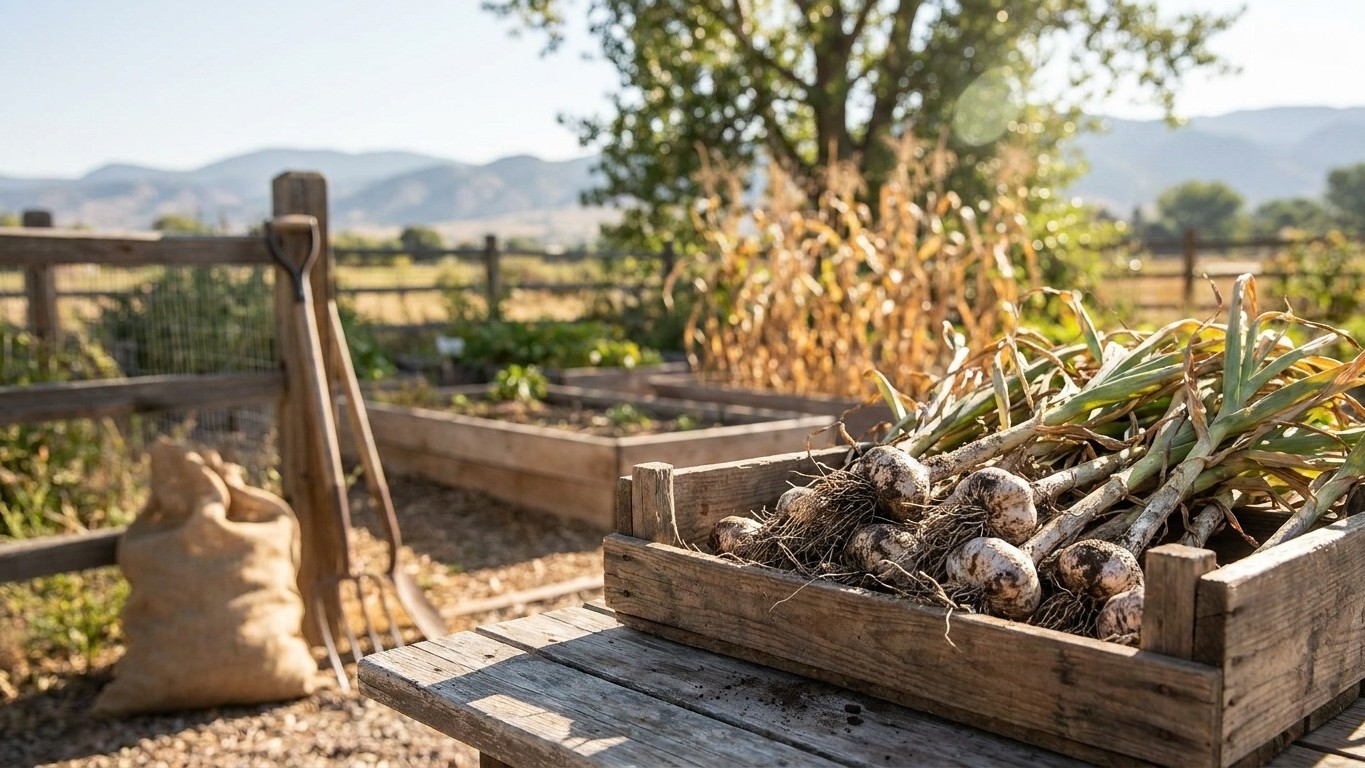

Garlic planted in Illinois soil last fall is ready to come out of the ground in early-to-mid summer, once the bottom leaves have browned and a handful of green ones remain at the top. From there, curing in a shaded, airy spot for several weeks turns a muddy bulb into something that keeps. Skip that step, and even a perfect harvest rots by January.
When garlic is ready to lift in Illinois
The clock on garlic actually starts the previous fall, not in summer. Garlic goes into the ground as cloves before winter sets in, giving roots time to establish while the soil is still workable. In the reference climate data for this region, the average first fall freeze falls somewhere between October 24 and November 3, based on NOAA NCEI’s 1991-2020 Climate Normals for the area’s weather station. That window is a midpoint, not a deadline: in roughly half the years on record, the freeze arrives later than that. It’s also tied to a specific airport station, so a garden out in the county, especially one lower in a valley or farther from the city, can freeze a week or two earlier. Check your own county’s typical timing before planning around it.
Once the clove is in the ground and winter passes, growth resumes in spring and the bulb spends the following months bulking up underground. The signal that it’s time to lift comes from the leaves, not the calendar. Garlic foliage dies back from the bottom up as the plant finishes filling out its cloves. When the lower third to half of the leaves have turned brown and dry, and only a few green leaves remain at the top of the stalk, the bulb has usually reached its size and it’s time to pull a test plant or two.
Reading the test bulb
Dig, don’t yank, one plant from the middle of the row rather than the edge. A bulb that’s ready shows individual cloves with tight, papery wrappers still intact around them. If the wrappers have started splitting open, or the cloves look loose and separated inside the skin, that plant sat in the ground too long and the bulbs may not store well. If the cloves are still small and undifferentiated, wait another week or two and check again.
Soil moisture matters here too. Garlic pulled right after a heavy rain comes out muddy and bruised more easily; garlic pulled during a dry stretch lifts cleaner. If rain is in the forecast and the test bulbs look close, it’s often better to pull a few days early than to wait through a soaking that can split wrappers or invite rot right before curing.
Curing it, and where to hang it here
Curing is the step that turns a freshly dug bulb into something that survives a Midwest winter. Fresh garlic is still full of moisture in the outer layers, the neck, and the wrapper skins. Curing dries all of that down slowly, so the papery layers seal tight around the cloves instead of staying soft and vulnerable to mold.
The goal is airflow, shade, and time, not heat. Direct sun during curing can scald the bulbs and cause the outer skins to bleach or crack, which defeats the purpose. A garage with the door cracked for airflow, a covered porch, a shed with a window open, or a carport all work, as long as rain and direct sun can’t reach the bulbs and air can move around them. Summer humidity in this part of the country can run high for stretches, which slows drying, so more airflow rather than less is the safer bet.
Hardneck versus softneck curing
Illinois gardens grow both types, and the curing approach shifts slightly depending on which one is in the ground.
| Type | How it’s typically cured | Note |
|---|---|---|
| Hardneck | Hung or laid in bundles with the stiff central stalk intact | Stalk stays rigid, doesn’t lend itself to braiding |
| Softneck | Hung in bundles first, braided after the necks soften and dry partway | Pliable neck allows braiding once curing is well underway |
Either way, leave the roots and tops on during curing rather than trimming them right after harvest. Cutting too soon opens a channel for moisture and rot to move into the bulb before the neck has had a chance to seal itself shut. Trimming comes after curing is finished, typically a few weeks in, once the outer wrappers feel dry and papery and the neck has tightened down.
Spacing bulbs so they aren’t touching, or hanging them loosely in bundles of a handful of plants rather than large clumps, keeps air moving between them and lowers the odds of a moldy bulb spreading trouble to its neighbors. A quick check partway through, looking for any bulb that’s gone soft or discolored and pulling it out of the batch, saves the rest.
Storing it through a Illinois winter
Cured garlic wants the opposite conditions of the field it grew in: cool, dark, dry, and out of the way of temperature swings. A pantry shelf away from a stove or furnace vent, an unheated closet, or a cool basement corner all tend to work better than a kitchen counter, which stays too warm and too bright for long-term storage.
The refrigerator is worth avoiding for whole bulbs meant for eating over the winter. Cold, moist refrigerator air tends to trigger sprouting in stored garlic, and once a clove sprouts, it starts drawing on its own stored energy and softens faster. A cool room-temperature spot, well below kitchen warmth but above refrigerator cold, holds garlic longer without pushing it toward sprouting.
Softneck versus hardneck in storage
Softneck garlic generally holds up longer in storage than hardneck garlic, which is part of why braided softneck bulbs are the type most often seen hanging in kitchens well into winter. Hardneck bulbs tend to soften and lose quality sooner, so working through the hardneck harvest earlier in the season and saving softneck bulbs for later months is a reasonable way to plan meals around what’s on hand.
Checking stored garlic every few weeks catches problems before they spread. A bulb that’s gone soft, sprouted, or developed a moldy spot should come out of storage right away, since leaving it in with the rest can bring moisture and mold spores into contact with otherwise sound bulbs. Setting aside the firmest, best-sealed bulbs from the harvest as seed stock for fall planting, rather than planting whatever is left over in spring, also tends to produce a stronger crop the following year.
What goes wrong here
Most garlic failures trace back to timing, not disease. Pulling bulbs too early, before enough of the lower leaves have browned, leaves cloves undersized and wrappers too thin to protect them in storage. Pulling too late, after the wrappers have split, leaves bulbs exposed and prone to rot within weeks of coming out of the ground. Both mistakes are easy to make in a season with an unusual stretch of heat or rain that throws off the normal die-back pattern.
Curing in the wrong spot causes a good chunk of the rest of the trouble. Bulbs cured in direct sun scald; bulbs cured somewhere damp with poor airflow mold before they finish drying, especially during a humid summer stretch. Rushing the process and cutting stalks or trimming roots before the neck has sealed opens a path for moisture and rot to reach the clove.
Soil pests worth watching
University of Illinois Extension documents jumping worms (Amynthas spp.) as an increasing concern in garden beds across the state. These worms alter soil structure and strip organic matter faster than earthworms typically found in home gardens, which can leave garlic beds with looser, less nutrient-rich soil going into the next planting season. Checking new soil, compost, or mulch brought into the garden, and avoiding moving soil between beds where jumping worms have turned up, are the main defenses currently documented.
For guidance specific to a county or a particular growing problem, University of Illinois Extension’s local offices, reachable through extension.illinois.edu, are the resource to check before assuming a national gardening tip applies to conditions here.
Common questions
How long does garlic need to cure before storing it?
Curing generally runs several weeks, and the bulb tells you when it’s done rather than the calendar: the outer wrappers should feel dry and papery, and the neck should have tightened and stiffened rather than staying soft or green.
Can garlic be planted and harvested in the same year in Illinois?
No. Garlic goes into the ground in fall, spends winter dormant, resumes growth in spring, and is lifted the following summer. It’s an eight-to-nine month cycle spanning two calendar years, not a single-season crop.
Why did my stored garlic sprout mid-winter?
Sprouting usually points to storage that’s too cold and damp, which is why the refrigerator is a poor long-term spot for whole bulbs. A cool, dry, dark room-temperature space slows sprouting far better than refrigeration.
Does the first fall frost date matter for garlic?
It matters for planting timing more than for harvest. Garlic is typically planted in the weeks around the average first fall freeze, which falls between October 24 and November 3 in this region’s NOAA climate data, though that date is a long-term average and arrives later than that in about half of all years.