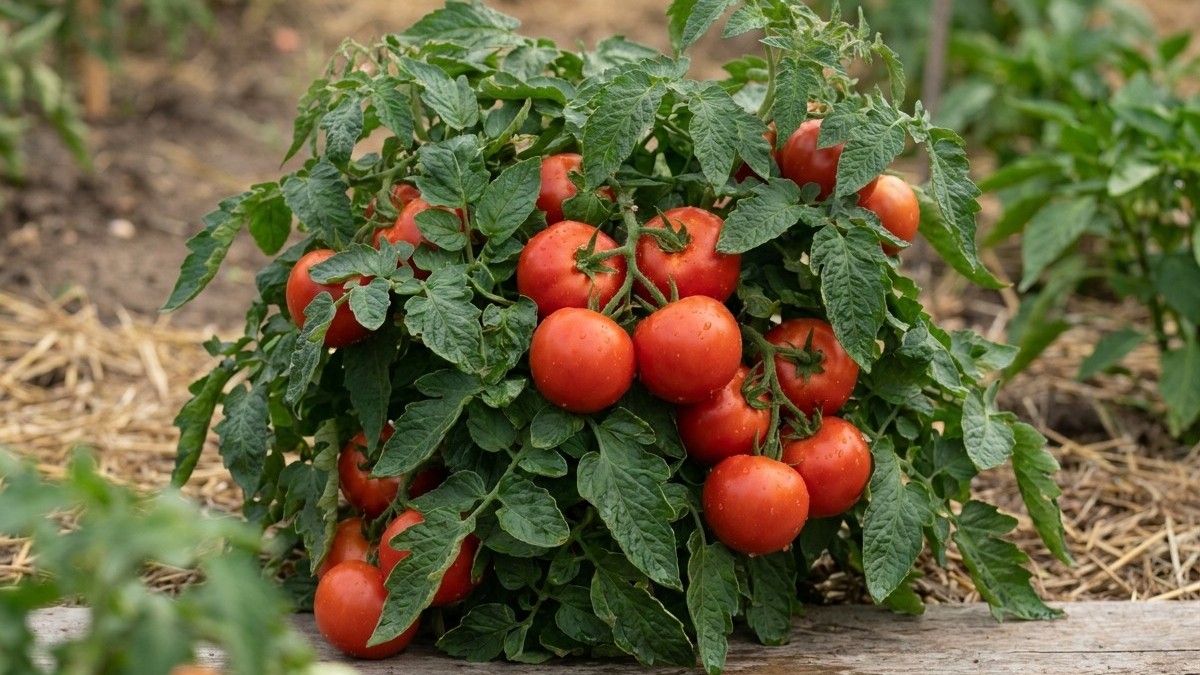

The safest rule for Quebec tomatoes: get every fruit off the vine before frost settles in, whether it’s blushed pink or still rock-hard and green. That window tightens fast in early fall, and most of what’s still green when the cold arrives can finish ripening indoors instead of on the vine. Handled right, green tomatoes picked at the right stage keep for weeks and turn red on a counter or in a paper bag just fine.
When to pick tomatoes in Quebec
October 5. That’s the average date of the first fall frost at the Montreal/St-Hubert A weather station, based on Environment and Climate Change Canada’s 1981-2010 climate normals. An average isn’t a promise, though. In roughly half the years behind that number, frost actually arrived later than October 5; in the other half, earlier. Treat it as the midpoint of a window, not a date you can circle on the calendar and trust completely.
The figure also comes from a single station near Montreal. Quebec’s settled agricultural belt stretches a long way north to south, and gardens in the Laurentians, the Eastern Townships uplands, or anywhere toward Saguenay routinely see frost show up weeks ahead of a Montreal backyard. If you’re gardening outside the Montreal region, use October 5 as a reference point for comparison, not a forecast for your own soil.
Where the province’s cold snaps come from
Montreal itself sits in Canadian hardiness zone 5b, according to Natural Resources Canada’s mapping based on 1991-2020 normals. That’s the Canadian system, built from seven climate variables rather than the single measure the USDA system uses, and the two don’t line up neatly. Natural Resources Canada says as much directly: a single Canadian zone can overlap nine different USDA zones. What zone 5b actually tells a tomato grower near Montreal is more practical than technical: the frost-free stretch is short enough that late-season timing decisions matter every single year, not just in an unusually cold one.
Once overnight temperatures start dropping and a frost warning shows up in the forecast, walk the rows and pick everything showing even a hint of color, what growers call the breaker stage, along with any full-sized green fruit. Small, marble-sized green tomatoes that haven’t reached full size rarely ripen well once separated from the plant, so there’s little point rescuing those.
What to do with the green ones
Not every green tomato behaves the same way once it’s off the vine.
Mature green fruit, the ones that reached full size and firmness with a faint waxy sheen and slightly rounded shoulders, will ripen indoors over time. Immature green tomatoes, still small and rock-hard with no sheen at all, generally won’t turn red no matter how they’re stored; they just soften and spoil. Sorting the harvest by these signs before deciding what to do with each tomato saves a lot of wasted counter space.
Sorting before storing
- Set aside fully mature green tomatoes for indoor ripening
- Keep firm, blemish-free fruit separate from anything bruised or split
- Group by size, since smaller tomatoes tend to ripen faster than large ones
- Pull out anything with soft spots or cracks and use it right away rather than storing it
Tomatoes that clearly won’t ripen don’t have to go to waste. Firm immature green fruit works in dishes built around that tartness and crunch, like relish, chow-chow, or the classic fried green tomato treatment. That’s a separate use case from ripening, though; once a green tomato is destined for the skillet or the jar, there’s no reason to hold it back waiting for color that isn’t coming.
One habit worth dropping: don’t wash tomatoes before storing them for ripening. Extra moisture on the skin invites mold, and a damp box of tomatoes rots faster than a dry one. Wipe off garden soil with a dry cloth instead, and handle the stems gently so you’re not tearing the skin near where the fruit attaches to the vine.
Ripening indoors, and how long they keep
Ripening green tomatoes indoors is mostly a question of patience and airflow, not heat.
Spread mature green tomatoes in a single layer inside a cardboard box or a loosely closed paper bag, and keep them at normal room temperature out of direct sunlight. A windowsill in full sun might look like the obvious spot, but direct light tends to create soft, uneven spots rather than actually speeding up ripening. A drawer, a pantry shelf, or a spot on the counter away from the window works better.
Speeding things along
Ethylene gas is what drives ripening, and tomatoes produce it themselves once they start turning. Tucking a ripe banana or apple into the same bag or box adds extra ethylene to the mix and can push things along faster. Check the batch every couple of days, since one tomato that starts to rot will spread mold to its neighbors quickly if it’s left in contact with them.
Fully mature green tomatoes typically color up over the following few weeks indoors, though timing varies with size and how far along each one already was when picked. Kept in a slightly cooler spot, like an unheated porch or a cool basement corner, some tomatoes will hold in a still-green or just-turning state for a couple of months, ripening gradually rather than all at once. That staggered approach is often more useful than trying to ripen everything at the same pace.
Once a tomato is fully ripe, refrigeration can slow spoilage for a few extra days, but tomatoes held in the cold too early, before they’ve finished ripening, tend to turn mealy and lose flavor permanently. Quebec’s ministry of agriculture, MAPAQ, publishes additional post-harvest handling guidance for home gardeners looking for more detail on storage conditions.
What goes wrong here
Waiting too long is the most common mistake. Gardeners see healthy vines still loaded with green fruit in late September and assume there’s more time, then a clear, calm night brings a hard frost that damages the whole crop overnight. Because October 5 is only an average for one station near Montreal, banking on that exact date, or assuming your own garden matches it, is exactly the kind of gamble that backfires most years somewhere in the province.
Storing ripening tomatoes in direct sun causes a different problem. It looks like it should speed things up, but it usually just creates soft, discolored patches on the side facing the light while the rest of the tomato lags behind. A shaded spot at room temperature does the job more evenly.
Piling too many tomatoes into one box without checking them regularly is another repeat offender. Ethylene from ripening fruit accelerates its neighbors, which is useful, but so does mold from a single rotting tomato in contact with the rest. A batch left unchecked for a week can lose several tomatoes to a problem that started with just one.
The last one is more about geography than technique: assuming your garden matches Montreal’s zone 5b and its early October average when you’re actually gardening somewhere colder or higher in elevation. Gardens in upland or northern parts of the province often lose their tomatoes to frost weeks before the Montreal-area average would suggest, simply because that figure describes one station, not the whole province.
Common questions
What is the average first fall frost date in Quebec?
The average is October 5, based on Environment and Climate Change Canada’s 1981-2010 climate normals for the Montreal/St-Hubert A station. It’s a mean date, not a guarantee, and in about half the years on record frost actually arrived later than that.
Should I pick tomatoes before a frost warning shows up?
Yes. Once a frost warning appears in the forecast, pick everything showing color along with full-sized green fruit rather than risking the whole harvest overnight.
Can green tomatoes ripen in the refrigerator?
No. Cold temperatures halt the ripening process rather than speeding it up. Keep green tomatoes at room temperature until they’ve finished ripening, and only refrigerate them afterward if you need to hold them a few extra days.
Does Quebec’s hardiness zone affect how long I can leave tomatoes outside?
It’s a factor, but a general one. Montreal sits in Canadian hardiness zone 5b under Natural Resources Canada’s system, which reflects a short frost-free season overall. That system doesn’t convert to a USDA zone, and it describes the Montreal area specifically, not every part of the province, so gardeners elsewhere should treat it as context rather than a precise local guide.