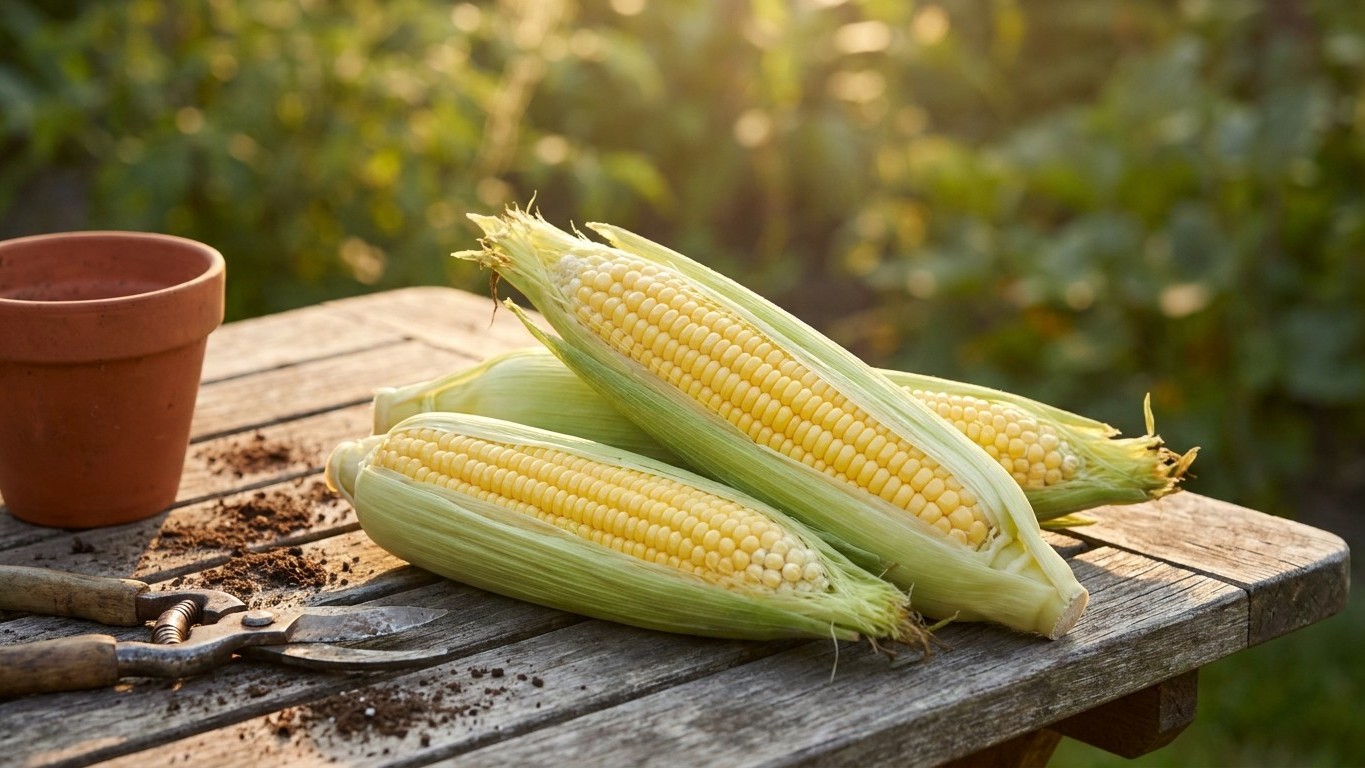

Early Sunglow sweet corn is a normal sugary (su) type with yellow kernels, recommended by Clemson Cooperative Extension. Because it’s su, it needs no isolation from other sweet corn varieties in the garden. Sow it once soil at 4 inches deep reaches 50°F. Pick it close to cooking time: su corn loses its sugar to starch faster than newer types, so the sweetness window is short.
The Genotype Behind the Ear
Early Sunglow is classified as normal sugary, written su in seed catalogs and extension references. That single letter code matters more than the variety name itself, because it tells you how the corn will behave in the field and on the counter. Su types are the traditional sweet corn genotype: the flavor is what most people grew up eating, rounder and more “corny” than the newer supersweet hybrids, but the sugar-to-starch conversion starts working against you the moment the ear leaves the stalk.
Clemson Cooperative Extension lists Early Sunglow among its recommended sweet corn cultivars for home gardens, with a plain description: normal sugary genotype, good corn flavor, and a kernel that converts sugar to starch faster than se or sh2 types after picking. That conversion speed is the tradeoff su gardeners accept in exchange for that classic taste.
The kernel color on Early Sunglow is yellow. That’s a cosmetic trait, not a performance one. Yellow, white, and bicolor kernels don’t rank differently for sweetness or texture, whatever kitchen folklore might suggest. What decides how sweet an ear tastes, and how long it holds that sweetness, is the genotype, not the color of the kernel. If you’re choosing between a yellow su variety and a white one, you’re choosing on looks and personal preference, not on flavor chemistry.
When Soil Temperature, Not the Calendar, Says Go
Sweet corn seed doesn’t care what the calendar says. It cares about soil temperature at the depth where it’s sitting. For a normal sugary type like Early Sunglow, the threshold is 50°F measured 4 inches down, taken in the morning before the sun has warmed the surface layer. That 4-inch depth matters because a thermometer pushed just an inch or two into the soil, or one read in the afternoon after hours of sun, will read warmer than what the seed actually experiences. Gardeners who plant on a surface reading often end up with seed that rots in cold, damp soil before it ever germinates.
Supersweet types, the sh2 genotype, need considerably warmer soil, 65°F at that same 4-inch depth, before they’ll germinate reliably. That’s one of the practical reasons su varieties like Early Sunglow get planted earlier in the season than sh2 hybrids: the seed simply tolerates cooler ground. If you’re staggering plantings of different genotypes in the same garden, this 15-degree gap is the number to plan around, not a difference in calendar weeks.
What won’t help you here is a days-to-maturity figure, because none is published specifically for Early Sunglow across extension sources. Seed catalogs vary in how they count maturity days, and the figure printed on your particular seed packet, from whichever source it came from, is the number that applies to your planting. Use a soil thermometer to decide when to plant, and use the packet in your hand to estimate when to expect ears. Those are two separate decisions, and conflating them is where a lot of “my corn never came up” complaints start.
A Quick Soil Check Before You Sow
Push a soil thermometer 4 inches down in the bed where you intend to plant, check it on a few consecutive mornings, and don’t sow until those readings sit at or above 50°F. One warm afternoon reading isn’t the same as sustained soil warmth, and cold snaps after a false-spring warm-up are common enough in most of the country to catch impatient gardeners out.
Isolation: The Rule That Doesn’t Apply Here
If you’ve gardened near other sweet corn growers, you’ve probably heard some version of the isolation warning: keep different types apart or risk ruining the crop. That advice is real, but it doesn’t apply to Early Sunglow. Because this is a normal sugary (su) variety, it needs no isolation from other sweet corn. It can be planted alongside other su or se varieties without any risk to flavor.
The isolation rule people usually repeat is meant for supersweet corn, the sh2 genotype. As Clemson Cooperative Extension puts it in its description of the type, the traditional su varieties like Early Sunglow need no isolation from other sweet corn, in direct contrast to the supersweet types. When sh2 corn cross-pollinates with pollen from a normal sugary or sugary enhanced variety nearby, the result isn’t a plant that looks wrong. The ears fill out normally, look fine on the stalk, and only reveal the problem when someone bites in and finds the kernels starchy instead of sweet. That’s what makes sh2 isolation such a serious rule for supersweet growers: there’s no visual warning, only a disappointing harvest.
Because Early Sunglow doesn’t carry that genotype, gardeners growing it don’t need to calculate planting distances or stagger pollination timing to protect it from neighboring corn. That said, no specific isolation distance or timing figure exists in extension guidance for su corn, because none is needed. The freedom to plant it near other sweet corn varieties without a fenced-off isolation block is one of the practical advantages of choosing a normal sugary type for a small or mixed home garden.
Why the Clock Starts the Moment You Pick It
Sweetness in corn is a countdown, not a fixed quality, and Clemson Cooperative Extension describes the mechanism plainly: “Sweet corn loses sugar from the kernel rapidly at high temperatures… Sweet corn can be stored under optimal conditions for about five days, but will lose sweetness with each day of storage.” That “about five days” figure is a ceiling under ideal, cool conditions, not a guarantee, and it drops fast if the corn sits in a warm kitchen instead of a refrigerator right after picking.
This is exactly where genotype decides how forgiving your harvest window is. Su varieties like Early Sunglow convert sugar to starch fastest of the three main genotypes, which is why the old advice to run straight from the garden to a pot of boiling water was built around corn like this. Se, the sugary enhanced type, holds its sweetness somewhat longer, giving a bit more slack for a same-day harvest and cook. Sh2, the supersweet genotype, holds sugar the longest of the three, which is part of why supersweet corn tolerates a trip to a farmers market or a few days in the crisper without tasting starchy.
None of that makes su corn a lesser choice, it just changes how you plan around it. If you’re growing Early Sunglow, treat the harvest day as cooking day. Pick in the cool of morning, refrigerate immediately if there’s any delay before cooking, and don’t count on it holding restaurant-quality sweetness three or four days into storage. That fast conversion is the tradeoff for the classic sugary flavor this genotype is known for.
Common questions
Does Early Sunglow need to be isolated from other sweet corn?
No. As a normal sugary (su) variety, it doesn’t require isolation from other sweet corn. That rule applies to supersweet (sh2) varieties, not to su types like this one.
How many days until Early Sunglow matures?
No specific days-to-maturity figure is published across extension sources for this cultivar. Check the number printed on your own seed packet, since maturity counts vary by seed source.
Is yellow corn sweeter than white corn?
No. Kernel color is a cosmetic preference, not a sweetness indicator. Sweetness depends on the genotype (su, se, or sh2), not on whether the kernel is yellow, white, or bicolor.
How long can I store picked Early Sunglow before it loses its sweetness?
Clemson Cooperative Extension notes sweet corn can be stored under optimal conditions for about five days, losing sweetness each day. Because Early Sunglow is a su genotype, it converts sugar to starch faster than se or sh2 types, so it’s best cooked as soon as possible after picking.