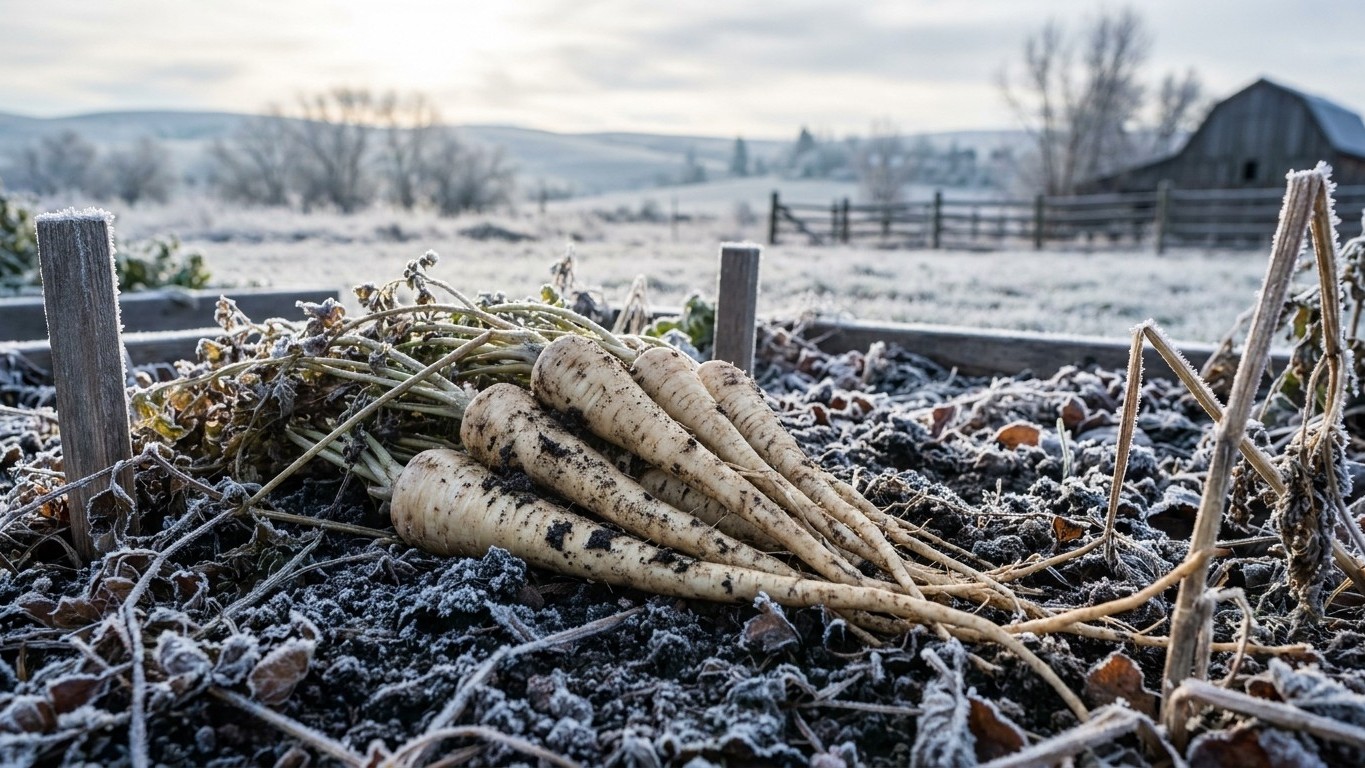

University of Delaware Cooperative Extension’s statewide list of garden pests doesn’t include a species built to feed on parsnip roots or foliage. The nine insects it tracks target squash vines, bean pods, cabbage family leaves, and tomato plants, not the carrot-family taproot growing quietly underground. That gap matters more than it sounds: most chewing or wilting turning up on a Delaware parsnip bed traces back to something other than a documented parsnip specialist.
Which pests attack parsnip in Delaware

University of Delaware Cooperative Extension documents nine garden pests for the state: Colorado potato beetle, cucumber beetles (spotted and striped), harlequin bug, imported cabbageworm, Mexican bean beetle, squash beetle, squash bug, squash vine borer, and tomato hornworm. That’s the complete list this service publishes for home vegetable gardens here, and it’s worth reading closely before assuming any of them touch a parsnip row.
Sort the list by host plant and the picture changes fast. Colorado potato beetle and tomato hornworm feed on solanaceous crops, potatoes, tomatoes, eggplant, which leaves parsnip, a carrot-family root, off their menu. Cucumber beetles, squash beetle, squash bug, and squash vine borer are cucurbit specialists; they need squash, cucumber, or melon foliage and won’t cross over to an umbellifer growing in the next row. Harlequin bug and imported cabbageworm work brassicas, cabbage, kale, broccoli, not roots in the carrot family. Mexican bean beetle sticks to legumes.
None of the nine species this extension service documents for Delaware is known to target the carrot family that parsnip belongs to, and that’s the detail that should reset expectations before hunting for damage in a parsnip bed.
That doesn’t mean a parsnip planting sits untouched all season. It means the state’s published pest data doesn’t hand over a ready name for whatever is chewing a parsnip leaf, and damage showing up there is more likely a wandering generalist from a neighboring crop, a soil condition, or a growing problem than a documented specialist. The rest of this page treats that gap as the starting point, not an obstacle.
When each one shows up, and what it does first
Since the state’s documented pest list skips parsnip, the more useful calendar here is the crop’s own. Parsnip seed is sown directly in the ground, 2 to 3 weeks before the last spring frost, and germination alone takes 14 to 21 days, per Utah State University Extension. That stretch, bare soil sitting through nearly three weeks before a seedling even breaks the surface, is when a planting is most exposed to anything opportunistic: birds picking at exposed seed, slugs on the first true leaves, or a wandering beetle from a nearby squash or bean row pausing to sample young foliage before moving on.
Delaware’s reference frost window, measured at the Wilmington station, puts the last spring frost between April 3 and April 14, and the first fall frost between October 26 and November 7. Those dates set the outer edges of the parsnip season: sow near the early end of that spring window and the crop has roughly 100 to 120 days to mature before the ground cools again in fall.
Once seedlings are up, the documented Delaware pests that might wander into a mixed vegetable garden, Colorado potato beetle drifting from a potato row, cucumber beetles moving off squash, harlequin bug spreading from cabbage, tend to show up as adults searching for their actual host plant, not settling on parsnip leaves. What that looks like on a parsnip row is usually light, scattered nibbling that doesn’t spread and doesn’t return, because the insect isn’t feeding to stay, it’s passing through. If damage keeps building week over week on the same plants, that pattern points away from a wandering generalist and toward something the extension office needs to look at directly.
Delaware’s cold enough winter, the average minimum in the coldest month sits at 25.6°F at the Wilmington station, isn’t itself the guarantee of a sweet root. The frost sweetening documented by Utah State University Extension comes from direct exposure to several frosty weeks, not simply from living in a state that gets cold; a parsnip pulled before that frost exposure, or left in ground where winter stays mild despite the state average, can finish fully mature and still taste starchy rather than sweet.
Telling the damage apart from everything else
Because Delaware’s documented pest list has no parsnip specialist, most problems showing up in a parsnip bed have a non-insect explanation, and separating those out first saves a wasted trip to the shed for a spray that won’t help anything.
A forked or split root is the complaint that gets blamed on pests most often, and it almost never is one. Forking has two separate causes here: heavy, stony, or compacted soil that deflects the taproot as it grows, and overwatering, which encourages branching roots to chase surface moisture instead of driving straight down. Those call for two different fixes, working the bed deeper and clearing stones versus cutting back on irrigation, so treating them as one problem leads nowhere. For heavy ground specifically, Utah State University Extension recommends double digging rather than a single pass with a tiller, since a shallow till still leaves compaction sitting right where the root needs to travel.
| What you see | Likely cause | What tells them apart |
|---|---|---|
| Forked, split, or hairy roots | Heavy/stony soil or overwatering | Check soil texture and recent watering; insect feeding scars or hollows a root, it doesn’t fork it |
| Pale, stunted foliage | Nutrient deficiency or poor drainage | Spreads evenly across the bed rather than in isolated chewed patches |
| Wilting despite moist soil | Root disease or crown rot | Roots show soft, discolored tissue rather than surface feeding marks |
| Ragged, chewed leaf edges | A wandering generalist insect | Damage is scattered and doesn’t keep expanding on the same plant |
| Broken or bent foliage | Wind, foot traffic, or tool damage | Clean or crushed breaks, not the irregular notches feeding leaves leave behind |
None of this replaces an in-person look. A county extension office can tell soil compaction from root rot or a nutrient gap from insect scarring in a way a photo or a symptom list can’t, and given how thin the state’s documented pest list is for this crop, that outside read matters more here than it would for a crop with a known dedicated feeder.
What actually works here, and what is a waste of time
The single most useful move on this crop happens before anything eats anything: working the bed deep and loose, and sowing seed directly where it will grow. Parsnip’s taproot doesn’t tolerate transplanting, so starting seedlings elsewhere and moving them defeats the crop before pests even enter the picture. Deep, sandy, stone-free soil, worked down as far as the root is expected to grow, prevents more forking than any pest control step on this list, per Utah State University Extension.
A lightweight physical cover laid over the bed right after sowing protects the exposed seed and slow-emerging seedlings during that 14-to-21-day germination stretch, when the planting has no leaves yet to spare. It comes off once seedlings are established, since parsnip doesn’t rely on pollinators for the root harvest and there’s no dedicated feeding pest documented here to guard against long-term.
What’s a waste of time is spraying preventively for any of the nine pests University of Delaware Cooperative Extension documents. None of them targets parsnip as a primary host, so treating a parsnip bed for cucumber beetle or harlequin bug on a calendar, rather than in response to an actual identified problem, spends effort on the wrong crop. It’s also a waste to chase forking with anything other than a soil fix; no spray corrects a root that split because the ground underneath it was compacted or because it got watered too heavily. The extension office, not a shelf of products, is the right first call when damage shows up and the cause isn’t obvious from soil and watering alone.
Where to check this for your own county
University of Delaware Cooperative Extension is the source for everything documented on this page, and its county offices are the next step when a symptom doesn’t match anything described here. A statewide pest list, the nine species named above, tells you what’s been documented somewhere in Delaware; it doesn’t tell you what’s active in one backyard bed in Sussex County versus a community garden near Wilmington.
Frost timing is the clearest example of why local checking matters: the April 3 to April 14 last-frost window and the October 26 to November 7 first-frost window both come from the Wilmington airport station, and gardens away from that station, especially rural or low-lying ones, commonly see frost arrive a week or two earlier in fall and linger a week or two later in spring. That shift changes when it’s safe to sow and how much of the 100-to-120-day season is actually available before the ground cools.
Soil varies the same way pest pressure does. A sandy coastal plain garden and a heavier inland clay bed a few counties apart can produce completely different forking problems from the same seed packet, which is part of why the extension service, not a general gardening guide, is positioned to say what’s actually happening in a specific spot. The next step for anyone seeing damage or a disappointing root is a call or visit to the county extension office, ideally with a sample or photo in hand, since that’s the level at which pest presence and soil condition actually get confirmed.
Common questions
Does Delaware have a pest that specifically eats parsnip?
No. University of Delaware Cooperative Extension’s documented list of nine garden pests targets squash, beans, cabbage-family crops, and tomatoes, not the carrot family parsnip belongs to.
Why is my parsnip root forked instead of straight?
Two separate causes are documented: heavy, stony, or compacted soil deflecting the taproot, or overwatering encouraging shallow branching roots. Neither is pest damage.
How long does parsnip seed take to sprout?
Germination runs 14 to 21 days after direct sowing, according to Utah State University Extension, which is why bare-looking soil in the first three weeks isn’t a failed planting.
When should parsnip be harvested for the best flavor?
After several weeks of exposure to frosty weather, which converts stored starch to sugar. Delaware’s first fall frost typically falls between October 26 and November 7 at the Wilmington reference station, but the crop needs frost exposure itself, not just a cold winter, to sweeten.