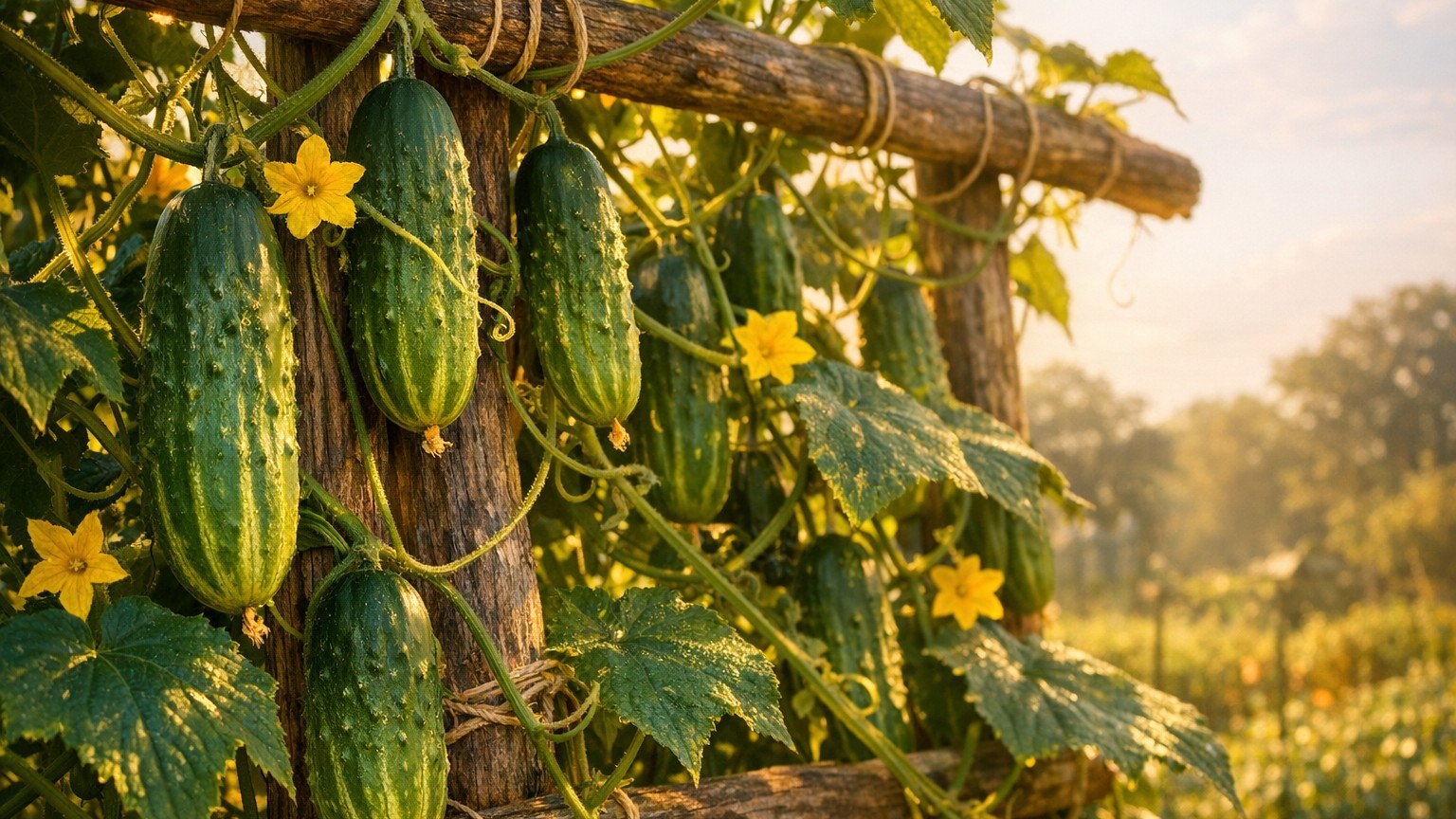

Mississippi‘s frost-free stretch runs long enough that season length almost never decides whether cucumbers succeed here. The real limit is heat load and humidity, which means the right choice depends less on which cultivar you pick and more on when you plant it and how you train the vine.
The short answer for Mississippi
Grow heat-tolerant, disease-resistant cucumbers on a trellis, timed as two shorter crops rather than one long summer planting. That’s the short version, and here’s why the numbers point that way.
The frost-free window at the reference station runs from a last spring frost of March 6 to March 22 out to a first fall frost of November 7 to November 22. Even taken conservatively, that’s well over 200 frost-free days, one of the longer growing seasons a home gardener will find in this cocon. Days-to-maturity isn’t the bottleneck here. Heat is: the reference station averages 71.1 days a year at or above 90°F, and cucumbers set fruit poorly once temperatures push past that mark for stretches at a time. Pollen viability drops, blossoms abort, and fruit that does form can turn bitter or misshapen.
That’s why the practical move is to split the season instead of running one continuous crop. Get an early planting in once frost risk has passed and let it finish before the worst of the summer heat arrives, then start a second round in late summer timed to mature ahead of the first fall frost window. Between those two windows, choose by type rather than by name:
| Type | Where it fits | Watch for |
|---|---|---|
| Vining slicing or pickling | Either window, trellised | Needs airflow given summer humidity |
| Parthenocarpic (self-fruitful) | Under row cover, extends either window | No pollinator needed, useful when bees are scarce |
| Bush | Containers, small beds, fast turnaround | Fits neatly between the two windows |
| Burpless / thin-skinned | Either window | Choose only cultivars bred for humid, not greenhouse, conditions |
None of these are variety names. Mississippi State University Extension trials cucumbers regionally and publishes results by disease resistance and performance, which is the level of detail worth chasing once the type is settled.
What will not work here

A single spring planting left to run through July and August is the most common failure. With 71.1 average days above 90°F, a vine that’s still flowering in peak summer will drop blossoms faster than it sets fruit, and spider mites tend to build up fast in that same hot, dry-leaf stretch. Growers who plant once in April and expect steady production through Labor Day are usually disappointed by mid-July.
Direct-seeding too early is the opposite mistake. Cucumber seed wants warm soil, and the last spring frost at the reference station falls anywhere from March 6 to March 22, meaning a planting in early March carries real odds of a setback. Cold, wet soil also just rots the seed before it germinates, so an early start on the calendar doesn’t buy anything if the ground hasn’t caught up.
Humidity does more damage than drought
Summer rainfall averages about 14.1 inches across June, July and August, arriving mostly as scattered thunderstorms rather than steady soaking rain, with June the driest month at 4.43 inches. That pattern, warm rain followed by warm sun, is exactly what downy mildew and angular leaf spot need. Vining types left to sprawl on bare soil sit in that moisture and splash disease spores from leaf to leaf. Tight spacing compounds it: what works in a dry western state, packing plants close to save space, turns into a mildew farm in Mississippi’s still, humid air.
European-style greenhouse cucumbers, bred for cool, low-humidity indoor conditions, are a poor match outdoors here for the same reason. They weren’t selected against the fungal pressure this climate produces, and they tend to decline fast once the rain and heat overlap in July.
What changes across Mississippi
Mississippi spans USDA Hardiness Zone 7b to 9a, and that spread matters more than a single statewide answer can capture. Zone 7b sits generally toward the northern part of the state, with colder winter extremes and a frost window that behaves closer to the tighter end of the ranges above. Zone 9a sits toward the Gulf Coast, with milder winters and more room on both ends of the frost-free season.
A gardener working land in the northern part of the state should treat the two planting windows more strictly. There’s less buffer if a late cold snap follows an early start, and the season closing at the earlier end of the November frost range (November 7 rather than November 22) leaves less room to stretch a second crop. Sticking to disease-resistant types and getting the fall planting in promptly matters more there.
Toward the coast, the milder end of the zone range often means a bit more flexibility on both sides of the season, an earlier possible start and a later possible finish. It doesn’t erase the heat problem, since the 71.1-day figure for days above 90°F comes from the central reference station and coastal humidity brings its own fungal pressure even where extreme heat is buffered by gulf air.
None of this tells an individual reader which zone their own yard falls into. The USDA Plant Hardiness Zone Map is the tool for that, and it’s worth five minutes before committing to a planting date.
Where to check this for your own county
This page describes Mississippi in general terms, built from a single reference station’s climate normals. A county extension office works from local trial data and local frost records, which will always beat a statewide estimate. That’s where to go next.
Mississippi State University Extension is the state’s land-grant extension service. On that site, look specifically for two things. First, a vegetable or garden planting calendar for your county or nearest office, which will narrow the frost dates used here down to what’s actually observed locally rather than at an airport station. Second, any variety trial results or recommended cultivar lists for cucumbers, since that’s where actual cultivar names, tested under Mississippi conditions rather than guessed at, will show up.
County agents also track disease pressure specific to their area, which matters given how much downy mildew and bacterial wilt vary by local humidity and by what’s been grown in nearby fields in past seasons. A recommendation built on that local history is worth more than any general rule about types and windows offered here.
Checking this against your own garden
Every date and average in this article describes a reference station, not a specific backyard. The garden itself will tell a more accurate story, and three things are worth watching directly.
Soil warmth by feel is the first. Cucumber seed germinates poorly in cold, damp soil no matter what the calendar says, so if the soil still feels cold and heavy a hand’s width down, it’s not ready, regardless of how far past the frost window the date sits.
The first flush of male flowers is the second. Cucumber plants typically produce a run of male flowers before the first female flowers (recognizable by the small swelling behind the petals) appear. Seeing male flowers without fruit forming yet is normal, not a failure, and it signals the plant is approaching fruiting maturity.
The timing of the first true leaves, the ones that appear after the initial seed leaves and actually look like cucumber foliage, is the third. If they show up noticeably faster or slower than a neighbor’s plants from the same seed packet, that’s a real signal about how warm or cool that particular spot in the yard runs compared with the general area, which matters more for next year’s timing than any statewide average.