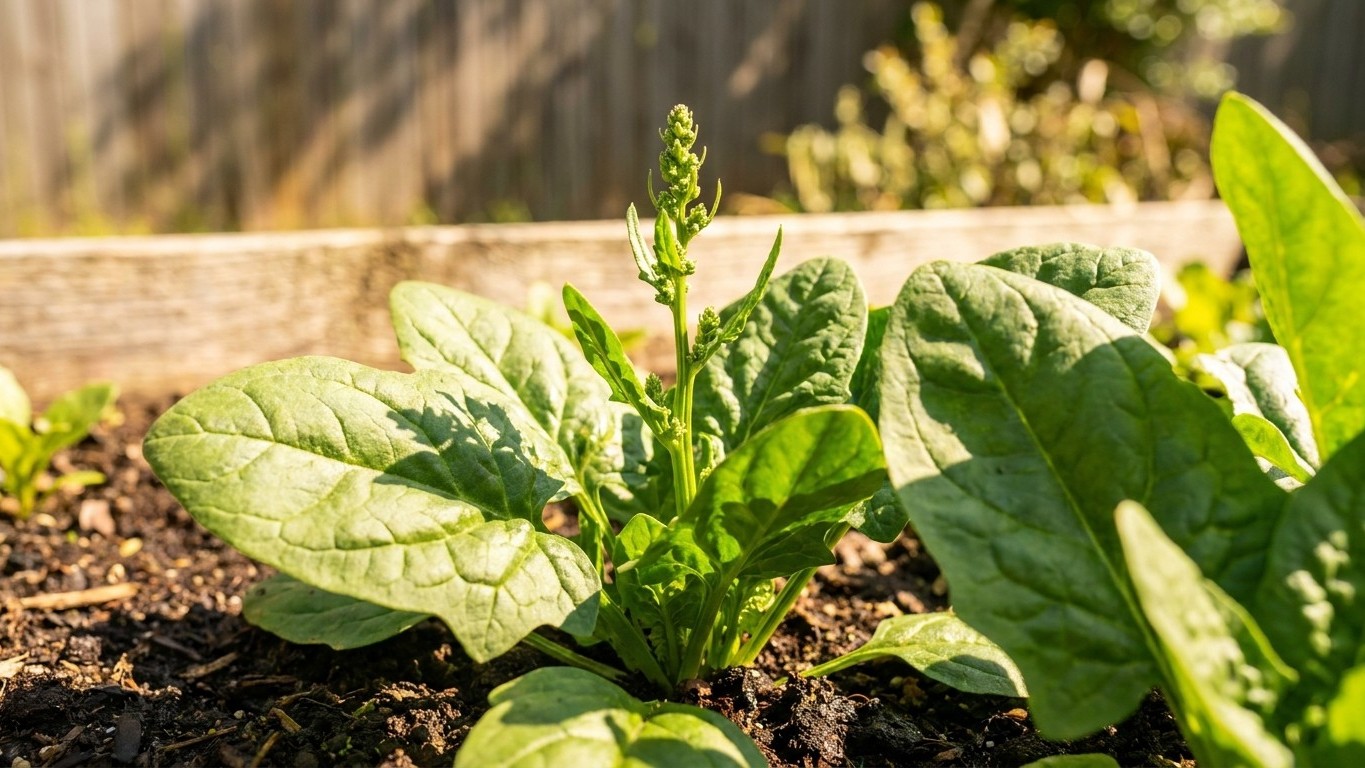

Spinach in North Carolina is eaten by three broad groups: chewing insects, small sap-feeding insects, and slugs and snails. Which group shows up first depends on the weather, and the frost-free window sets the calendar for both the spring and the fall crop. Heat, not insects, usually ends the season. That makes it easy to blame a bug for damage that has another cause. County extension agents can tell you what is active near you.
Which pests attack spinach in North Carolina
The authority for what is active in the state is NC State Extension, the state’s Cooperative Extension service, and its county centers. It publishes pest identification help by crop and by county. The groups below describe how the damage happens. The exact species in your yard is a question for your county office.
Chewing insects, mostly caterpillars and beetles, take bites out of leaf blades and edges. Sap feeders are small, soft-bodied insects that settle on tender new growth and drink from the plant. Slugs and snails are not insects at all. They are mollusks that rasp holes in leaves at night and hide in mulch and soil cracks by day.
Spinach gives a pest a very short window. In the fall, the plan is to plant early enough that the plants size up before the cold slows them down. Any feeder that arrives in that stretch has the whole crop to itself, and the plants have little time to outgrow damage. A leaf lost in week three hurts more than a leaf lost in week eight. If you are still planning the fall bed, When to Sow Autumn Spinach in North Carolina covers the timing. The broader Growing Spinach in North Carolina guide covers the rest of the season.
When each one shows up, and what it does first
Spring: slugs first, then chewers and sap feeders
Spring spinach goes in as soon as the soil can be worked, and the reference station near Charlotte sees its last spring frost between March 23 and April 5. The Blue Ridge to the west runs several weeks later, and the coastal plain runs earlier. In the first cool, damp weeks, slugs and snails are the likeliest feeders. The first sign is ragged holes in the middle of leaves, often with dried silvery trails across the leaf or the soil. Nothing is visible by day.
As nights stop dropping to freezing, chewing insects join in. You see leaf edges bitten away and holes of uneven size, sometimes with dark droppings on the leaf surface or on the soil below. Sap feeders follow on the new growth. The giveaway is the heart of the plant. Young center leaves look puckered or curled, and the undersides may carry clusters of tiny insects or a sticky film.
Warm weather also brings bolting, which can pass for a pest problem. Spinach grows best where temperatures stay at or below 75 F, and the Charlotte station averages 35.0 days a year at 90 F or higher. The longest day there gets 14 h 23 of daylight, and long days trigger flowering on their own. If you want to know whether a tall, bitter plant is bolting or bug-damaged, read Will Spinach Bolt Early in North Carolina?
Fall: warm soil, late insects, then frost
Fall sowing is held back by warm soil, and cold is not the obstacle. Germination drops once soil goes above 80 F, so seed sown too early in a hot September can fail to come up evenly. Gaps in the row, which look like a pest problem, are often a germination problem.
Seedlings that do come up emerge into the tail end of the warm season, when chewers and sap feeders are still active. The first sign in fall is often a seedling that has been cut off at soil level or stripped to a stem. The first fall frost, between October 30 and November 8 at the reference station, thins out most insects. Slugs and snails stay active on mild, damp nights well into the cool months, so they are the longest-running problem of the fall crop.
Telling the damage apart from everything else
Spinach leaves show stress in a handful of ways, and several causes look alike. Look for the feeder or its trail before you reach for any treatment. A plant with yellow leaves and no holes is not an insect problem, and spraying it only adds a new variable. Use the table below to sort what you see.
| What you see | Possible cause | What settles it |
|---|---|---|
| Ragged holes, silvery trails on leaves or soil | Slugs or snails | Trails are present and the damage appears overnight. A nighttime check finds the feeder. |
| Bitten edges, uneven holes, dark specks on leaves | Chewing insects | Droppings on or under the leaves. Insects found under leaves or in the soil at the base. |
| Curled, puckered center leaves, sticky film | Sap-feeding insects | Tiny insects clustered on the undersides of new leaves. |
| Older leaves yellow first, no holes | Nutrient shortage or soggy soil | Yellowing starts on the lower, older leaves. A soil test through your county extension office shows nutrient levels. |
| Midday wilting, crisp brown margins | Heat or water stress | Plants perk up by evening and the soil is dry at finger depth. |
| Spots with rings, fuzzy growth underneath | A leaf disease | Spots appear without any insect present and spread after wet weather. Extension’s plant clinic can confirm it. |
| Tall central stalk, narrow bitter leaves | Bolting | A flower stalk rises from the center. Chewing marks are absent. |
| Clean, torn edges or whole plants pulled up | Mechanical damage or a larger animal | Torn tissue and no slime trail or droppings. Damage is often within reach of the ground. |
Sorting helps because the fixes differ. A bed that is wilting in a hot spell needs mulch and morning water. A bed with a hungry slug population needs a different approach. Treating before you have found the cause is the usual mistake. A sharp photo and a leaf sample, shown to your county extension office, can identify it.
What actually works here, and what is a waste of time
On a short spinach season, the calendar does more than any product. Sowing when the weather suits spinach, not when it is convenient, keeps plants growing under 75 F and out of the heat that triggers bolting. A fall crop planted once the soil has cooled below 80 F comes up evenly and gets ahead of the slow-moving insects.
A physical barrier does the next most. Floating row cover set over the bed at sowing, before any pest arrives, keeps egg-laying insects off the plants. Seal the edges with soil or boards so nothing crawls under. Cover set after you see damage can trap the very insects you were trying to exclude. Spring cover also needs an eye on temperature, because spinach stalls and bolts when it gets too hot under the fabric.
Several cheap habits help. Water in the morning so leaves and soil surface dry by night, which makes the bed less inviting to slugs and snails. Pick off what you find at dusk and drop it in soapy water. Thin plants for airflow, clear dead leaves and old crop residue, and rotate the bed so the same feeders do not find the same crop waiting in the same place.
Several common moves waste effort. Spraying at the first hole usually hits damage that is already done. Homemade mixtures of unknown strength can scorch tender leaves. Sowing into hot soil to outrun the insects only lowers germination. And grabbing whatever pesticide is on the shelf is a gamble, since labels differ on which leafy crops they cover. Extension keeps track of what is registered for use in North Carolina, so ask them before you buy anything.
Where to check this for your own county
Your county center of NC State Extension is the place to start. Every county has an office with agents who know the local pests and the local weather. They can also run a soil test, identify an insect from a sample, and tell you which products are registered for leafy vegetables in the state.
Pest presence varies inside a state. The Blue Ridge, the Piedmont and the coastal plain differ in weather, and the frost dates in this article come from the Charlotte area. A slug problem on the coast may be a non-issue in the mountains, and the reverse is just as true.
Bring the evidence with you. Take the insect itself in a sealed bag, or a sharp photo of the leaf, the underside and the base of the plant. Add a note on when the damage started and how many days it has been since the last rain or watering. That is usually enough for an agent to point you toward the cause. The next step is simple. Tonight, check the undersides of the leaves, take two clear photos, and call or visit your county office in the morning.
Common questions
Is spinach with holes in the leaves safe to eat?
Leaves with feeding holes are generally fine once you trim off chewed or slimy bits and wash the rest well. Discard leaves with fuzzy growth, spreading spots or a rotten smell. If you are unsure what caused a spot, ask your county extension office before you eat it.
Do I need row cover on fall spinach?
It helps most at sowing and on young seedlings, when the plants cannot afford to lose leaves. Seal the edges and check under the fabric from time to time. Remove it if the weather turns warm, since spinach grows best at or below 75 F.
Will a cool summer keep spinach from bolting?
No. Long days trigger flowering as well as warmth, and the longest day at the Charlotte reference station has 14 h 23 of daylight. A cool summer does not cancel that. Spinach is best treated as a cool-season crop that finishes before the long days of early summer.
How long does harvested spinach keep?
Spinach is highly perishable. At 32 F and high humidity, good quality does not hold past about two weeks, and that is a ceiling. At the 41 to 50 F typical of a fridge door or warm shelf, it yellows and decays much faster. Keep it in the back of the bottom shelf, in a bag or container that holds moisture, and plan to eat it within days.