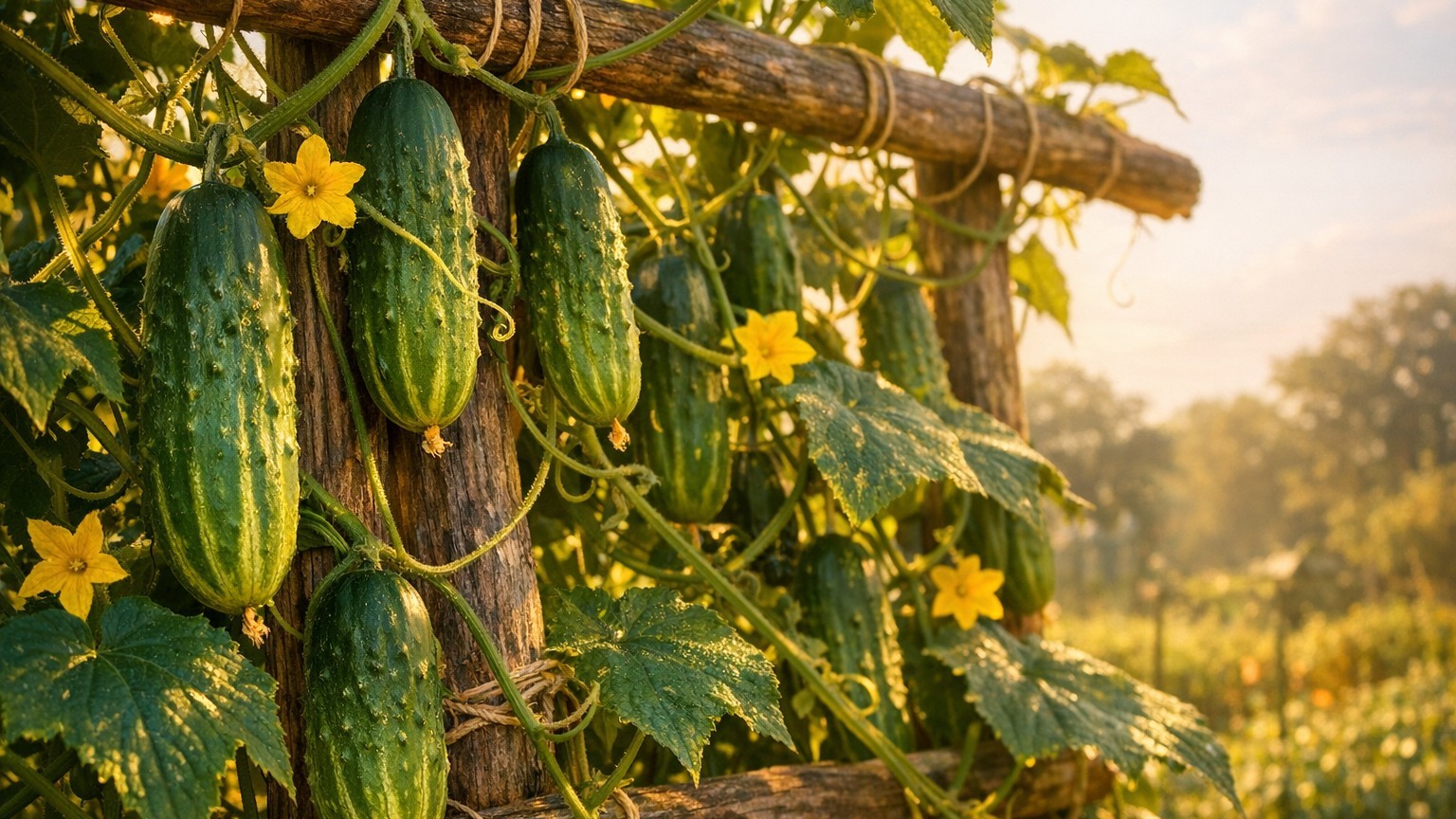

Nevada’s answer depends less on flavor preference than on how much heat and how many frost-free weeks a given yard actually gets. In the low desert around Las Vegas, heat-tolerant slicing and burpless types with strong vigor make sense because the growing window is long and brutally hot. Everywhere at elevation, from Reno to Carson City and the rural basins between, a shorter-season pickling or bush type is the safer bet, because the frost-free stretch there is nowhere near as generous.
The short answer for Nevada
Start with the type, not the variety name, because Nevada’s growing conditions swing too widely for one cultivar recommendation to hold across the state. The USDA Plant Hardiness Zone Map puts Nevada anywhere from zone 4a to zone 10a, a spread built entirely on the average annual extreme minimum winter temperature. That single fact tells you the state contains both some of the coldest gardening ground in the Lower 48 and some of the hottest, often within a few hours’ drive of each other.
In the hot end of that range, the reference station data shows 131.3 days a year averaging 90°F or hotter. That is the number that should drive variety choice in the low desert: cucumbers there need heat tolerance more than cold tolerance, and vigorous slicing or burpless types that keep setting fruit through a long, punishing summer will outperform anything bred for a short, cool season. Parthenocarpic types, which set fruit without pollination, are worth considering in that same heat because they keep producing even when extreme afternoon temperatures suppress bee activity.
At elevation, the calculation flips. A short, reliable frost-free window rewards bush and pickling types that mature quickly and don’t need a long tail of warm nights to finish sizing fruit. Vining slicing types bred for a long season are a poor match for a garden where the growing window closes early. Bush habits also make sense in tighter mountain-valley plots where space and season are both limited.
Why this page won’t name a cultivar
No single variety name belongs on a page covering both ends of a 4a-to-10a spread. What performs in the Las Vegas Valley can struggle or bolt too fast in a high mountain valley, and vice versa. The reliable path is to decide on type first (pickling, slicing, burpless, parthenocarpic, bush or vining) based on the season length and heat load in your part of the state, then check the University of Nevada, Reno Extension for the specific varieties actually trialled near you. That’s covered in more detail further down this page.
What will not work here

Long-season vining slicers are the first casualty in Nevada’s colder, higher-elevation gardens. When the hardiness range runs down to zone 4a, the growing season is short enough that a cucumber bred to ramble for weeks before its first real fruit set simply runs out of warm nights. A grower there is better served by a compact, fast-finishing type than by a variety that assumes a long, forgiving summer.
In the low desert, the failure mode is different: it’s watering habits, not the variety, that sink most plantings. Summer rainfall at the reference station averages about 0.7 inches across June, July and August combined, with June itself delivering just 0.04 inches. Pair that with 131.3 days a year at or above 90°F, and you get a plant that is losing moisture through its leaves far faster than any typical desert summer replaces it through rain. A weekly watering schedule, which might be fine in a wetter, cooler state, will leave cucumbers stressed and bitter in a Nevada low-desert summer. Shallow, frequent watering that matches the heat load, not a fixed weekly ritual, is what the numbers call for.
Soil texture changes that math again. The same 0.7 inches of summer rain, or the same irrigation you apply by hand, drains through sandy desert soil within a day but can sit in a clay-heavy garden bed for the better part of a week. A grower on sandy soil in a hot Nevada summer may need to water every other day just to keep pace with evaporation, while a clay-soil garden in the same town could hold moisture long enough to invite root rot if watered on the same schedule. There is no single Nevada watering rule; there’s a rule that depends on what’s under your feet.
Dense, ground-level spacing meant for a humid climate is also a mismatch here. Nevada’s summers are dry by national standards, but a gardener who plants cucumbers close together and waters overhead creates a small, localized pocket of humidity right at leaf level. That’s exactly the environment powdery mildew favors, even in a state that is otherwise one of the driest in the country. Spacing for airflow and watering at the soil line rather than overhead solves a problem the regional climate data alone wouldn’t predict.
What changes across Nevada
A hardiness range of 4a to 10a is not a rounding error, it’s close to the full range the USDA system uses across the entire continental United States. That means a “Nevada” recommendation, on its own, is nearly meaningless. The system is built on one variable, the average annual extreme minimum temperature, so it doesn’t capture summer heat or rainfall directly, but it’s still the clearest single signal of how differently the north and the south, or the valley floor and the mountain bench, will treat the same cucumber seed.
| Rough position in the range | What it implies for cucumbers |
|---|---|
| Colder end (near 4a) | Short frost-free window; favors fast bush and pickling types started from transplants rather than direct-seeded long-season vines |
| Warmer end (near 10a) | Long, hot season; favors heat-tolerant slicing, burpless and parthenocarpic types with frequent, shallow watering |
The reference-station frost data makes the same point from another angle. The Las Vegas airport station shows a last spring frost typically falling between January 7 and February 1, and a first fall frost between December 8 and December 23. Those dates describe an extreme desert urban-heat-island microclimate, not a usable planting window for Nevada as a whole. Reno, Carson City, and pretty much anywhere at meaningful elevation see frost arrive months earlier in the fall and linger months later in spring. Treating the Las Vegas figures as a statewide calendar would push a mountain-valley gardener into planting cucumbers straight into a killing frost.
There is no way to collapse a 4a-to-10a state into one frost date or one variety pick. The honest version of this section is that Nevada’s growing conditions vary about as much internally as they do compared with neighboring states, and the only fix is checking where your own county lands rather than assuming the state average applies to your yard.
Where to check this for your own county
The University of Nevada, Reno Extension is the source built for exactly this gap between statewide data and your own backyard. Its site, extension.unr.edu, is where to look next, and it’s worth being specific about what to search for once you’re there.
Two things matter most. First, the local planting calendar for your county or region, which will translate the frost data above into an actual sowing window for where you garden, rather than the desert-extreme dates tied to the Las Vegas reference station. Second, the list of cucumber varieties the extension office has actually trialled in Nevada conditions, since those trials account for the state’s heat and elevation swings in a way no national seed catalog can.
A county-level recommendation will always beat a state-level one, and it’s worth saying plainly that this page is the state-level version. It can tell you to think in terms of bush versus vining, or heat-tolerant versus fast-finishing, based on the hardiness range and the heat and rainfall normals cited above. It cannot tell you that a specific pickling variety performed well in a specific Washoe County trial garden last season, or that a particular slicing type struggled with bitterness in a specific Clark County heat wave. That level of detail lives at the county extension office, not on a statewide overview.
If your county doesn’t have a dedicated page yet, the statewide extension office can typically point you toward the nearest office that does, or toward a regional trial result that applies to your elevation band. Either way, the call to make is the same: use this page to decide what type of cucumber fits your climate, then use the extension service to confirm which named varieties of that type have actually proven themselves nearby.
Checking this against your own garden
Every date and average on this page is a normal, built from 1991-2020 climate data, not a forecast for your specific plot this year. Your own garden will tell you more than any regional figure once the season actually starts, and three simple observations matter most.
- Soil warmth by feel: cucumbers germinate poorly in cold soil no matter what the calendar says. Push a finger a couple of inches into the bed; if it still feels cold rather than mild, the soil hasn’t caught up to the air temperature yet, and seed sown now will sit and rot rather than sprout.
- The first flush of male flowers: cucumbers typically produce male flowers before female ones. Seeing that first flush tells you the plant has moved from vegetative growth into reproductive mode, and it’s a better sign of readiness than counting days on a seed packet.
- The first true leaves: the rounded seed leaves that appear first aren’t the plant’s real leaves. Watching for the first set of true, jagged-edged leaves is a clearer signal that the plant has established well and is ready to handle the stresses of your particular yard, whether that’s afternoon heat in the low desert or a cool night swing at elevation.
These three signs work anywhere in Nevada, from a raised bed in a mountain valley to a drip-irrigated row in the low desert, because they measure your microclimate directly rather than relying on a regional average that may or may not describe the ground you’re actually standing on.