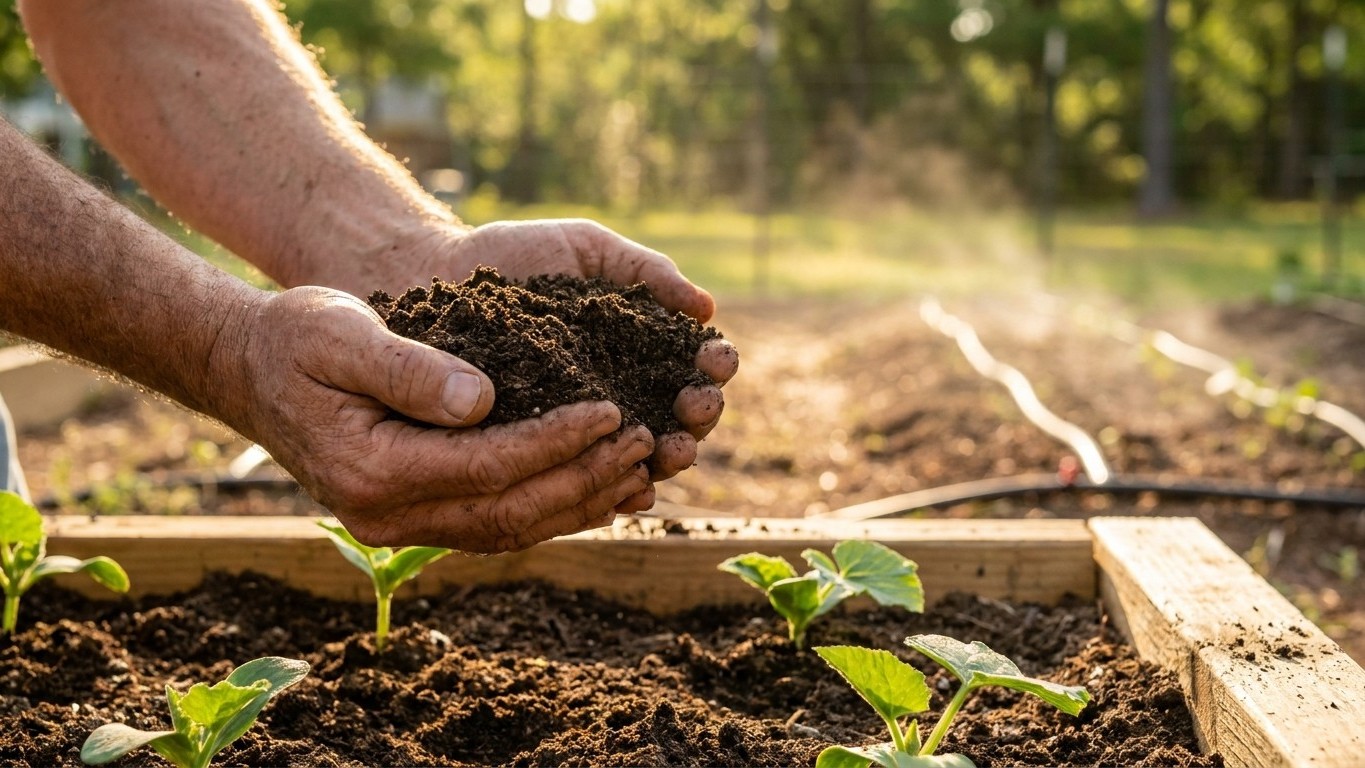

Summer squash goes into Montana ground once soil temperatures climb into the mid-60s, which in most valleys means late May through early June, not the frost-free date itself. In cooler mountain pockets that window shifts later, and the growing season overall runs shorter and hotter-in-bursts than gardeners further west or east often expect.
When the soil is warm enough in Montana
Gardeners tend to fixate on the last frost date as the green light for planting, but for summer squash that’s the wrong signal. Squash seed rots in cold, wet soil before it ever germinates, and transplants set out too early just sit there, stalled, waiting for warmth that hasn’t arrived. The frost date matters only as a marker of when the air stops threatening to kill the plant outright. The soil, several inches down where the roots actually live, takes longer to catch up.
For the Billings area, NOAA’s 1991-2020 Climate Normals put the last spring frost (32°F) somewhere between April 29 and May 10, based on the 30-70% freeze probability band at station USW00024033. That’s a probability range, not a guarantee. Some years the last frost lands earlier, some years it sneaks in later, and a gardener who plants right on the early edge of that window is accepting real risk in exchange for a longer season.
Why soil temperature, not the calendar, decides
Soil warms more slowly than air, especially in Montana where snowmelt keeps ground temperatures depressed well into spring. Practically, that means waiting one to two weeks past the last frost date before direct-seeding or transplanting summer squash, longer in shaded or heavy clay beds, shorter on raised, sandy, south-facing ground. A simple soil thermometer, checked at planting depth in the morning, tells you more than any date on a seed packet.
One more caution worth repeating: Billings sits in one of the milder valleys the state has to offer. Mountain valleys elsewhere in Montana can see frost in any month of the year, which means the dates above describe a reference point, not a promise for every backyard in the state. Gardeners at higher elevation or in a known frost pocket should push their planting date later and watch their own thermometer rather than trust a regional average.
Skip pesticide products and rate-based treatments at planting time. What actually protects young squash is timing itself: waiting for warm soil, hardening off transplants for several days outdoors before they go in the ground, and covering seedlings with row fabric on any night an early cold snap threatens after planting. That practice costs nothing and does more than any chemical intervention this early in the season.
How long the season lasts here
Layering the two NOAA frost windows together gives a real answer to how much growing time Montana gardeners actually get. The first fall frost (32°F) at the same Billings reference station falls between October 1 and October 14. Paired with the spring window of April 29 to May 10, that puts the frost-free season somewhere between roughly 144 and 168 days, depending on where each year falls within those probability bands. Call it four and a half to five and a half months.
That’s not a short season by Montana standards, but it’s also not generous. Summer squash germinates and grows fast once soil warms, so even the shorter end of that window, 144 days, is enough for a full harvest from a single spring sowing. The real question is whether it’s long enough to justify a second one.
What the window allows, and what it doesn’t
On the long end of the range, a gardener whose soil warms by mid-May and who doesn’t see frost until mid-October has roughly five and a half months to work with. That’s enough runway to consider a second sowing in early-to-mid summer, timed so the second crop matures before the fall frost risk climbs back up. On the short end, where soil warming lags into late May and frost returns by the first week of October, the math gets tighter. A second sowing there risks running out of season before the plants produce anything worth harvesting, which shifts the practical strategy toward getting the first sowing right rather than betting on a second.
Transplanting versus direct-seeding matters here too. In a shorter window, transplants started indoors a few weeks ahead give squash a head start the calendar won’t otherwise provide, though squash roots dislike disturbance and need a gentle transition rather than a rough transplant shock. In a longer window, direct-seeding once soil has warmed avoids that root check entirely and often catches up to transplanted stock within a few weeks anyway. For a fuller walk-through of how to time a second planting and stagger harvests, the succession sowing guide on this site covers the mechanics in more depth than fits here.
Heat and water in Montana
Montana’s Billings reference station averages 28.3 days a year at or above 90°F, a meaningful but not extreme heat load. That’s not Phoenix territory, but it’s enough hot stretches to matter for a crop whose pollen is short-lived once temperatures push into the high 90s. On the hottest days, flowers can open, fail to set fruit, and drop, which is why gardeners sometimes see plenty of blossoms but a lull in actual squash during the peak of a heat spell. The plant usually recovers once temperatures ease, but a run of very hot days in July or August can stall production for a week or more.
Squash leaves are large and lose water quickly, especially under that kind of heat, while the plant’s root system stays relatively shallow and can’t always keep pace with demand. That combination, big thirsty leaves and a modest root plate, is what makes water supply the deciding factor in a hot stretch, more than any single high-temperature reading.
What the rainfall numbers actually mean
Summer rainfall at the same station totals about 4.3 inches across June, July, and August, and it isn’t spread evenly. June averages 2.22 inches, July drops to 1.22, and August, the driest month of the growing season, averages just 0.87 inches. That decline lines up with the same stretch when heat load is highest, which means the driest, hottest part of the Montana summer arrives right when squash plants need water most.
That 4.3-inch figure is a normal, not a forecast, and it never tells the whole story on its own. Rain that falls as a single thunderstorm often runs off rather than soaking into the root zone, and sandy soil lets water through in a day where clay holds it for a week. A rain gauge on the actual garden bed, checked through July and August, tells a gardener far more than the regional average ever will. In practice, that August dry spell is usually where supplemental watering earns its keep, along with afternoon shade cloth on the hottest days to reduce leaf water loss and keep pollen viable through the worst of the heat.
Which summer squash suit Montana
None of this points to a single named variety, and that’s deliberate. The types trialled and proven to perform well in a given Montana county are documented by researchers who test them against local soil, elevation, and microclimate, something no general guide can substitute for. The Montana State University Extension Service publishes exactly that kind of trial data, county by county, and it’s the only recommendation that means anything for a specific garden.
What can be said in general terms, reasoned from the facts above, is which traits matter most here. In a shorter-season area, where soil warms late and frost returns by early October, the earliest-maturing types within a squash category give the best odds of a full harvest before the season closes. In a stretch with real heat load, the summer squash types bred or selected for airflow around the root crown and some tolerance of heat stress on flowering hold up better through the hottest weeks in July and August, particularly when paired with afternoon shade and consistent watering during the driest month.
Humidity, disease pressure, and the honest limits of this page
Montana’s summer rainfall is modest rather than heavy, which keeps fungal disease pressure lower than in humid eastern states, but a wet spring or an irrigation habit that keeps foliage damp can still invite powdery mildew, especially as plants mature and canopy thickens. Where that’s a concern, disease resistance becomes a more useful selection criterion than earliness or flavor.
Naming a specific variety here would be a guess dressed up as advice, and that’s the one mistake a gardener notices immediately when the seed packet doesn’t match what actually grows in their soil. The county extension office, reachable through the Montana State University Extension Service, keeps current trial results for the varieties that have actually performed in that region’s conditions, which is worth the phone call before committing a season’s growing window to seed.