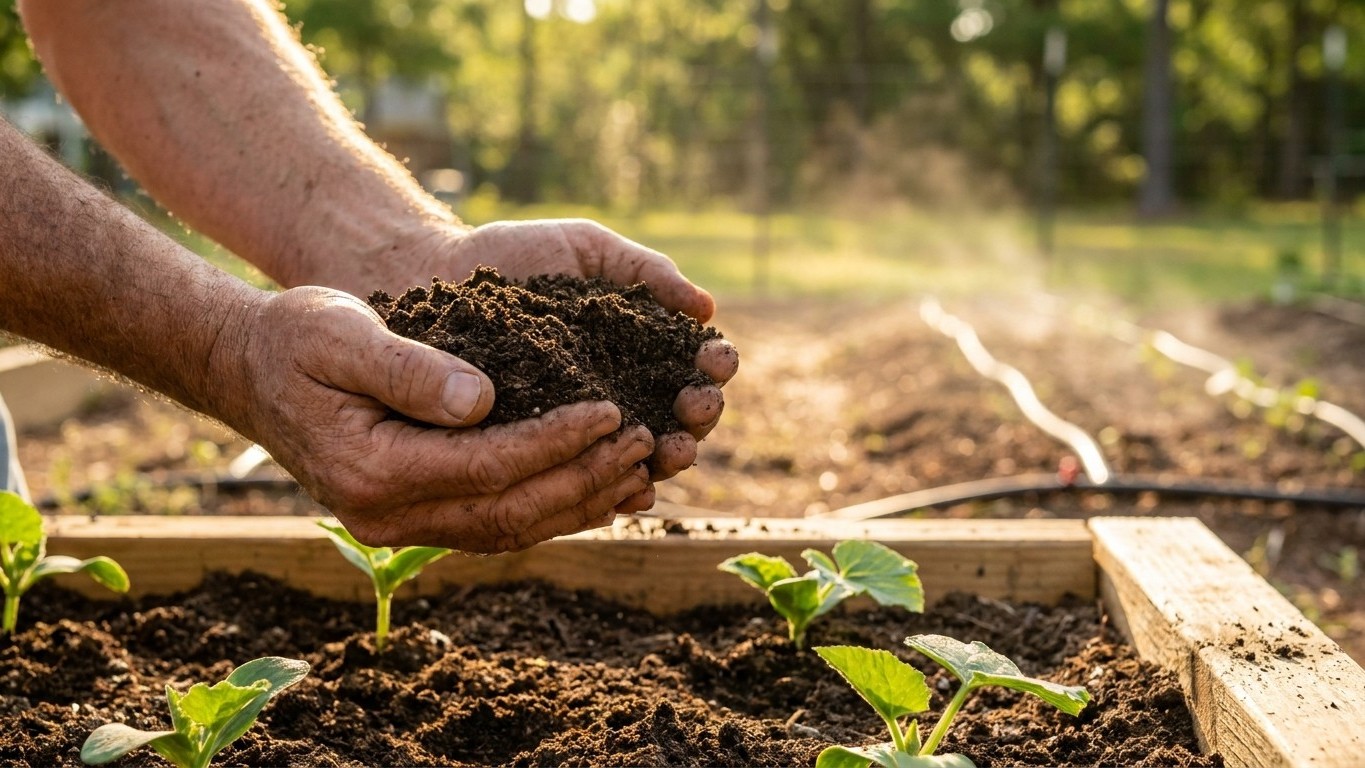

Summer squash goes into Nebraska ground once both the air and the soil have shaken off spring cold, typically late April through mid-May depending on where you garden in the state. The catch: frost dates tell you when the killing cold usually ends, not when the soil is actually ready to sprout a squash seed. That gap is where most transplant shock and rotted seed happen.
When the soil is warm enough in Nebraska
The reference station behind Nebraska’s official frost data (NOAA NCEI, 1991-2020 normals) puts the last spring frost between April 12 and April 23. That’s a 30-70% probability band, not a guarantee. Read it as: some years the risk clears by mid-April, some years it lingers into late April, and either can happen at your address.
Summer squash doesn’t actually care about frost once it’s past. What it cares about is soil temperature, and soil temperature lags air temperature by one to three weeks depending on how much sun the bed gets and whether it’s covered in mulch or bare dirt. A frost-free morning in late April can still sit over soil in the low 50s, and squash seed sown into that soil will often rot before it sprouts rather than simply sit and wait. The safer marker gardeners use is soil that’s stayed reliably above 60°F for several days running, which in most of Nebraska lands somewhere in the two to three weeks after that April frost window closes.
Location inside the state matters more than the statewide date suggests. Nebraska spans USDA Hardiness Zone 4a to 5b, a range built entirely from average extreme winter minimums, not spring warm-up speed, but it’s a useful flag that the western and northern parts of the state run colder and slower to warm than the Omaha-area station used for these frost figures. Suburban and rural yards typically see their own last frost land later than an airport station’s number, sometimes by a week or two, more at elevation. A garden in a low spot or a shaded valley will trail even further behind.
None of this changes with a fancier calendar trick. The practical move is a soil thermometer pushed two inches down, checked in the morning, for a few days before you commit seed or transplants. If you’d rather skip the guesswork on which squash types have actually performed well against Nebraska’s variable spring, the University of Nebraska-Lincoln Extension publishes county-level guidance and trial results that this page can’t replace. Naming a specific variety here would be guessing at conditions this article has no way of knowing for your yard; a local extension recommendation is built on actual trial data from your region.
How long the season lasts here
Run the two ends of Nebraska’s frost-free window together and you get a season that’s longer than most gardeners assume. The last spring frost falls between April 12 and April 23, and the first fall frost arrives between October 15 and October 26, both from the same NOAA NCEI 1991-2020 normals. Taking the tighter, more conservative pairing (latest spring frost to earliest fall frost), that’s roughly 175 days free of frost. Taking the wider pairing, it stretches to close to 197 days, better than six months.
That length changes the strategy, not just the calendar. Summer squash is a fast crop by vegetable standards, and a window this generous means one planting almost never uses up the whole season. There’s room for a second sowing in early to mid-summer, timed so the new plants take over just as the first round starts to slow down or succumb to the vine borers and mildew that build up on older plants as the season wears on. A short-season territory forces gardeners to make their one sowing count and lean on transplants to buy time; Nebraska’s window is generous enough that direct-seeding is a reasonable default for the first round, with a second direct-sown or transplanted batch following once early summer heat has settled in.
The trade-off worth naming honestly: a longer window doesn’t mean a hotter or wetter one, and Nebraska’s mid-summer heat and rainfall pattern (covered next) still sets real limits on how much a second planting benefits from that extra runway. Timing that follow-up sowing correctly matters more than simply having the calendar space for it. For the actual staggering, seed-spacing intervals, and how to judge when the first planting has peaked, the site’s succession sowing guide walks through the mechanics in more depth than fits here.
Heat and water in Nebraska
The reference station at Omaha logs an average of 28.1 days a year at or above 90°F. That’s a meaningful heat load without tipping into the extreme end of what squash can handle. Squash pollen loses viability fast once temperatures push into the high 90s and beyond, and a run of days that hot during flowering can leave blossoms opening and closing without setting fruit at all. Twenty-eight days scattered across a Nebraska summer, mostly clustered in July, means the crop faces real heat stress but rarely the sustained, weeks-long extremes that shut pollination down entirely further south.
Water is the tighter constraint. Summer rainfall across June, July and August averages about 12.6 inches, but it isn’t spread evenly:
| Month | Average rainfall |
|---|---|
| June | 4.44 in |
| July | 3.55 in |
| August | 4.6 in |
July, the driest of the three and often the hottest, is exactly when squash’s oversized leaves are pulling the most moisture out of the soil to stay cool. Those leaves are efficient at losing water through transpiration, and the plant’s root system sits fairly shallow, so it can’t chase moisture down the way a deep-rooted crop can. Combine a dry July with several 90-plus-degree days in the same stretch and a garden that isn’t getting supplemental water will show it fast: wilted leaves by afternoon, blossom drop, fruit that stalls out small.
This isn’t a desert-Southwest heat problem, and it would be wrong to treat Nebraska like one. Twenty-eight hot days a year and 12.6 inches of summer rain put it in a middle tier: not so cool and damp that mildew and slow ripening are the main worry, but not so brutal that afternoon shade cloth becomes standard practice either. The practical response is a consistent watering rhythm through July specifically, aimed at the root zone rather than the leaves, since wet foliage overnight is what invites powdery mildew even in a moderate-rainfall state like this one. A rain gauge on the actual plot, cross-checked against whether the soil is sandy (drains fast, needs more frequent watering) or clay-heavy (holds moisture longer but slower to warm), tells a gardener more than the regional average ever will.
Which summer squash suit Nebraska
Season length isn’t the limiting factor here. A frost-free window running 175 to nearly 200 days gives almost any summer squash type plenty of time to mature and produce a second flush, so the choice comes down to heat and moisture handling rather than speed.
Given Omaha’s 28.1 days above 90°F, types known for holding fruit set through short heat spikes are worth favoring over ones bred mainly for cool, short-summer regions. Given July’s dip to 3.55 inches of rain layered on top of that heat, plants that keep producing without heavy irrigation, and that tolerate a few dry stretches without dropping blossoms, have an edge. And because Nebraska’s rainfall, while moderate, still arrives as summer thunderstorms that wet foliage overnight, resistance to powdery mildew belongs on the checklist too, not as an afterthought but as a first-round filter alongside heat tolerance.
Broadly, the types worth asking about at a local nursery or extension office fall into a few groups:
- Bush-type squash bred for airflow around dense foliage, which helps foliage dry faster after rain
- Varieties selected for disease resistance packages that include powdery mildew, given the state’s summer humidity
- Vigorous, heat-tolerant types that keep setting fruit through short 90-plus-degree runs rather than pausing production
This page isn’t going to hand over a specific variety name, and that’s a deliberate choice rather than an oversight. The types that actually perform well in Lincoln differ from what does well in Scottsbluff or Chadron, given the state’s spread across USDA zones 4a to 5b and the real differences in growing conditions from the eastern river valleys to the western panhandle. University of Nebraska-Lincoln Extension runs regional variety trials and publishes results specific to Nebraska’s growing regions, and that trial data is the only recommendation that actually reflects what’s been tested against this state’s heat, rainfall and season length rather than a generic national list. A quick call to the county extension office, mentioning your specific soil type and whether your garden runs hot or shaded, will get you further than any variety name printed here could.