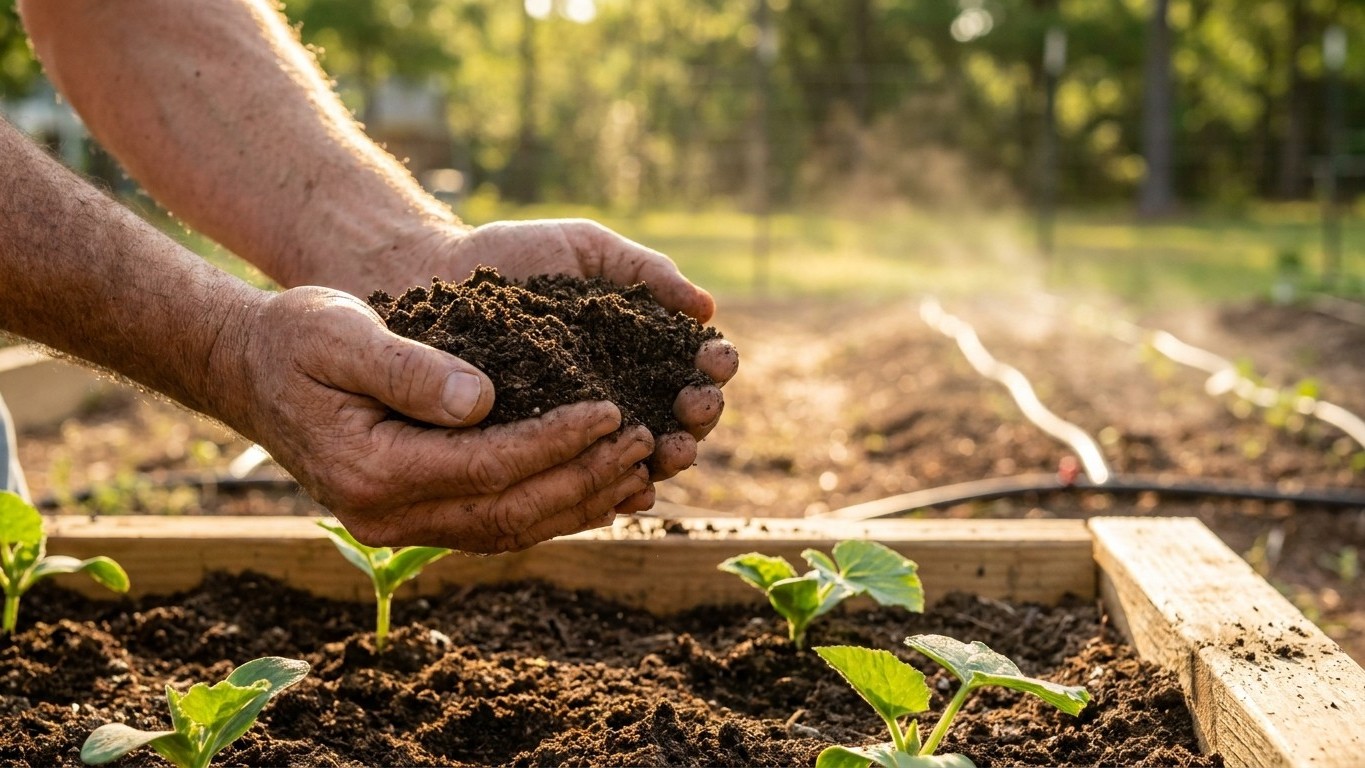

Summer squash goes in the ground in Rhode Island once soil temperatures hold above 60F, which typically lines up with mid-to-late May near the coast and pushes toward early June inland. The state’s frost window, its heat load, and its rainfall pattern each shape a different part of that decision, and they matter more than any calendar date alone.
When the soil is warm enough in Rhode Island
The frost date question gets asked first, but it’s the wrong question by itself. At the reference station tracked by NOAA (Providence, station USW00014765), the last spring frost falls in a window of April 7 to April 17, based on the 1991-2020 Climate Normals’ 32F freeze probability band. That’s a 30-70% probability range, not a guaranteed switch-off date for frost risk. Suburban and rural gardens away from the airport station tend to see frost linger later into spring, sometimes by one to two weeks, more if the garden sits at elevation or in a low-lying cold pocket.
Here’s the part that trips up a lot of gardeners: frost date and planting date aren’t the same thing. Summer squash doesn’t care when the last frost hit. It cares whether the soil itself has warmed enough to keep germinating seeds from rotting and transplant roots from stalling. Squash seed struggles to germinate in soil below 60F, and even once it’s up, cold soil slows root development for weeks after the air has warmed. So the frost date is a proxy, a rough marker that the air is unlikely to freeze anymore, but the soil lags behind air temperature by two to three weeks in spring. A garden that hit its last frost in mid-April might not have squash-ready soil until the very end of May.
What this means for timing in practice
Direct-seeding too early into cold, wet Rhode Island clay or loam is one of the more common ways a squash planting fails before it even sprouts. The safer play is to check soil temperature directly, either with a simple soil thermometer pushed a few inches down, or by watching for consistent nighttime lows staying above 50F. Waiting an extra week rarely costs a meaningful chunk of the season here, given how the frost-free window plays out (more on that next), but planting into cold soil can cost the whole first sowing.
Raised beds and black plastic mulch both warm faster than open ground, and either can shave several days off the wait. For gardeners who want the earliest possible start without gambling on frost, starting seed indoors three to four weeks before the expected transplant date, then hardening off before moving plants outside, is the more forgiving route, since it sidesteps the cold-soil germination problem entirely.
How long the season lasts here
Subtract the two ends of the frost window and Rhode Island’s frost-free season runs from roughly April 7-17 through October 24-November 3, which stretches to somewhere between about 189 and 210 days depending on where in that range a given year and location fall. That’s a genuinely long window by Northeast standards, and it changes the math on how a gardener should plan the season, not just when to start it.
A window this long means one sowing almost never has to be the only sowing. Summer squash plants tend to lose vigor and productivity after roughly six to eight weeks of heavy bearing, especially once squash bugs or vine borers move in, which they reliably do by midsummer across New England. With close to seven months of frost-free time available, a Rhode Island gardener has real room to put in a second round of seed in early-to-mid July, timed so the new planting hits its stride just as the first one starts fading. That second wave often outruns the pest pressure that builds up on older plants and pushes fresh squash production well into September, sometimes right up toward that late-October to early-November frost window.
This is also where the transplanting-versus-direct-seeding decision actually matters. In a short-season territory, transplants make sense because they buy back time the calendar doesn’t have. In Rhode Island’s longer window, direct seeding is a perfectly viable default for both the first and second sowings, since there’s enough season left to let seed catch up naturally. Transplants still have a place for that second sowing, though, if a gardener wants to skip a few weeks of adolescent growth and get replacement plants fruiting sooner. For the specifics on staggering those plantings, timing the gap between them, and reading when a first planting has peaked, the succession sowing guide on this site walks through the process in more depth.
Heat and water in Rhode Island
Rhode Island isn’t a hot-summer state, at least not by the standard summer squash actually struggles with. The reference station at Providence logs an average of just 9.4 days a year at or above 90F, according to the same 1991-2020 NOAA Climate Normals used for the frost data. That’s a modest heat load. Summer squash’s real trouble zone starts when temperatures push into the high 90s consistently, because squash pollen stays viable for only a few hours and heat that intense causes blossoms to drop before pollination happens. At under ten days a year near that threshold, and likely fewer that actually reach it, heat-driven pollination failure is not the main risk here.
Rainfall tells a more relevant story. Summer months bring about 10.3 inches of rain across June, July and August, out of 47.5 inches for the year, with July running driest at 2.91 inches, June at 3.81 inches, and August at 3.59 inches. That’s a reasonably wet summer compared to squash-growing regions further west or south, and it shifts the main risk away from drought stress and toward the opposite problem: too much moisture sitting on leaves and soil.
Squash’s broad leaves and shallow root system are built for a hot, dry climate’s tradeoffs, drawing lots of water fast through a wide leaf surface while relying on roots that don’t reach deep. In a low-heat, moderate-rain state like Rhode Island, that combination tips toward fungal trouble rather than water stress. Powdery mildew, downy mildew and other leaf diseases thrive in the humid, mild conditions that follow a rainy New England summer week, especially when foliage stays wet overnight. Slow ripening is the other consequence of a cooler summer: fewer hot days means fruit sizing up a bit more slowly than it would in a hotter zone.
The practical response isn’t heavier irrigation, since rainfall here usually covers baseline water needs outside of dry stretches. It’s airflow and moisture management: spacing plants generously, watering at the soil line rather than overhead, and removing lower leaves that stay damp and shaded are the practices that matter more in Rhode Island’s climate than any irrigation schedule built for a hot-climate garden.
Which summer squash suit Rhode Island
Given a long frost-free season, low heat load, and a humid summer with regular rain, the type of summer squash that fits Rhode Island best is one bred for disease resistance first, heat tolerance a distant second. Powdery and downy mildew resistance matters more here than in a hot, dry state, because the state’s own climate normals point squarely at humidity-driven disease pressure rather than heat stress or drought as the dominant risk.
The season length also opens up choices that a shorter window would foreclose. Because there’s room for a second sowing in early-to-mid July, a gardener isn’t locked into planting only the earliest-maturing types out of necessity. An early type still has value for getting the first harvest going sooner and for finishing that first planting’s productive run before pest pressure builds, but a slightly later-maturing type can work fine for the second sowing, since there’s still a solid two to three months of frost-free time left to bring it to harvest even after a July start.
What this page won’t do is name a specific variety. Naming a cultivar without the trial data behind it is exactly the kind of confident-sounding advice that falls apart the moment a gardener tries to source it or finds it performs nothing like described. Variety trials run by the state’s own land-grant extension service are the only recommendation that means anything at this level of specificity, because they’re tested against Rhode Island’s actual soil, pest pressure and weather, not a national average. The University of Rhode Island Cooperative Extension maintains current guidance on varieties trialled for the region, along with disease-resistance ratings and planting schedules calibrated to local conditions.
The broader takeaway holds regardless of which type or variety a gardener eventually picks: match the plant’s needs to what the region’s own numbers say, which in Rhode Island’s case means prioritizing airflow, disease resistance and a staggered planting schedule over anything built around beating the heat.