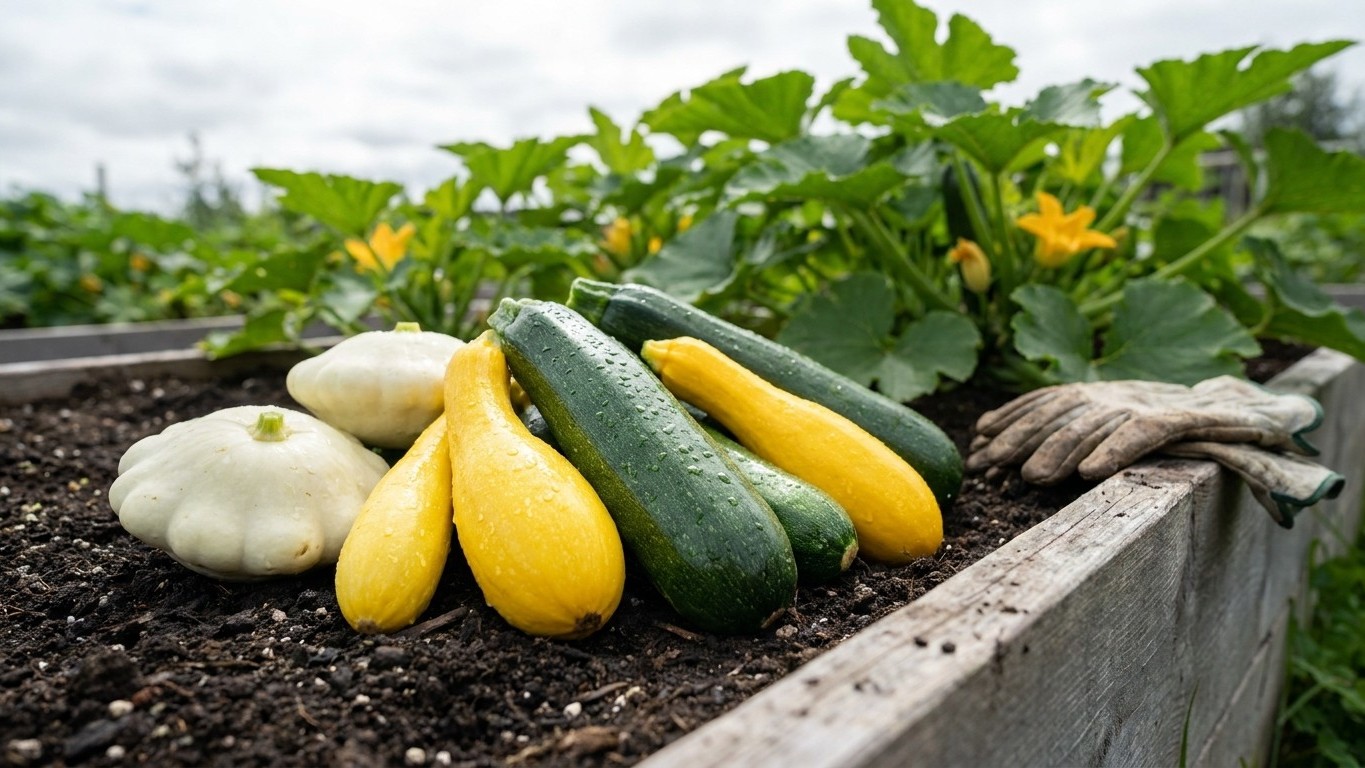

Summer squash grows well almost anywhere in Mississippi, but the varieties that thrive here are the ones bred to shrug off heat and humidity, not the ones that mature fastest. With a frost-free window stretching roughly from March to November and 71 days a year above 90°F, the real decision is disease resistance and heat tolerance, not days-to-maturity.
The short answer for Mississippi
Start with the numbers that actually apply here. The reference station’s last spring frost falls between March 6 and March 22, and the first fall frost doesn’t show up until November 7 to November 22. Stretch those two dates out and you get a frost-free season that can run anywhere from about 230 to 261 days. Summer squash needs 45 to 60 days from seed to first harvest. That gap between what the season offers and what the crop requires is enormous, which means season length is simply not the constraint for Mississippi gardeners the way it is in, say, the upper Midwest.
What does constrain the choice is heat load and disease pressure. The reference station averages 71.1 days a year at or above 90°F, and summer rainfall arrives in a pattern of localized thunderstorms rather than steady soaking rain (14.1 inches across June, July and August, with June the driest month at 4.43 inches). That combination, heat plus humid air plus intermittent rain, is exactly the recipe for powdery mildew, downy mildew and heavy squash vine borer pressure by midsummer.
Given that, the type of summer squash matters more than the specific variety name. Yellow crookneck and straightneck types bred for southern growing conditions, and zucchini types selected for powdery mildew tolerance, consistently outperform older open-pollinated lines that were never tested against Deep South disease pressure. Pattypan and scallop types can work too, but they tend to show mildew symptoms a week or two earlier than crooknecks in the same bed, based on how extension trial reports across the Southeast typically describe relative disease onset.
Because the season here is long enough to support more than one planting, the better strategy isn’t picking one variety and nursing it through August. It’s succession planting: an early crop that will likely decline under disease and borer pressure by midsummer, followed by a second sowing timed so it comes into production as the first one fades. That approach uses the long frost-free window Mississippi actually has, instead of fighting it with a single planting that has to survive the entire season on its own.
What will not work here
A squash variety that needs a short, cool summer to perform well is fighting the wrong climate here. Mississippi’s 71.1 days a year above 90°F put steady heat stress on any plant not bred for it, and varieties developed for northern growing regions tend to show blossom drop, stunted fruit and early bolting when daytime highs sit in the mid-90s for weeks at a stretch. That’s not a failure of gardening technique. It’s a mismatch between the plant’s genetics and the region’s heat load.
Watering on a weekly schedule is another common failure point. June, the driest summer month at 4.43 inches, often delivers that rain in one or two heavy thunderstorm events rather than gradual moisture. A single weekly watering can’t make up for a ten-day dry stretch sandwiched between storms, especially with evaporation running high on 90-degree-plus days. Squash plants watered only once a week in a Mississippi July commonly show blossom-end stress and reduced fruit set, not because the seasonal rainfall total is low, but because it doesn’t arrive on a schedule the plant can rely on.
Spacing and disease pressure
Close spacing, the kind that might work fine in a drier western state, defeats itself here. Humid air trapped between crowded plants keeps leaf surfaces wet longer after rain or morning dew, and that extended wet period is what powdery and downy mildew need to establish. Growers who pack squash hills tightly to save bed space typically see mildew symptoms appear two to three weeks earlier than those who leave full air circulation between plants.
Finally, a single planting date carried through the whole season tends to fail by late summer regardless of variety. Squash vine borer populations build through the season, and by August even a resistant variety planted in April is often carrying enough accumulated stress, from borer damage, mildew and heat, that yield drops off sharply. That’s the specific failure mode succession planting is designed to avoid.
What changes across Mississippi
Mississippi spans USDA Hardiness Zones 7b through 9a, based on the USDA Plant Hardiness Zone Map (2023, built on 1991-2020 normals). That’s a meaningful spread within one state, and it means there’s no single planting date or heat expectation that applies everywhere. The hardiness zone system measures one thing, the average annual extreme minimum temperature, so it speaks to winter cold, but it’s also a useful marker for how the rest of the growing calendar shifts from north to south.
A gardener in the northern part of the state, closer to zone 7b, should generally expect a later last frost and an earlier first fall frost than the reference station figures used above, since those numbers come from one station and suburban or rural sites nearby often run one to two weeks later in spring and earlier in fall. A gardener near the Gulf Coast, closer to zone 9a, likely sees the opposite: an earlier practical planting window and a longer stretch of warm fall weather before frost becomes a real risk.
Heat load likely shifts too. The 71.1 days-above-90°F figure comes from the Jackson-area reference station; coastal and far-southern parts of the state plausibly see a different count, and interior areas away from the moderating effect of the Gulf may run hotter still in peak summer. None of this changes which types of summer squash work best statewide, heat and disease tolerance still matter everywhere, but it does change when to plant and how many succession rounds are realistic. A reader trying to pin down exactly which zone applies to their own property should check the USDA map directly rather than guess from a regional description.
Where to check this for your own county
This page describes Mississippi at the state level, built from one reference station’s climate normals. That’s useful for understanding the general pattern, heat load, frost windows, disease pressure, but it’s not a substitute for county-level guidance. A county recommendation beats a state one every time, because it accounts for local soil, microclimate and the specific varieties that have actually been trialled nearby.
Mississippi State University Extension is the place to find that detail. Its site, extension.msstate.edu, publishes county-level planting calendars and vegetable variety recommendations developed through actual trials in Mississippi conditions, rather than general regional advice. Two things are worth looking for specifically once there: the local planting calendar for your county, which will reflect frost timing closer to your actual location than a single airport weather station can, and any published variety trial results for summer squash, since extension programs periodically test crookneck, straightneck and zucchini lines against regional disease pressure and report which held up best.
County extension agents also track pest and disease pressure in near real time, something a climate-normals page like this one can’t do. If squash vine borer or a mildew outbreak is running heavier than usual in a given year, that’s the kind of timely detail a county office will have and a general state guide won’t. Treat this page as the starting framework, the reasoning about why heat and disease resistance matter more than maturity date in Mississippi, and treat the county extension office as the source for what to actually plant this season.
Checking this against your own garden
Every date and average on this page is a regional pattern, not a guarantee for one specific yard. The most reliable information a gardener has is what’s happening in their own bed, and three simple observations tell most of the story.
Soil warmth by feel is the first. Summer squash seed germinates poorly in cold soil regardless of what the calendar says. Pressing a hand into the top couple inches of soil and finding it comfortably warm, not just air-temperature but warm to the touch on a sunny afternoon, is a better planting signal than any date range, especially in a state where suburban and rural sites often run cooler in spring than the airport station these normals come from.
The first flush of male flowers is the second thing to watch. Squash plants typically produce male blossoms before female ones, and a strong early flush signals the plant has settled in and is building energy toward fruiting. A long delay in flowering, or flowers that appear then drop without any fruit set, often points to heat stress or inconsistent watering specific to that spot, not a variety problem.
The appearance of the first true leaves, the serrated leaves that follow the rounded seed leaves, marks the point where the plant is drawing on its own root system rather than seed reserves. Slow or stunted true-leaf growth in a bed that’s otherwise been watered and fed normally is often a sign of a microclimate issue, poor drainage, too much shade, competing roots nearby, that no regional guide could have predicted, and no succession-planting schedule can fix on its own.