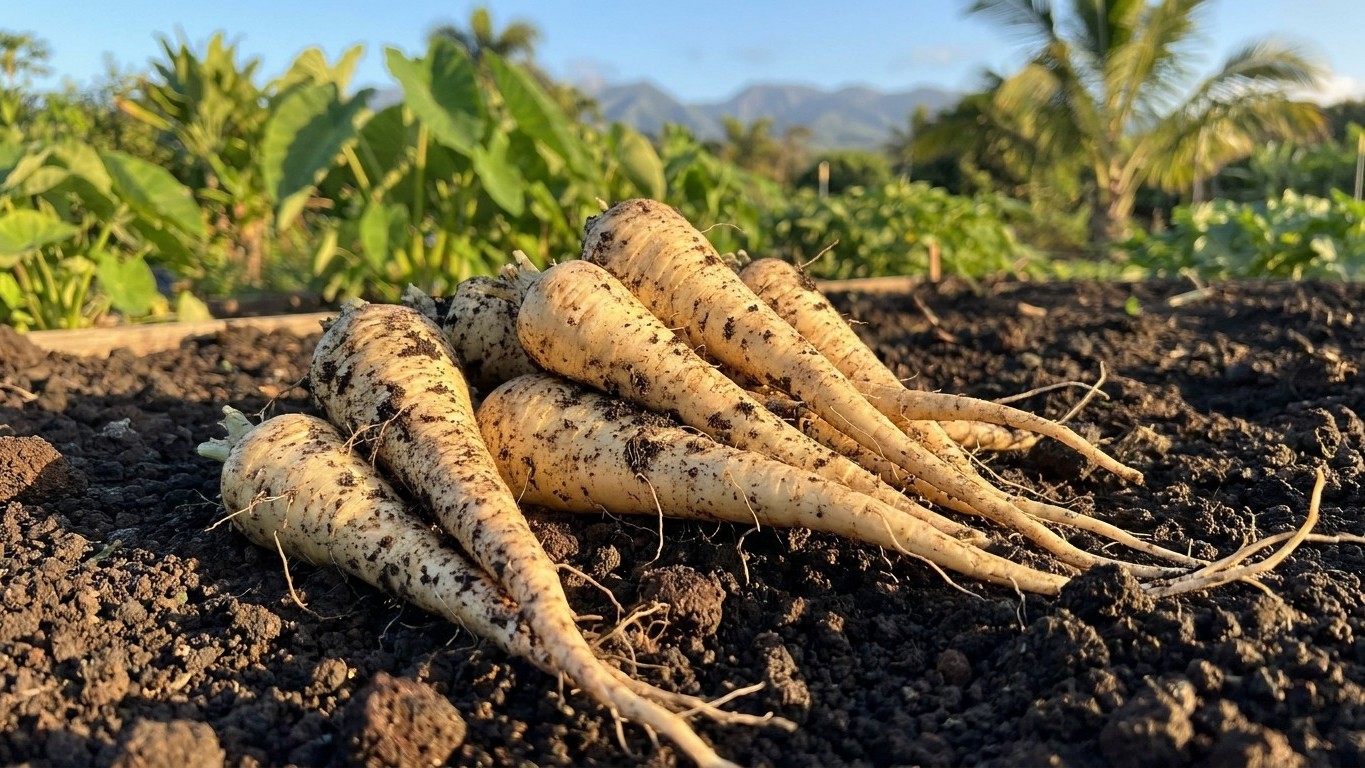

Of the eight pests University of Illinois Extension documents for the state, only two have a real shot at feeding on parsnip: Japanese beetle and brown marmorated stink bug. Both are generalist feeders that show up well after seedlings are established, and both attack leaves, not the root itself. The other six on that list target different plant families entirely and never touch a parsnip patch.
Which pests attack parsnip in Illinois

University of Illinois Extension documents eight insect and invertebrate pests present in this state: bagworm, brown marmorated stink bug, Colorado potato beetle, Japanese beetle, jumping worms (Amynthas spp.), spotted lanternfly, squash bug (Anasa tristis), and squash vine borer. That’s the full list, and it isn’t padded with pests borrowed from other states or crops.
Most of that list has nothing to do with a parsnip bed. Bagworm targets conifers and woody landscape plants. Colorado potato beetle is a nightshade specialist feeding on potato, tomato, and eggplant; parsnip belongs to the carrot family and isn’t on its menu. Spotted lanternfly feeds on woody plants and vines, chiefly tree of heaven and grapevine, with no documented interest in herbaceous garden crops. Squash bug and squash vine borer are both cucurbit specialists tied to squash and pumpkin; parsnip has no vine or rind for either to exploit. Jumping worms don’t eat living plant tissue at all, they’re soil dwellers that consume leaf litter, and their damage shows up as altered soil structure, not chewed leaves.
That leaves Japanese beetle and brown marmorated stink bug, and only two of the eight are generalist feeders broad enough to reach parsnip foliage at all. Japanese beetle has one of the widest host ranges of any garden pest in the Midwest, feeding on hundreds of plant species, and garden vegetables with exposed leaf canopy are well within reach. Brown marmorated stink bug is similarly indiscriminate, piercing and sucking on a long list of fruits, vegetables, and field crops rather than sticking to one family.
Neither insect is a specialist on parsnip the way carrot rust fly or parsnip webworm are elsewhere in the country, and neither of those specialists appears on the University of Illinois Extension list for this state. Practically, a parsnip grower here is watching for incidental damage from two broad feeders, not a dedicated parsnip pest working through a predictable life cycle on that one crop.
When each one shows up, and what it does first
Parsnip is sown in place, not transplanted, and the timeline that matters starts at seeding. Germination takes 14 to 21 days, so a row that looks bare at two weeks isn’t necessarily a failed planting. Seed typically goes in the ground two to three weeks before the last frost, which in this state’s reference station runs April 11 to April 22, though gardens outside that reference city commonly see frost linger one to two weeks longer. Once seedlings are up and true leaves expand, the plant has roughly 100 to 120 days ahead of it before the root reaches usable size, which pushes harvest close to, or past, the first fall frost window of October 24 to November 3.
Japanese beetle damage shows up on foliage well after that early seedling stage, once leaves have filled in enough to feed a beetle. The first sign is skeletonized leaf tissue: the beetle chews out everything between the veins, leaving a lacy, see-through pattern rather than clean holes. Adults tend to feed in groups, so damage often appears clustered on a few plants or leaves rather than spread evenly across the row.
Brown marmorated stink bug works differently because it pierces and sucks rather than chews. The first visible sign is usually stippling, small pale or yellowish dots scattered across a leaf, sometimes developing into brown, slightly sunken spots as tissue dies back around the feeding site. Unlike Japanese beetle damage, there’s no missing leaf tissue at first, just discoloration.
Because parsnip’s edible portion sits underground, foliage damage matters most when it’s heavy enough to reduce the leaf area the plant needs to bulk up the root over that 100 to 120 day stretch. Light, scattered feeding late in the season has far less consequence than the same damage happening early, while the root is still developing.
Telling the damage apart from everything else
Foliage problems on parsnip get blamed on insects more often than they should be. Heavy or stony soil is a well-known cause of forked, misshapen roots, and so is inconsistent overwatering that encourages side roots to branch off the main taproot; those are separate causes, and neither has anything to do with an insect. Utah State University Extension notes that parsnip does best in deep, sandy soil, and that heavy ground needs to be double dug before planting, which is a soil-preparation issue, not a pest one.
Yellowing or pale foliage gets read as pest damage constantly, but nutrient deficiency and drought stress produce similar-looking symptoms without a single bite mark or piercing spot anywhere on the plant. The distinguishing sign is uniformity: deficiency and drought tend to fade a whole plant or row evenly, while insect feeding leaves discrete marks, whether that’s the lacy skeletonizing of a beetle or the scattered stippling of a stink bug.
Fungal and bacterial leaf diseases add another layer of confusion, since they can produce spots that resemble stink bug stippling at a glance. The detail that separates disease from insect feeding is the presence or absence of a living insect nearby: disease lesions often expand over days with a defined ring or margin and sometimes a powdery or fuzzy texture, while insect-feeding spots stay static once the insect has moved on.
| Symptom | Likely cause | What distinguishes it |
|---|---|---|
| Forked, branching root | Heavy/stony soil or inconsistent overwatering | No leaf damage at all; problem is entirely below ground |
| Lacy, see-through leaf tissue | Japanese beetle feeding | Veins remain intact; tissue between them is gone |
| Scattered pale or brown spotting | Brown marmorated stink bug feeding | Spots stay static, no expanding ring or fuzzy growth |
| Uniform pale or yellow foliage | Nutrient deficiency or drought stress | Affects whole plant or row evenly, no discrete marks |
| Expanding spots with defined margins | Fungal or bacterial disease | Lesion grows over days; often has a ring or texture |
Any symptom that doesn’t clearly match one of these patterns is worth a call to the local Extension office rather than a guess made from a photo online.
What actually works here, and what is a waste of time
A parsnip bed has one advantage most vegetable gardens don’t: since the crop is grown for its root and never needs pollination, a floating row cover can stay on from seeding straight through to harvest without blocking a single bee. That matters more than any treatment timing, because it means exclusion, keeping the insect off the plant in the first place, is available for the entire 100 to 120 day season rather than just a short window.
Installing that cover right after seeding, and keeping the edges buried or weighted down, blocks both Japanese beetle and brown marmorated stink bug from reaching the foliage at all. Hand-picking is the other low-tech option that holds up: Japanese beetles are large, slow, and easy to knock into a container of soapy water in the early morning when they’re least active, and doing this over several mornings reduces a local population noticeably without any product involved.
What doesn’t hold up well is reactive spraying aimed at either insect once damage is already visible. Brown marmorated stink bug adults are highly mobile, moving in from field edges and neighboring yards, so a treatment that kills the ones present today does little to stop new arrivals tomorrow. Japanese beetle traps marketed for home gardens carry a similar problem: they’re often more effective at drawing beetles into the yard from surrounding properties than at removing them, so a trap set up right next to a parsnip row can make local damage worse, not better.
Any decision about a pesticide product, including what’s legal to use on a food crop in this state, belongs with University of Illinois Extension and its county offices, not with a generic product label. This site names the pests and the timing; it doesn’t prescribe what to spray.
Where to check this for your own county
University of Illinois Extension maintains a network of county offices, and that’s the right first call for anything that doesn’t clearly match the patterns above. A statewide list of documented pests describes what’s present somewhere in Illinois, not what’s guaranteed to be in any one backyard, and pest pressure from Japanese beetle or brown marmorated stink bug can vary sharply from one county to the next depending on local land use, nearby host plants, and recent weather.
The same caution applies to frost dates. The April 11 to April 22 last-frost window and the October 24 to November 3 first-frost window both come from a single reference weather station, and gardens outside that immediate area commonly see frost arrive one to two weeks later in spring and one to two weeks earlier in fall. A gardener at higher elevation or farther from that station should treat both windows as a starting point, then confirm timing with their own county Extension office before locking in a seeding date.
Bring a clear photo and a specific description, chewed lace-pattern versus static spotting versus a forked root, when contacting a county office. That level of detail is what lets an Extension agent give a real answer instead of a general one, and it’s the fastest way to confirm whether what’s showing up in a specific parsnip row matches the documented pattern for Japanese beetle, brown marmorated stink bug, or something else entirely that isn’t on the statewide list at all.
Common questions
Do carrot rust fly or parsnip webworm affect parsnip in Illinois?
Neither appears on the University of Illinois Extension list of documented pests used for this page. If a grower suspects either one, a county Extension office is the right place to confirm, since this page only names pests that service documents for this state.
Can Japanese beetle damage kill a parsnip plant outright?
Heavy, repeated skeletonizing early in the 100 to 120 day growing period reduces the leaf area the plant needs to build its root, which can shrink the harvest, but isolated feeding on a few leaves late in the season is a much smaller concern.
Does a floating row cover need to come off at any point for parsnip?
No. Since parsnip is grown for its root and doesn’t need insect pollination to produce a harvestable crop, the cover can stay in place from seeding through harvest without any tradeoff.
Why do parsnips taste better after frost if the plant can be damaged by cold?
The sweetening comes from exposure to frost itself, which converts stored starch to sugar over several cool weeks, not from how well the plant tolerates the region’s winter minimum. Those are two separate things, and confusing them leads to harvesting too early.