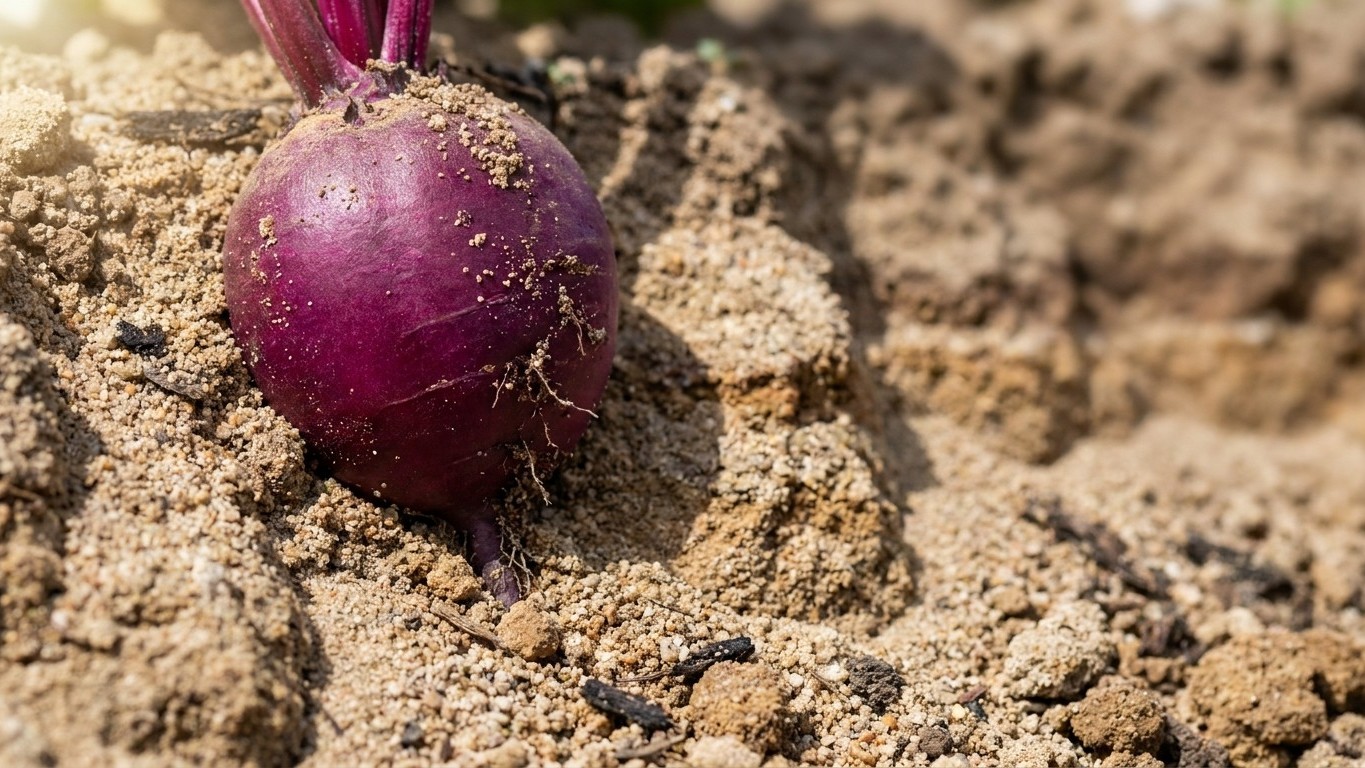

Purdue Extension Entomology documents ten insect pests active on Indiana vegetable crops, but only two of them are actual beet feeders: the seedcorn maggot, which attacks the seed and root before the plant ever breaks the soil surface, and the cabbage looper, which shows up later to chew foliage. The maggot is a spring problem tied to cool, wet soil around planting time. The looper is a summer problem that keeps going as long as leaves are tender.
Which pests attack beet in Indiana

The full list Purdue Extension Entomology documents for the state’s vegetable gardens reads: Asparagus beetle, Brown marmorated stink bug, Cabbage looper, Colorado potato beetle, Mexican bean beetle, Seedcorn maggot, Spotted cucumber beetle, Squash bug, Squash vine borer, and Striped cucumber beetle. That is a broad roster, and most of it has no business anywhere near a beet row.
Start with the ones to cross off. The asparagus beetle feeds on asparagus spears and ferns, a completely different plant family, so a beet grower can ignore it outright. The Colorado potato beetle and the Mexican bean beetle are named for their hosts for good reason: the first sticks to potatoes and other nightshades, the second to snap beans and related legumes, and neither has any interest in a beet leaf. The squash bug, squash vine borer, and striped cucumber beetle are all cucurbit specialists, built around melons, squash, and cucumbers, and they will pass right by a beet bed on their way to a zucchini plant. The spotted cucumber beetle leans the same direction, favoring cucurbits and corn as its primary hosts. The brown marmorated stink bug is a genuine generalist with a wide host range, but its documented damage in Indiana centers on fruiting vegetables and tree fruit, not root crops with edible tops, so it does not belong on a beet-specific watch list.
That leaves two species actually documented as beet feeders here: the seedcorn maggot and the cabbage looper. The list is short because the pest pressure on beet in this territory is genuinely narrow, not because this page is trimming it down. A gardener who spends a season scanning for squash bugs on a beet row is watching the wrong insect. The seedcorn maggot works underground, tunneling into the seed itself or the germinating root, which is why damage often looks like poor germination rather than obvious insect feeding. The cabbage looper works above ground, a pale green caterpillar that chews ragged holes in the leaves and can strip a stand of foliage if left unchecked through a warm stretch.
Knowing which two matter changes how a gardener spends time. Scouting for the maggot means checking soil conditions and seed rows at planting, not watching leaves. Scouting for the looper means the opposite: checking leaf undersides for the pale, ribbon-like egg deposits and skipping worry about the root zone entirely.
When each one shows up, and what it does first
Beet is direct-seeded, not transplanted, so every timing question here starts from the seeding date, not from a set-out date. Indiana’s last spring frost window runs April 9 to April 21 at the Indianapolis reference station, with roughly a 10 percent chance of a freezing event even after that date closes. Beet seed can go into the ground on the early side of that window, and that early, cool, damp soil is exactly the condition the seedcorn maggot favors.
The first sign of seedcorn maggot trouble is not a bug at all. It is a gap. Rows that should have emerged evenly show missing plants, or seedlings that come up stunted and yellow with a hollowed-out or scarred root just below the soil line. Because the damage happens underground before a stand is even visible, most gardeners find out only after the fact, when a thin or patchy row tells the story. This pest is worst in the cool, wet weeks that bracket the frost window and fades as soil warms and dries through late spring.
What follows once plants are established
Once beet seedlings clear that early window and put on true leaves, the risk shifts entirely to foliage. The cabbage looper does not appear until plants have real leaf area to feed on, so it is a mid-season and later concern rather than an early one. The first sign is small, irregular holes chewed between leaf veins, often starting on lower or outer leaves. Left alone through a stretch of warm weather, a looper population can move from occasional holes to ragged, skeletonized leaves in a short span, since the caterpillars keep feeding and growing as long as the plant keeps producing tender growth.
The two pests essentially hand off the calendar to each other: one owns the cool, wet start of the season underground, the other owns the warm, leafy stretch that follows above ground. A gardener who checks the wrong zone at the wrong time can miss both.
Telling the damage apart from everything else
Insect feeding is not the only reason a beet stand looks wrong, and treating every problem as a pest issue wastes effort and sometimes makes things worse. Water stress in the first 6 weeks after seeding is what triggers premature flowering (bolting), an entirely different failure from insect feeding, and no amount of scouting for bugs will fix a plant that has already bolted from an early dry spell. Separately, heat above 85°F combined with water stress is what turns a root woody, a late-season problem tied to irrigation and temperature, not to anything chewing on the plant.
| Symptom | Likely cause | What distinguishes it |
|---|---|---|
| Patchy, uneven germination | Seedcorn maggot, or cold/wet soil rot | Dig up a missing spot: a hollowed or tunneled seed points to the maggot; a mushy, un-tunneled seed points to rot from soil conditions |
| Ragged holes in leaves | Cabbage looper, or slug feeding | Looper holes appear during the day and leave dry, papery edges; slug damage is wetter-looking and tends to show up overnight |
| Plant flowers early instead of forming a root | Bolting from early water stress | Not insect-related; check whether the bed went dry in the first six weeks after seeding |
| Root is tough, fibrous, or woody | Heat above 85°F paired with water stress | Not insect-related; occurs later in the season and reflects irrigation gaps during hot stretches |
Any of these can also resemble a nutrient shortfall or simple mechanical damage from cultivating too close to the row. The safest move when a symptom does not clearly match one of the two documented pests is to send a sample or a photo to a local extension office rather than guessing.
What actually works here, and what is a waste of time
Given how short Indiana’s documented beet pest list actually is, the fixes are narrow too, and timing beats product every time on a short growing season.
For seedcorn maggot, the most reliable move is avoiding the conditions that draw the fly in the first place. The maggot is pulled toward decomposing organic matter in the soil, which is one more reason to follow the guidance of amending with no more than 1 inch of composted organic matter per 100 square feet and working it in well ahead of seeding rather than right before. A floating row cover laid down at seeding and left on through early leaf stage physically blocks the adult fly from laying eggs near the row, and it costs nothing in spray or timing precision.
For cabbage looper, hand-picking is genuinely effective on a home-garden scale, since the caterpillars are large enough to see and the damage is visible before it gets severe. Checking leaf undersides regularly through the warm stretch of the season catches egg masses before they hatch into a larger problem. Biological and other labeled treatment options exist, but which ones are approved for use in Indiana, and at what rate, is a question for the local extension office, not something to guess at from a bag on a shelf.
What wastes time: spraying preventively for pests that are not actually present, and treating bolting or woody roots as if they were insect damage. Neither of those responds to a pesticide, because neither one is a pest. The other common mistake is waiting until damage is obvious to put a row cover down. By the time seedcorn maggot damage shows on the surface, the cover is too late to help that generation.
Where to check this for your own county
Everything on this page reflects what Purdue Extension Entomology has documented at the state level, and a state-level list does not describe any single backyard. Pest pressure shifts county to county and even bed to bed, depending on what was planted nearby last season, how wet the soil ran this spring, and what the neighbor’s compost pile is doing.
The most useful next step is a call or visit to the local county Extension office, which can confirm whether seedcorn maggot or cabbage looper activity has actually been reported nearby this season, and can identify a sample if a symptom does not clearly match anything described here. A photo or a physical sample sent early, before a stand is lost, is worth far more than a diagnosis guessed from a written description. Extension offices exist specifically for this kind of local check, and they carry current information on what is labeled for use in the state that a general gardening page cannot responsibly provide.
Anyone planning next season’s beet bed should treat this page as a starting point for what to watch for, and the county office as the place to confirm it against what is actually happening on the ground this year.
Common questions
Do flea beetles attack beet in Indiana?
Flea beetles do not appear on the Purdue Extension Entomology list of documented pests referenced for this page, so no claim about them is made here. A local extension office can confirm current activity for any insect not covered in this documented list.
Can seedcorn maggot damage be fixed once it appears?
No. Damage happens underground before or during germination, so by the time a gap in the row is visible, the affected seed or seedling is already lost. The useful move is preventing conditions that attract the fly before the next seeding, not treating the current stand.
Is cabbage looper damage the same as damage from other caterpillars?
Not necessarily. This page addresses only the cabbage looper because that is the species Purdue Extension Entomology documents for this territory. Other caterpillar species may cause similar-looking leaf damage, and a county extension office can confirm identification from a sample.
Should I water more to prevent bolting and woody roots at the same time?
They are two separate failures with two separate windows. Bolting comes from water stress in the first 6 weeks after seeding; woodiness comes from heat above 85°F paired with water stress later in the season. Consistent moisture across both periods addresses both, but they are not the same problem and do not share one fix.