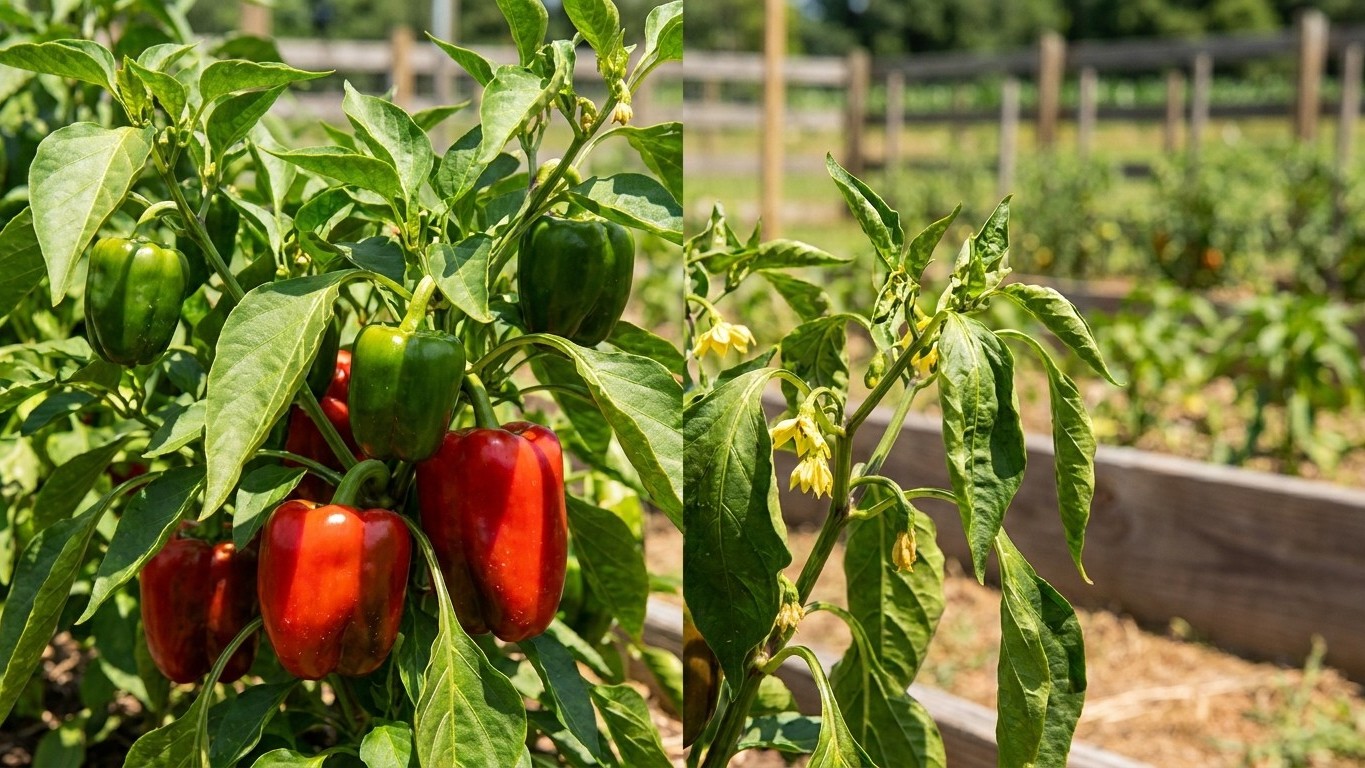

Six of the pests Idaho tracks for garden vegetables will actually feed on pepper: aphids, Colorado potato beetle, cutworms, grasshoppers, tomato hornworm, and wireworms. Aphids and cutworms show up first, close to transplant time. Grasshoppers and hornworms build later, once plants have size to them. The exact week depends less on the calendar than on how far a garden sits from Idaho’s frost-free window, which itself shifts by more than two weeks depending on elevation.
Which pests attack pepper in Idaho
University of Idaho Extension documents eleven garden pests for this state: Aphids, Carrot rust fly, Colorado potato beetle, Cutworms, Grasshoppers, Imported cabbageworm, Onion maggot, Pea leaf weevil, Squash bug, Tomato hornworm, and Wireworms. That’s the complete list carried for Idaho vegetable gardens, no more and no fewer. Only some of them have any business on a pepper plant.
Carrot rust fly larvae tunnel into carrot and parsnip roots; pepper has neither the taproot nor the plant chemistry that draws them in, so they skip it entirely. Imported cabbageworm feeds on cabbage, broccoli, and the rest of that family, and has no interest in a nightshade like pepper. Onion maggot works allium roots specifically, and pea leaf weevil chews on pea and other legume seedlings, so neither one crosses over. Squash bug is built around cucurbits, squash and pumpkin vines by name, and won’t touch a pepper stand growing nearby.
A pest listed for Idaho gardens is not automatically a pepper pest: five of the eleven feed on entirely different plant families and never reach a pepper bed at all.
That leaves six worth watching. Aphids cluster on the undersides of new leaves, feeding on sap and weakening a transplant before it has a chance to establish. Cutworms work at the soil line, severing stems on young transplants within days of setting them out. Wireworms live in the soil and chew into roots and lower stems, and do their worst damage where the ground was recently sod or pasture. Grasshoppers are generalists that shred foliage once their numbers build later in the season, with pepper just one of many plants in their path. Tomato hornworm belongs to the same family group as pepper, tomato, and eggplant, and its larvae strip leaves and can scar fruit directly. Colorado potato beetle is mainly a potato and eggplant feeder, but it will move onto pepper when those preferred hosts are close by, which makes it an occasional visitor rather than a primary pepper pest here.
When each one shows up, and what it does first
Idaho’s last spring frost falls between April 23 and May 7 near Boise, according to NOAA NCEI 1991-2020 Climate Normals for station USW00024131. Boise sits in a low valley, so most of the state runs colder and later than that window. Per Utah State University Extension, transplants go in only after soil reaches 60°F and frost risk has passed, following 8 to 10 weeks of growing indoors first.
Cutworms and aphids arrive first, typically within two to three weeks of transplants going into the ground. Cutworm damage shows up as a stem cut clean through at the soil line, with the seedling toppled but otherwise intact; that’s usually the whole signal, since the worm has already dropped back into the soil by daylight. Aphids show up as a stippled or curled look on the newest leaves, sometimes with a shiny film on nearby stems.
Wireworms strike at the same early stage, but the sign looks different: a transplant that just never establishes, sitting at the same size for a week or two before it wilts. Pulling it up shows chewed roots or tunneled stem tissue.
Grasshoppers and Colorado potato beetle build later, as populations mature through the warmer stretch of the season. Grasshopper feeding looks like ragged notches along leaf edges, spreading across a bed rather than starting on one plant. Colorado potato beetle shows first as small, neat holes in leaves and, if it’s already worked over nearby potato or eggplant, clusters of yellow-orange eggs on leaf undersides.
Tomato hornworm shows up latest, once plants have real size, usually as defoliation on a single branch stripped nearly to bare stem overnight, with dark droppings on the leaves below. Pepper fruit set fails at both ends: nights below 55°F and days above 90°F both stop it, so blossoms can drop with no pest involved at all.
Telling the damage apart from everything else
Not every damaged pepper plant has an insect on it. Idaho’s swing between hot afternoons and cool nights produces a handful of look-alike symptoms that get blamed on pests when the real cause is temperature, water, or a missing nutrient.
| What you see | Looks like | What actually distinguishes it |
|---|---|---|
| Wilted, collapsed transplant, stem intact | Cutworm | Stem is severed clean at the soil line; the plant separates at ground level with a gentle pull |
| Curled, yellowing new leaves | Aphids | Check leaf undersides for clusters of small soft-bodied insects; if none are found, suspect uneven watering instead |
| Blossoms or small fruit dropping, no chewing marks | Insect feeding | No insect turns up on close inspection, and the drop tracks with a hot or cold stretch, not with a pest sighting |
| Stunted plant, never bulks up, nothing visible above ground | Wireworm or root disease | Dig gently near the root zone; chewed tunnels point to wireworm, mushy dark roots point to disease instead |
| Ragged holes spread across many leaves at once | Grasshopper | Check neighboring plants and grass edges for the same pattern; a hornworm instead strips one branch bare |
Blossom drop with no insect ever found almost always traces back to temperature, not to feeding damage. A county extension office can confirm a diagnosis with a sample when the cause still isn’t clear after checking the plant closely.
What actually works here, and what is a waste of time
On a growing season this short, timing beats treatment. Physical barriers set at transplant work best against cutworms: a collar pushed an inch into the soil around each stem blocks the worm before it ever reaches the plant, and costs nothing but a few minutes per transplant. A collar installed at transplant stops a cutworm outright; spraying after the stem is already cut does nothing.
For aphids, a strong water spray aimed at leaf undersides knocks populations down without any product, and works reasonably well here since Idaho’s dry summer air keeps populations from rebounding as fast as they would somewhere humid.
Wireworms are mostly a soil-history problem. Ground that was lawn, pasture, or weedy fallow within the last couple of years carries far more wireworms than ground that’s been tilled vegetable garden for several seasons, so where a bed goes in matters more than anything done once plants are in the ground.
Grasshoppers and hornworms are harder to manage physically once numbers build. Picking hornworms off by hand works fine, since a plant rarely carries more than a few at a time. Grasshopper outbreaks that build across a neighborhood are beyond what one home garden can control on its own. What doesn’t help: spraying on a fixed schedule regardless of whether a pest is actually present, and treating blossom drop as an insect problem when the real driver is a run of nights or days at the wrong temperature. University of Idaho Extension and county offices can confirm which registered options apply to a given pest in Idaho; this site doesn’t recommend specific products.
Where to check this for your own county
University of Idaho Extension keeps the documentation this article draws from, and the county offices under that system are where a specific garden gets checked against local pressure. What’s confirmed at the state level describes what’s been found across Idaho, not what’s necessarily present in one yard.
A garden in the Treasure Valley near Boise sits in one of the state’s warmer, longer-season pockets, with 47.5 days a year reaching 90°F or hotter on average, per NOAA NCEI Climate Normals. A garden a few thousand feet higher, in the mountains or on the eastern plateau, faces a shorter frost-free window and far fewer hot days, which changes how many generations of these pests even get through before the season ends.
The next step is straightforward: contact the University of Idaho Extension office for the county where the garden sits, describe what’s showing up and when it started, and ask about sample identification if the cause still isn’t obvious. That beats guessing from a photo or a list.
Common questions
Does Colorado potato beetle actually damage pepper plants in Idaho?
It’s mainly a potato and eggplant feeder. University of Idaho Extension lists it among the pests documented for the state, and it will move onto pepper when its preferred hosts are nearby or already stripped, so it’s worth watching without treating it as the main pepper threat.
Why do pepper blossoms drop with no pest ever found?
Per Utah State University Extension, pepper fruit set fails at both temperature ends: nights below 55°F or days above 90°F stop it on their own, with no insect involved.
When should pepper transplants go into the ground in Idaho?
After soil reaches 60°F and frost risk has passed, per Utah State University Extension. Near Boise, the last spring frost falls between April 23 and May 7 (NOAA NCEI 1991-2020 Climate Normals), though higher ground elsewhere in the state runs colder and later.
Is it worth treating for grasshoppers before they show up?
No. Treating before there’s any evidence of feeding wastes effort against a pest that may never arrive in numbers. Check with the county extension office for registered options once actual damage or grasshopper numbers build.