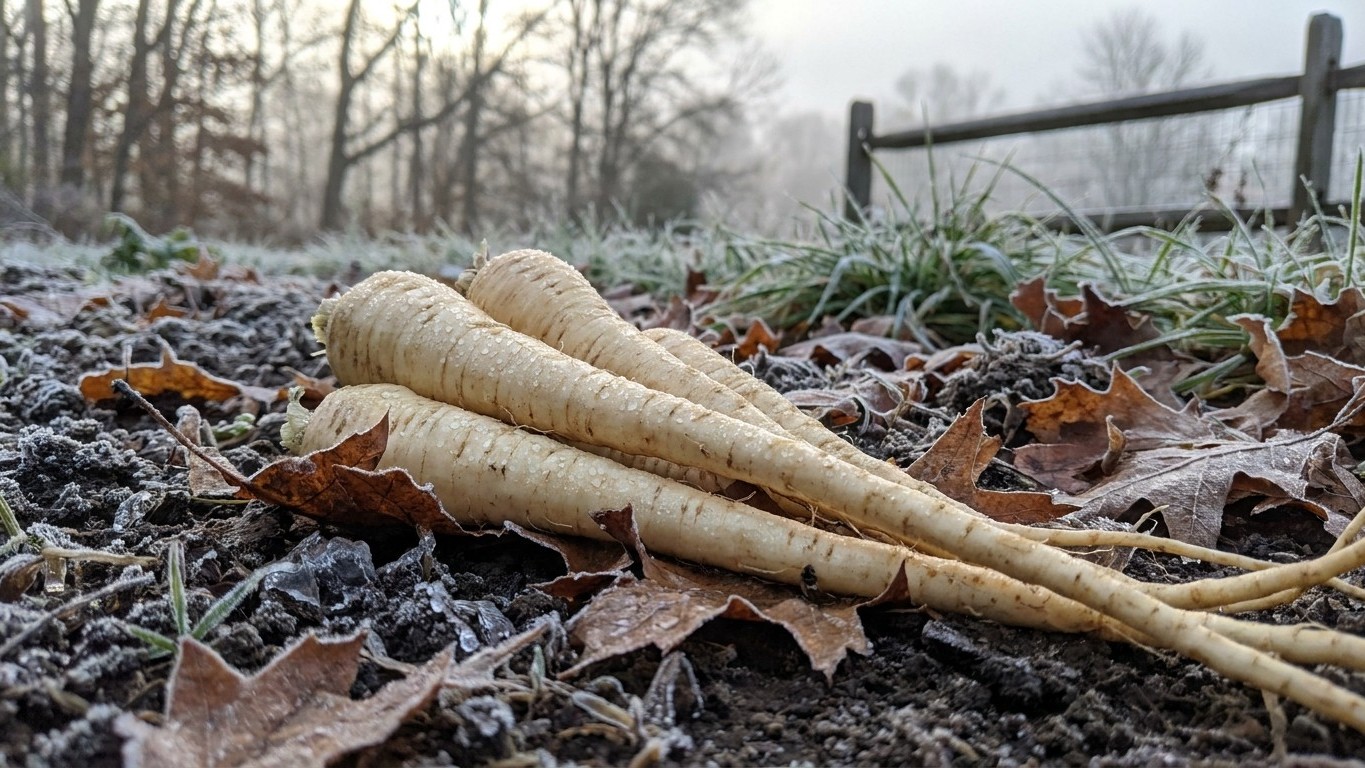

In Louisiana, only two of LSU AgCenter’s documented vegetable pests have any real business on a parsnip bed: the vegetable weevil, whose larvae tunnel through the root itself, and the fall armyworm, which strips the ferny foliage above ground. Everything else on that pest list, from squash vine borer to pepper weevil, belongs to other crops entirely. Timing matters more than the pest name here, since Louisiana’s frost window is short enough that the calendar decides more than the insect does.
Which pests attack parsnip in Louisiana

LSU AgCenter documents ten insect pests across the state’s vegetable and ornamental plantings: Cowpea curculio, Crape myrtle bark scale (Acanthococcus lagerstroemiae), Fall armyworm, Leaf-footed bug, Pepper weevil, Pickleworm, Squash bug, Squash vine borer, Tomato pinworm, and Vegetable weevil. That is the full, sourced list for this territory. Nothing else is documented here, and adding a pest known elsewhere would just be a guess dressed up as fact.
Most of that list has nothing to do with a parsnip bed. Cowpea curculio feeds on cowpea and southern pea pods, not roots. Crape myrtle bark scale is an ornamental-tree pest that never enters a vegetable garden. Pepper weevil needs pepper fruit to complete its life cycle, and pickleworm, squash bug, and squash vine borer are cucurbit specialists that ignore a root crop in the carrot family. Tomato pinworm mines tomato leaves and fruit. Leaf-footed bug feeds on developing seed pods and fruit, something a parsnip grown for its root doesn’t produce in the same way, so it stays off this shortlist too.
That leaves two. Vegetable weevil is the one actually built for this crop: larvae feed underground on the roots and crowns of turnips, carrots, and parsnips, while adults chew ragged notches into the foliage above. Fall armyworm is the second, a generalist caterpillar that strips leaves off dozens of unrelated plants whenever it moves through in numbers, parsnip foliage included.
The habit that decides whether damage gets caught early: check below the soil line, not just the leaves. Vegetable weevil damage starts on the root itself, out of sight, so a bed can look fine above ground while the harvest is already compromised underneath.
When each one shows up, and what it does first
Parsnip in south Louisiana runs on an unusual clock. NOAA NCEI’s 1991-2020 climate normals put the last spring freeze here between January 18 and February 8, and the first fall freeze between December 17 and January 8. A 32°F freeze occurs in only 86.8 percent of years at the reference station, so roughly one winter in seven never freezes at all, and the fall window straddles the New Year rather than sitting inside a single season. That is not a typical planting calendar. Here, summer heat, not frost, limits when parsnip can grow.
Seed goes into the ground directly, since parsnip does not transplant well, and germination alone takes 14 to 21 days, according to Utah State University Extension. Add the full 100 to 120 days the root needs to mature from that seeding date, and a Louisiana gardener working around a fall-into-winter frost window is running the whole life cycle through the cooler months, when the ground is workable and the heat has backed off.
Vegetable weevil tracks that same cool stretch. Its larvae work underground while the root fills out, feeding on the flesh and crown, and the first sign most gardeners notice isn’t a bite mark on a leaf but a root that comes up tunneled or hollow at pulling time. Adults chewing notched edges into the foliage above ground are usually the earlier tell, if anyone catches it before the roots are already compromised.
Fall armyworm moves on a different schedule, tied to warm, humid stretches rather than the cool window that suits the crop. When it does show up on parsnip, the first sign is ragged or skeletonized foliage, chewed from the edges inward, sometimes overnight in a heavy outbreak. Because that damage happens above ground and fast, it’s usually the more obvious of the two pests, even though it does less lasting harm to the part of the plant meant for eating.
Telling the damage apart from everything else
A forked or split parsnip root is not automatically a pest problem. Two separate causes produce it here, and they should never be merged into one diagnosis: heavy, stony, or compacted ground that splits the taproot as it pushes down, and overwatering, which encourages the root to branch instead of driving straight. Utah State University Extension notes that deep, sandy soil suits this crop, and that heavy soil needs double digging before seeding to avoid the problem entirely.
Cracked roots can also come from uneven watering rather than any pest, drought followed by a heavy soak swelling the root faster than its skin can stretch. A pale, stunted plant with slow growth usually points to poor fertility, not an insect. And a root that snaps cleanly instead of showing tunnel marks is typically mechanical damage from a hoe or a hand pulling too close to a neighboring plant.
| Symptom | Likely cause | What tells it apart |
|---|---|---|
| Forked or split root | Heavy/stony soil, or overwatering | No tunnel marks or frass inside the root |
| Hollow or tunneled root at harvest | Vegetable weevil larvae | Visible tunnels, sometimes with larvae or frass |
| Ragged foliage, edges eaten inward | Fall armyworm | Chewing spreads fast, often within days |
| Pale, slow-growing plant, no chewing | Poor soil fertility | No feeding marks anywhere on the plant |
None of this replaces a look at the plant itself. A root pulled early to check for tunneling, or a sample taken to a parish extension office, settles the question in a way a description never can.
What actually works here, and what is a waste of time
Timing beats treatment on a crop with only one workable season here. Because parsnip needs cool months to mature and sweeten, and because south Louisiana’s freeze window is short and unreliable, getting seed in early enough that the full 100 to 120 days lands before summer heat returns matters more than any treatment applied later. Sow too late, and heat stress compounds whatever insects show up.
Row cover laid down at seeding, before vegetable weevil adults or fall armyworm moths find the bed, is the most reliable physical barrier available, since it blocks egg-laying without needing to identify the pest first. Because a root crop doesn’t depend on pollinators for the part being harvested, cover can stay on far longer here than it could on a fruiting vegetable.
Rotating out of a bed that grew cucurbits, peppers, or tomatoes the season before helps too, since several pests on LSU AgCenter’s list overwinter in soil or debris tied to those specific hosts, even though none of them attack parsnip directly.
What doesn’t help: spraying on a fixed schedule regardless of what’s actually happening in the bed. Neither vegetable weevil larvae underground nor a fast-moving armyworm outbreak responds predictably to a calendar-based treatment. This page doesn’t recommend a product or active ingredient, because labeled, legal options change, and only the parish extension office knows what’s currently approved for a home garden in Louisiana.
Where to check this for your own county
Louisiana calls its local units parishes, not counties, and LSU AgCenter, the source for every pest named on this page, runs an extension office in each one. That local office is the right next call, not because the statewide list is wrong, but because it can’t say what’s actually active in one specific garden this season.
A pest documented for the state does not mean it’s present in every parish, or that it arrives the same week everywhere. Vegetable weevil pressure in particular tends to track local soil and moisture closely enough that two gardens a few miles apart can see very different levels of root damage in the same season.
The parish office can also confirm what’s currently labeled for home garden use, since approved products change and this page intentionally names none. Bringing an actual sample, a tunneled root, a chewed leaf, a larva in a jar, gets a far more useful answer than a description read over the phone.
The same logic applies to every fact on this page: the frost dates come from a single reference station, the pest list from one statewide program, and the crop biology from a university extension in a different state entirely. None of it substitutes for a look at the actual bed. The next useful step is a call to the parish office covering the garden in question, before the next planting window opens rather than after a harvest comes up disappointing.
Common questions
Does frost hurt parsnip in Louisiana?
No. Parsnip actually needs exposure to frost to convert stored starch into sugar. The problem here is the opposite: roughly one winter in seven brings no freeze at all, so a root can grow perfectly well and still finish mild instead of sweet.
Can parsnip grow in Louisiana’s heavy clay soil?
Not without preparation. Utah State University Extension recommends deep, sandy soil for straight roots, and says heavy ground must be double dug before seeding or the root will fork as it hits resistance.
How do I know if vegetable weevil is in my parsnip bed before harvest?
Notched, chewed foliage from adult weevils is the earliest visible sign above ground. The larvae feeding on roots stay hidden until a root is pulled early to check, or until harvest reveals the tunneling.
Is fall armyworm worse than vegetable weevil for parsnip?
It depends on what’s being judged. Fall armyworm damage looks more dramatic and shows up fast on foliage, but vegetable weevil attacks the root, which is the part actually harvested, so its damage can matter more even though it’s harder to spot in time.