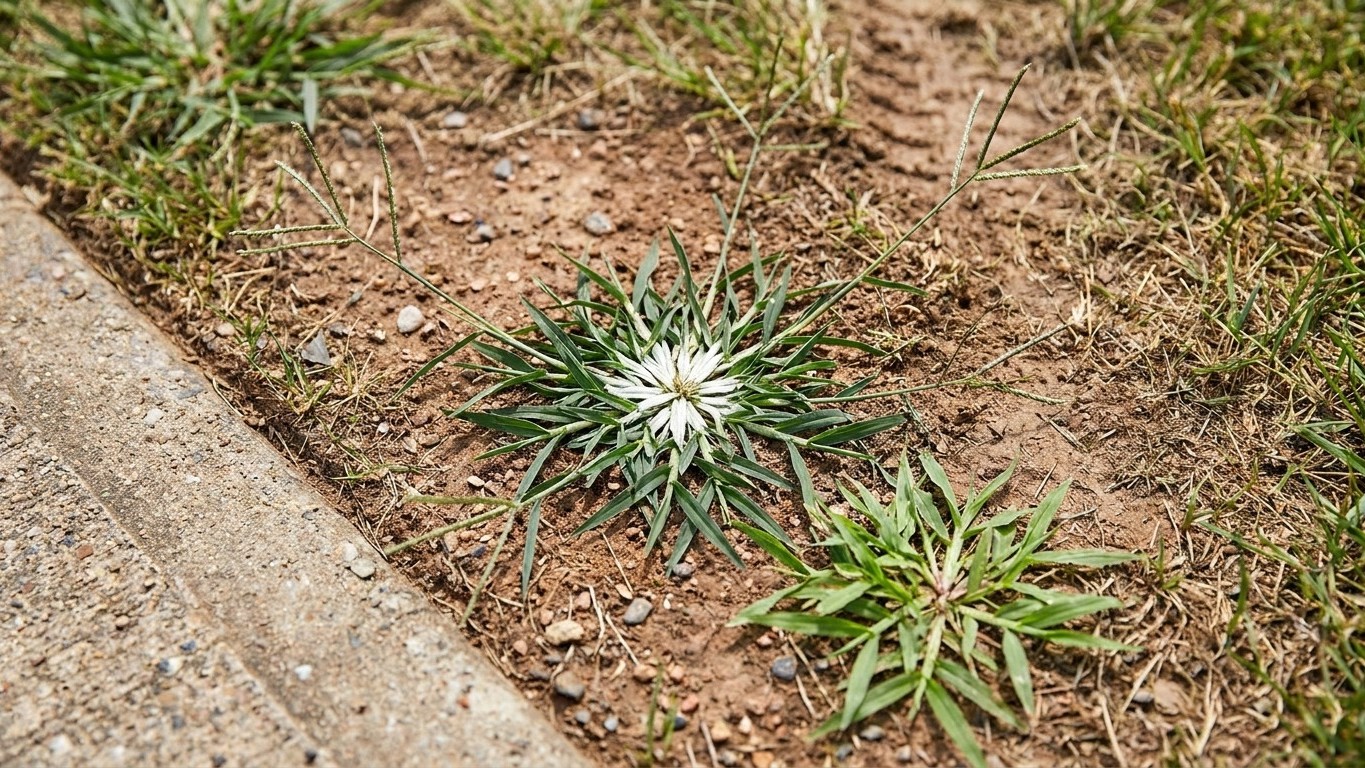

The short answer: aim for the first three weeks of September across most of Southern Ontario, working backward from the province’s average first fall frost so the new grass has roughly 45 days of growing weather before the ground freezes. Wait until October and you’re gambling with seedlings that germinate but never root deep enough to survive winter.
The overseeding window in Ontario
The math behind that September window starts with one number: an average first fall frost of October 16, recorded at the Toronto Lester B. Pearson International Airport station and published by Environment and Climate Change Canada in the 1981-2010 Canadian Climate Normals. Count back 45 days, the stretch of growing weather cool-season turf needs to establish before a hard freeze, and you land right around September 1.
That’s the calculation, but it’s worth being honest about what October 16 actually means. It’s a mean date, not a guarantee. In roughly half the years on record, the first frost at that station arrived later than October 16, and in the other half, it arrived earlier. Treat it as the midpoint of a window, not a line you can plant right up against.
Ontario is also not one climate zone wearing a single date. The Pearson station sits in the Greater Toronto Area, which runs milder and later into fall than places further north or at higher elevation. A lawn in Sudbury or Thunder Bay is working with a shorter season and an earlier frost than one in Windsor or along the Niagara Peninsula. If you garden outside the Toronto area, treat September 1 as a general cue and lean earlier rather than later if you’re north of the Golden Horseshoe.
Why cool-season grasses set the calendar
Ontario falls into what turf extension literature calls a cool-season zone, the classification that governs which grasses actually survive here. The species that hold up are Fine Fescues, Kentucky Bluegrass, Perennial Ryegrass, Rough Bluegrass, and Tall Fescue, all of them cool-season types that green up in spring and fall and tolerate the freeze-thaw cycle of an Ontario winter. Warm-season grasses, the kind that thrive through summer heat in the southern United States, simply won’t hold here. They go dormant at temperatures cool-season grass shrugs off, and a hard frost finishes them for good. That’s the whole reason the fall window matters so much: you’re not just picking a convenient date, you’re matching seed to a climate that only supports one type of turf.
The soil temperature that actually decides it
Calendar dates are a proxy. What actually triggers germination is soil temperature, and for the cool-season species used in Ontario, that means soil between 50 and 65°F, measured about two inches down, checked mid-morning before the sun has had all day to skew the reading.
A basic soil thermometer, the kind sold for a few dollars at most garden centers, does the job. Push it into the lawn in a few spots, avoid taking a single reading right next to a driveway or south-facing wall where soil runs warmer than the rest of the yard, and average what you see over two or three mornings rather than trusting one snapshot.
In practice, soil in Southern Ontario tends to settle into that 50 to 65°F range through the first half of September as air temperatures cool and the ground follows a few weeks behind. That’s part of why the calendar window and the soil-temperature window line up so closely here: by the time the calendar says early September, the ground has usually caught up. But a warm stretch can push soil above 65°F even into September, and a cold snap can drop it below 50°F earlier than expected, especially in shaded yards or heavy clay that holds a chill longer than sandy soil does.
The practical move is to use the calendar to know when to start checking, then let the thermometer make the final call. If soil is still sitting above 65°F in the first week of September, wait a few days rather than seeding into ground that’s still too warm for the seed to germinate promptly. If it’s already dipped below 50°F, you’re running out of runway and should get seed down without further delay.
How much seed, and what it costs to guess
Seeding rates for cool-season grass are published as pounds per 1,000 square feet, and they’re built for a new lawn started from bare soil. Overseeding an existing lawn, where you’re thickening turf that’s already there rather than starting from scratch, uses half those rates.
| Grass species | New lawn rate (per 1,000 sq ft) | Overseeding rate (per 1,000 sq ft) |
|---|---|---|
| Tall Fescue | 6 to 8 lb | 3 to 4 lb |
| Fine Fescues | 4 to 5 lb | 2 to 2.5 lb |
| Kentucky Bluegrass | 1.5 to 2 lb | 0.75 to 1 lb |
| Perennial Ryegrass | 6 to 8 lb | 3 to 4 lb |
| Rough Bluegrass | 1.5 to 2 lb | 0.75 to 1 lb |
The instinct to spread more seed than the label calls for is common, and it’s the wrong move. More seed is not insurance. Seedlings compete for the same light, water, and nutrients in the same square foot of soil, and a lawn overseeded too heavily thins itself out as the weaker seedlings lose that competition. You end up paying for seed that never becomes turf.
Guessing low carries its own cost: bare patches that weeds move into before the grass has a chance to fill in. A rough estimate of lawn square footage, measured with a tape measure rather than eyeballed, is worth the ten minutes it takes before you buy seed. Most bags sold in Ontario garden centers list coverage in square feet on the label, so matching your measured area to the bag size avoids both problems at once.
The three weeks after you sow
Seed down is the easy part. The three weeks that follow decide whether it survives to spring, and they’re where most overseeding attempts in Ontario succeed or fail.
Germination for cool-season grass typically shows the first green within one to two weeks once soil sits in that 50 to 65°F range, but the seed needs consistent moisture the entire time, not just on the day you spread it. Light, frequent watering, enough to keep the top inch of soil damp without pooling, matters more here than one deep soak a week. Seed that dries out mid-germination doesn’t come back once you resume watering.
This is also where the 45-day math from earlier becomes concrete. Germination takes the first one to two weeks. The remaining time before frost goes toward root establishment, the process that determines whether the new grass survives winter dormancy or dies back with the first hard freeze. Seed sown too close to that October 16 average frost date germinates, sure, but it runs out of growing season before the roots go deep enough to handle a Ontario winter. That’s the real risk of waiting past the September window: not that the seed fails to sprout, but that it sprouts and then dies anyway once the ground freezes.
Hold off on mowing until the new grass reaches a height where the mower is trimming it rather than uprooting shallow seedlings, generally once it’s grown a couple of inches past your normal cutting height. Foot traffic on the overseeded area during those first three weeks does more damage than most homeowners expect, since new roots haven’t anchored yet. Keeping pets and kids off the patch, even informally, protects the investment more than any single watering schedule does.
Common questions
Can I overseed in spring instead of fall in Ontario?
Fall is the stronger window for cool-season grass because seedlings face less competition from weeds and cooler, more consistent soil moisture. Spring seeding is possible but tends to compete against summer heat stress just as roots are still shallow, which is a tougher path to establishment.
What happens if I overseed too late in September?
Seed sown too close to the average October 16 frost date may still germinate if soil conditions allow, but it often won’t have enough of the roughly 45-day growing window left to establish roots strong enough to survive winter dormancy.
Does the frost date differ across Ontario?
Yes. The October 16 figure comes from a single station at Toronto Pearson. Northern Ontario and higher-elevation areas typically see frost weeks earlier, while some southern pockets near Lake Erie or Lake Ontario can run slightly later.
Should I test soil temperature before buying seed?
It’s a smart step but not required to shop. Buy seed once you’re within the general September window, then use a soil thermometer to confirm the ground has cooled into the 50 to 65°F range before you actually spread it.