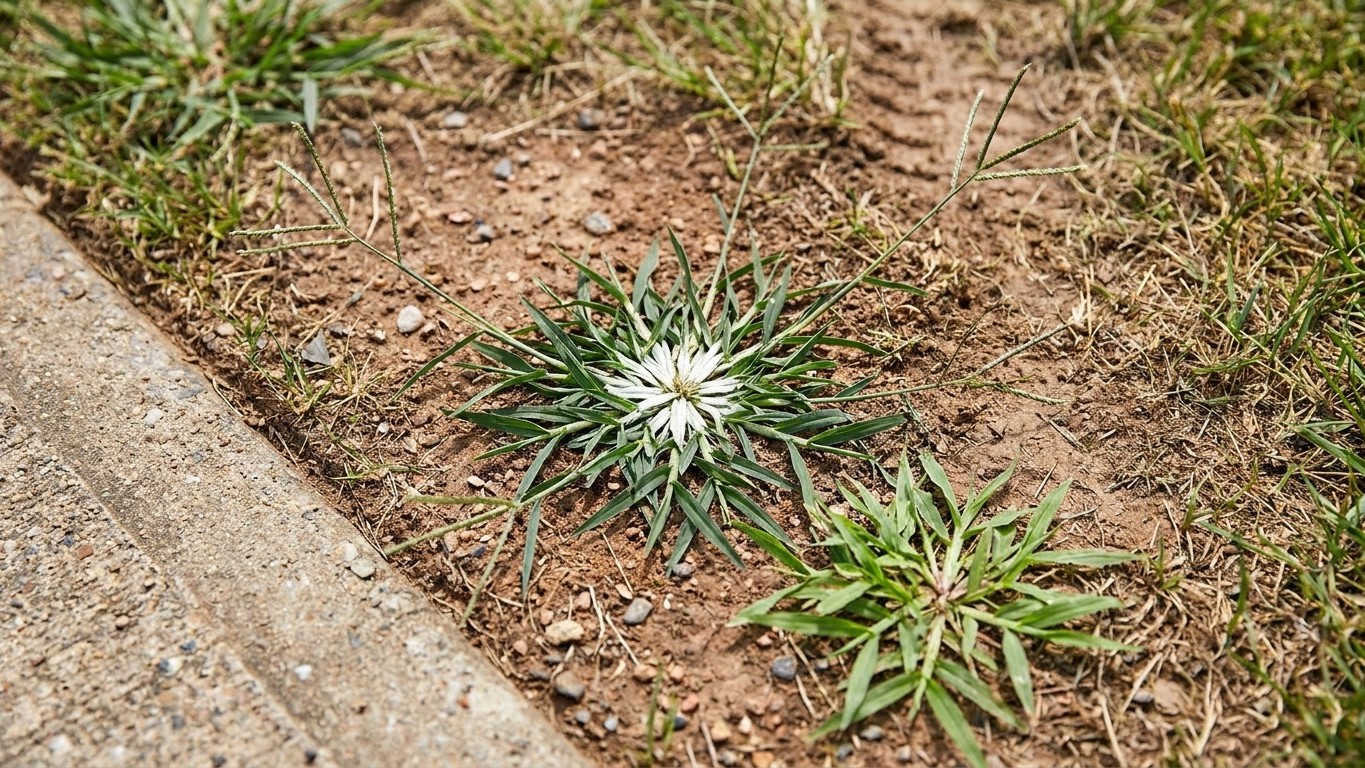

Most Florida lawns fall into two height groups. Bermudagrass, zoysiagrass and seashore paspalum are cut at 1 to 2 inches, and centipedegrass and carpetgrass at 1.5 to 2 inches. St. Augustinegrass takes 2.5 to 4 inches, and bahiagrass 3 to 4 inches. Find your grass, stay inside its range, and sit near the top of that range through summer. Cutting a grass at another species’ height is a common way to thin a lawn.
The mowing height for Florida lawns
Every grass on the table below is a warm-season species. That is not a matter of preference. Cool-season grasses stall in sustained heat and humid nights, and they are prone to disease through a Florida summer. They thin out by August and rarely recover. Lawn advice written for far-northern places, such as How High to Mow a Lawn in Nunavut, is built around those cool-season grasses, so its heights do not carry over.
| Grass | Mowing height | What to know |
|---|---|---|
| Bahiagrass | 3 to 4 inches | Tall and tough, sends up seed stalks quickly |
| St. Augustinegrass | 2.5 to 4 inches | Wide blades, spreads by thick runners above the soil. Standard cultivars belong at 3.5 to 4 inches; only dwarf types go as low as 2.5 |
| Centipedegrass | 1.5 to 2 inches | Slow growing, low maintenance |
| Bermudagrass | 1 to 2 inches | Dense and fast spreading, likes a sharp, low cut |
| Zoysiagrass | 1 to 2 inches | Dense, fine-textured, slow to recover from damage. Best height varies by cultivar (coarse types about 2 to 2.5 inches) |
| Seashore paspalum | 1 to 2 inches | Tolerates salt, common near the coast |
| Carpetgrass | 1.5 to 2 inches | Suits wet, poorly drained ground |
Why do the heights differ so much?
Growth habit explains it. Bermudagrass, zoysiagrass and paspalum knit into a tight mat of fine leaves, and they keep enough leaf surface to feed themselves even when cut short. St. Augustinegrass and bahiagrass have coarser, wider leaves and fewer of them per square foot. They need the extra height to gather enough sunlight.
Cut St. Augustine to 1 inch and you scalp the runners, exposing stems that were meant to stay shaded. Let bermudagrass climb to 4 inches and it turns stemmy, with a layer of dead material under the green. The grass still grows, but it looks and behaves worse.
How do you know which grass you have?
Runners, blade width and seed heads usually settle it. A thick, flat stem crawling over the soil with broad blades points to St. Augustine. Tall, forked seed stalks in a lawn cut at 3 inches point to bahiagrass. If you are unsure, take a sample to your county office of UF/IFAS Extension before you set the deck. A wrong guess can cost you a season of recovery. Neighbors across the state line often grow the same species, so How High to Mow a Lawn in Georgia is a useful cross-check for north Florida.
Raising the deck when the heat comes
Summer is the hard season for Florida turf, and the rain makes it look easy. At the Jacksonville reference station, normals for 1991-2020 show about 21.3 inches of rain across June, July and August, out of 53.4 inches for the full year. June averages 7.6 inches, July 6.77 (the driest of the three) and August 6.88. That is a lot of water. It also pushes growth hard, which is why a lawn can need mowing every week in July.
Soil changes what the rain does. On sand, which covers much of the state, an inch of rain drains through within the day. A wet summer can still leave a sandy lawn dry two days later. On clay, the same inch can hold for a week. Heat adds to the swing. Days at or above 90°F drive evaporation, and a single summer thunderstorm often runs off a hard, dry surface instead of soaking in. So a lawn on sand can still need watering between storms, even in the rainiest month.
Mowing height is your cheapest defense. Taller grass shades its own soil, which slows evaporation, and it carries more leaf to feed deeper roots. For bermudagrass, zoysiagrass and paspalum, stay at 2 inches instead of dropping toward 1. Carpetgrass and centipedegrass also stay at 2 inches. A lawn in shade should always sit at the high end, since it has less light to work with.
Mow when the grass is dry. Wet blades clump, clog the deck and cut unevenly, and fungal spores travel easily on damp mower wheels. If a week of storms keeps you off the lawn, do not drop the deck to catch up. Keep the setting where it is and mow more often until you are back on schedule.
The one-third rule, and why it is not arbitrary
Never remove more than one third of the leaf height in a single mowing. Leaves make the sugars that feed the roots. Strip off half the blade at once and the roots lose their supply while the plant rebuilds leaf, so root growth slows right when summer heat demands deep roots.
The rule works out in plain numbers. St. Augustinegrass kept at 4 inches should be mowed before it passes about 5⅓ inches. Bermudagrass kept at 2 inches should be cut before it reaches 3 inches, a margin of only 1 inch. That is why short grasses need frequent mowing in the rainy season. They run out of room quickly, and in July the margin can disappear in a few days.
Skip a week and the lawn overshoots. Resist the urge to cut it right back to height. Take off about a third, wait three or four days, then mow again, and repeat until you are back in range. A lawn that looks shaggy for a few extra days recovers faster than one that was scalped and turned yellow-brown.
Dull blades undermine the rule even when you follow it. A dull blade tears the leaf instead of slicing it, leaving frayed tips that turn pale and brown a day or two later. Leave the clippings on the lawn, since they are short enough to break down quickly and they return nutrients to the soil.
The basics of mowing technique, from pattern to frequency, are covered in Mowing a Lawn. The height numbers here are what turn that general advice into the right schedule for a Florida lawn.
The first and last cut of the year
Frost sets the calendar only in the northern part of the state. At the Jacksonville reference station, the mean last spring frost falls between February 16 and March 7, and the mean first fall frost between November 26 and December 13, according to the NOAA NCEI 1991-2020 Climate Normals. Those dates cover the 30 to 70 percent probability band for a 32°F freeze. The station is an inland airport, so the coast runs milder.
For the first cut in north Florida, watch the grass instead of the date. Wait until the lawn has greened up and is actually growing, which usually comes after the last frost window opens. A warm week in February can fool you, and a late freeze will burn new growth. Make that first mow at the normal height for your grass. If last year’s dead blades are still standing, remove them in a couple of passes instead of dropping the deck below the species range.
The last cut works the same way in reverse. When cool nights slow growth and the lawn stops needing a trim, you are done for the season, usually in the window above. Do not lower the deck for a short last cut. Grass that goes into winter at its normal height keeps more leaf and more insulation over the crown.
Central and south Florida do not follow that window. Frost is uncommon in central Florida and almost unknown in Miami, so there is no dependable first or last frost to plan around. The turf keeps growing through winter, slower in the short days. You mow year-round, less often from December to February, and the heights in the table do not change. Frost dates from Jacksonville should never be used for a lawn farther south.
Common questions
What is the best mowing height for St. Augustinegrass in Florida?
The range is 2.5 to 4 inches, but standard cultivars such as Floratam belong at 3.5 to 4; only dwarf cultivars go as low as 2.5. Use the lower end of your cultivar’s range in cool weather in full sun, and the top through summer and in shade.
Can bahiagrass be cut short like bermudagrass?
No. Bahiagrass belongs at 3 to 4 inches. Bermudagrass is cut at 1 to 2 inches. Mowing bahiagrass at bermuda height removes too much leaf and thins the stand, and a bermudagrass lawn left at bahia height turns stemmy.
Should I lower the deck in winter?
No. Keep the same range and mow less often, because growth slows in the shorter days.
How often should I mow during the summer rains?
Mow whenever the grass has grown about half again as tall as the height you want, so you never remove more than a third. In June, July and August that is often more frequent, and shorter grasses such as bermudagrass may need a cut closer to every 5 days. Wait for the blades to dry, and do not drop the deck to make up for a missed week.