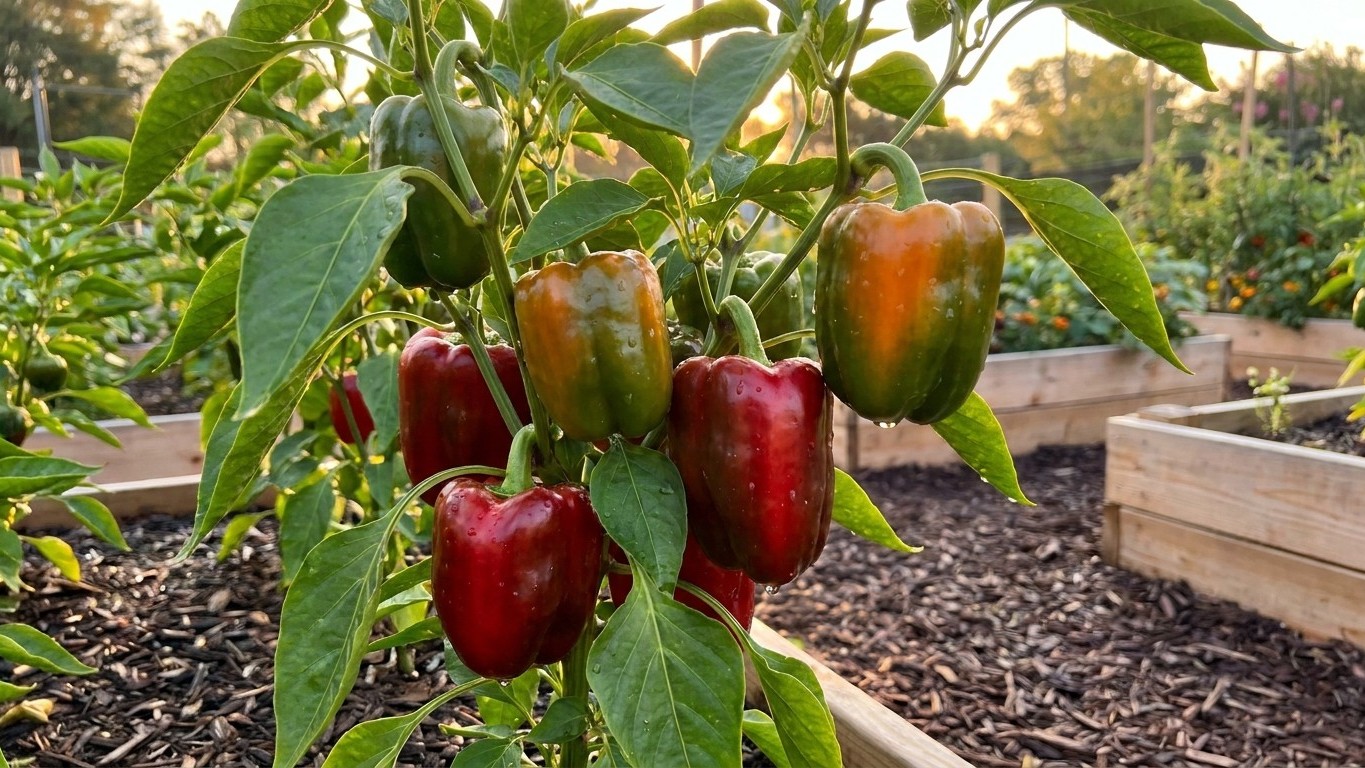

In Boise and similar low-elevation valleys, start pepper seed indoors from mid-February to mid-March, then move transplants outside after the last frost once soil hits 60°F. Higher elevations across Idaho run colder and later, so that window shifts back weeks at a time depending on your county.
The short answer
Boise averages 47.5 days a year at or above 90°F, according to NOAA NCEI Climate Normals covering 1991 to 2020. That’s not a handful of scorching afternoons. That’s roughly a month and a half scattered through summer, mostly landing in July and August, right when a pepper plant should be setting its heaviest flush of fruit. Pepper flowers abort when daytime highs push past 90°F for stretches, so a Boise-area garden needs a planting schedule that gets flowering going before that heat load piles up, not during it.
That’s one end of the trouble. The other end matters just as much, and it’s the one growers overlook because they’re staring at frost dates instead. Pepper fruit set also fails when nights drop below 55°F, according to Utah State University Extension. Cool spring nights and early fall nights both count. A plant can look healthy, covered in blossoms, and still drop every one of them if nights stay too cold for pollen to function properly.
Here’s the gap in the data, and it matters: this site tracks days above 90°F for Idaho, but it does not carry summer night minimum temperatures. Boise’s elevation, its river valley setting, and the mountains ringing it all shape how fast nights cool once the sun goes down, and that varies from one small valley to the next in ways a statewide or even regional average can’t capture. Don’t guess at your nighttime lows based on latitude or on how cold your winters get. Those two things don’t predict summer night behavior. If you garden somewhere with a thermometer that records overnight lows, or a nearby weather station you trust, check it through June and into September. That’s the number that tells you whether your peppers are dropping blossoms from cold nights even while the days feel plenty warm.
Put together, a Boise-area pepper crop is threading a needle. Too cool at night in late spring, and blossoms drop. Too hot in midsummer, and blossoms drop again. The workable stretch in between is real, but it’s not as long as a look at the average summer temperature would suggest, and higher-elevation parts of Idaho compress that window even further.
When to start seed here
Working backward from transplant day is the most reliable way to land on a sowing date, and it holds up no matter which county you garden in. Here’s the arithmetic, spelled out so you can run it with your own local numbers.
- Start with your last frost date. For Boise, NOAA NCEI’s 1991-2020 climate normals put the 32°F freeze probability in the 30 to 70 percent band between April 23 and May 7. Peppers can’t go outside before that window closes, and even then only once the risk has dropped enough for your comfort. Boise sits in a low valley; most of Idaho sits higher and colder, with a shorter frost-free season, so if you’re gardening in the mountains or on the eastern plains, your local frost date will run later, sometimes by several weeks.
- Add the soil temperature check. Frost clearing isn’t the only requirement. Utah State University Extension is specific that peppers should go into soil that has reached 60°F, not just soil that’s merely thawed. In a Boise-area spring, soil often lags a week or two behind the air, especially in a wet, shaded, or clay-heavy bed. Whichever comes later, the frost-free date or the 60°F soil mark, that’s your real transplant day.
- Count back 8 to 10 weeks for indoor sowing. Utah State University Extension recommends starting pepper transplants indoors 8 to 10 weeks before that outdoor planting date. Using Boise’s frost window as an anchor, that puts indoor seed-starting somewhere between mid-February and mid-March, with the earlier end of that range fitting growers who wait for the later, safer side of the frost window and want transplants ready to go the moment soil warms.
- Adjust for your elevation and microclimate. If your garden sits higher than Boise, or in a low spot that collects cold air, push both the sowing date and the transplant date later. There’s no single number that covers all of Idaho here. The frost data above is specific to the Boise reference station, and the rest of the state runs colder.
This backward count is worth redoing every year rather than trusting memory, since soil temperature swings with how wet or dry the spring has been, and a slow, cool spring can push the 60°F soil mark later than the calendar alone would suggest.
What goes wrong here
Idaho’s climate produces a specific, repeatable set of pepper problems, and most of them trace back to the same two temperature thresholds already covered above.
- Blossom drop during a summer hot spell. With Boise averaging 47.5 days a year at 90°F or above, a run of hot afternoons in July is close to guaranteed, and pepper flowers will abort in numbers once heat pushes past that mark for several days running. There’s no way to cool the air, but afternoon shade cloth over the plants during the worst heat, along with deep, consistent watering the night before a forecast hot spell, reduces the drop. Plants that are already stressed for water lose blossoms faster in heat than well-watered ones.
- Blossom drop from a cool night. The flip side. A late spring cold snap, or an early, unusually cool night in September, can abort flowers just as effectively as heat does, since Utah State University Extension puts the cold threshold at nights below 55°F. Because this site doesn’t track summer night lows for Idaho, the fix starts with watching your own overnight temperatures rather than assuming a “normal” Boise summer night stays warm enough. Floating row cover pulled over plants on a night that’s forecast to dip low can hold enough heat to save that night’s blossoms.
- Sunscald on exposed fruit. Idaho’s clear skies and strong summer sun expose pepper fruit to intense direct light, and fruit that loses its leaf cover, from pruning, wind damage, or simple thin foliage, develops pale, papery patches where the sun hits it directly. Leaving foliage fuller rather than pruning peppers hard, and avoiding heavy defoliation during the hottest weeks, keeps fruit shaded enough to avoid it.
- Blossom-end rot from uneven watering. Peppers that go through a dry stretch and then get a heavy soaking, common when Idaho’s low humidity dries out garden beds fast between waterings, develop the sunken, dark patches on fruit bottoms known as blossom-end rot. It’s a calcium delivery problem tied to inconsistent moisture, not a soil deficiency in most cases. Mulching to hold moisture evenly and watering on a steady schedule rather than waiting until plants wilt is the practical fix.
Common questions
How long does it take pepper seeds to become harvestable fruit in Idaho?
Once transplanted outside, peppers generally reach harvest in about 70 to 85 days, according to Clemson Cooperative Extension. Add the 8 to 10 weeks of indoor growing time before that, and a full Idaho pepper season, from sowing seed to picking the first fruit, runs close to five months.
Can I direct-sow pepper seed outside in Idaho instead of starting indoors?
It’s not the recommended path. Idaho’s frost-free season, particularly outside the Boise valley, isn’t long enough for pepper seed sown directly in the ground to mature and produce a real harvest before fall cold arrives. Utah State University Extension’s 8-to-10-week indoor head start exists specifically to compensate for a short outdoor growing window.
What temperature should I store harvested peppers at?
Clemson Cooperative Extension recommends storing harvested peppers at 45 to 50°F with 80 to 90 percent relative humidity, which holds quality for two to three weeks under those optimal conditions. That’s warmer than a standard refrigerator, and it matters: dropping below roughly 45°F causes chilling injury, where peppers pit and go soft. A regular fridge is too cold for peppers held any length of time.
Does Idaho’s dry climate change how often I need to water pepper plants?
Low humidity combined with the summer heat load reflected in Boise’s 47.5 average days above 90°F means soil dries out faster than it would in a humid climate, and that uneven moisture is a direct driver of blossom-end rot. A steady watering schedule, rather than watering only when plants show stress, matters more in Idaho’s climate than in wetter regions.