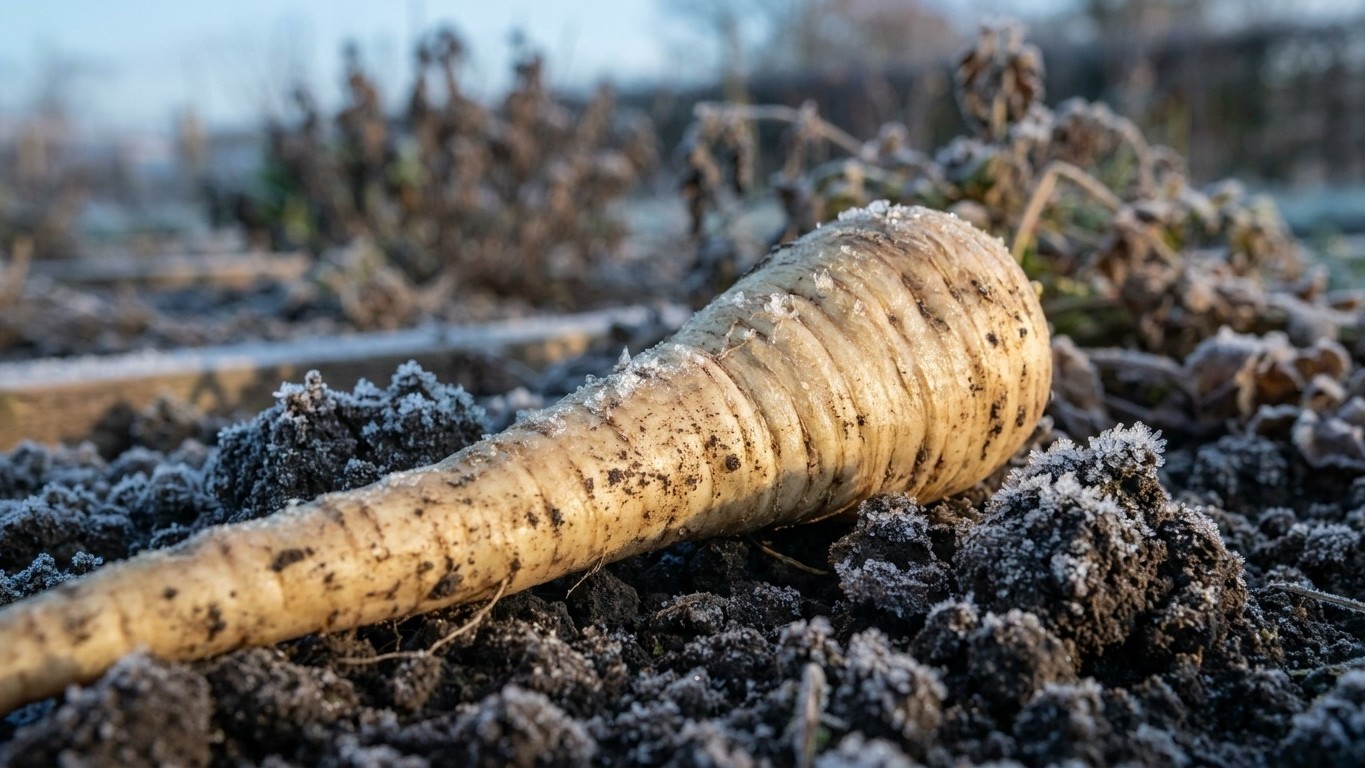

Flea beetles are the pest most likely to show up on parsnip in New Hampshire, chewing small holes in seedling leaves within a few weeks of germination. Later in the season, broader foliage feeders including Japanese beetle, Asiatic garden beetle, rose chafer, and tarnished plant bug join in, all documented statewide by UNH Cooperative Extension. None of them touch the root directly. What matters is how much leaf they take from the plant that’s supposed to be building that root underground.
Which pests attack parsnip in New Hampshire

UNH Cooperative Extension documents nine garden pests found in the state: Asiatic garden beetle, Brown marmorated stink bug, Flea beetles, Japanese beetle, Lily leaf beetle, Rose chafer, Squash vine borer, Striped cucumber beetle, and Tarnished plant bug. That’s the complete list for this territory. It isn’t padded with anything the extension service hasn’t actually put on record here, and it isn’t a long list, either.
Four of the nine have no real business on a parsnip bed. Squash vine borer and striped cucumber beetle are cucurbit specialists, boring into and feeding on squash, pumpkin, cucumber, and melon vines rather than root vegetables in the carrot family. Lily leaf beetle is even narrower in its tastes: it goes after true lilies and fritillaria almost exclusively, and a parsnip leaf gives it nothing it wants. Brown marmorated stink bug leans toward fruiting crops, piercing developing tomatoes, peppers, and sweet corn kernels rather than the foliage of a root crop. Spotting any of these four elsewhere in the yard doesn’t mean parsnip is the next stop.
That leaves five pests that do turn up on parsnip foliage here: flea beetles, tarnished plant bug, Japanese beetle, Asiatic garden beetle, and rose chafer. Flea beetles come closest to being a parsnip specialist among them, since the carrot family is a preferred host during the seedling stage when the beetles are small and hungry. The other four are generalists with wide host ranges, feeding on dozens of garden and landscape plants and landing on parsnip leaves more or less by opportunity than by preference.
Winter survival is what separates the generalists from one another. Tarnished plant bug overwinters as an adult, tucked into leaf litter and garden debris, riding out a coldest-month mean minimum of 17.1°F at the Manchester reference station. Japanese beetle, Asiatic garden beetle, and rose chafer instead spend the winter as grubs several inches down in the soil, insulated from that same air temperature by the ground above them. Neither strategy removes a pest from next year’s garden. It just changes where it spends the cold months waiting.
When each one shows up, and what it does first
Parsnip seed goes into the ground 2 to 3 weeks before the last spring frost, and it takes 14 to 21 days just to germinate, so digging into the bed early to check on it turns up nothing but bare soil. With a last spring frost falling between April 16 and April 27 at the Manchester reference station, most New Hampshire sowings sit underground for three full weeks before anything shows above the surface at all.
Flea beetles are usually the first pest to find the bed, arriving within a couple of weeks after true leaves emerge. What a gardener notices first isn’t the insect, it’s the damage: a scatter of tiny, round holes across the leaf, sometimes called shothole damage, concentrated on the youngest growth. The beetle itself is small and drops off the leaf the moment the plant is disturbed, which is why the holes are usually spotted days before anything is seen moving.
The generalist feeders, Japanese beetle, Asiatic garden beetle, and rose chafer, show up later, once the canopy has filled in and the plant is well past the seedling stage. Their feeding looks different from flea beetle damage: coarser chewing along the leaf margins, sometimes skeletonizing a leaf down to its veins, instead of the fine pinholes seen earlier. Rose chafer and Japanese beetle also tend to feed in clusters, so damage often shows up heavy on a few plants rather than spread evenly across the row.
Tarnished plant bug moves through the same stretch of the season, feeding by piercing rather than chewing. Its damage looks like distorted or stunted new growth and small dark flecks where it fed, easy to write off as something else until the pattern repeats on the next set of unfurling leaves. None of these later arrivals interrupt root development directly. The parsnip keeps building sugar underground right up to the first fall frost window of October 13 to October 26, when several weeks of cold weather finally convert that stored starch into the sweetness the crop is grown for.
Telling the damage apart from everything else
Not every ragged leaf or misshapen root on a parsnip plant is a pest. A forked or split root is never proof of an insect problem, and it has two entirely separate causes that shouldn’t be lumped together: heavy or stony ground that deflects the taproot as it grows, and overwatering, which encourages side roots to branch off instead of one straight root pushing down. Checking soil texture and the watering schedule settles which one applies faster than looking for a bug ever will.
| What you see | Could look like | What actually distinguishes it |
|---|---|---|
| Small round holes scattered across young leaves | Flea beetle feeding | Holes are shallow and concentrated on the newest growth; the beetle itself is rarely seen, only the damage |
| Ragged, chewed leaf edges or skeletonized leaves | Japanese beetle or rose chafer | Bite marks are larger and coarser; beetles often visible in clusters on the plant when checked |
| Distorted new growth with dark flecks | Tarnished plant bug | Marks are from piercing, not chewing, and repeat on each new leaf as it unfurls |
| Forked or split root at harvest | Assumed pest damage | No insect involved; caused by heavy or stony soil, or by overwatering, never both at once |
| Yellowing on lower, older leaves | Nutrient shortage or drought stress | No holes or chew marks anywhere on the plant; the yellowing is uniform rather than patchy |
Wilting when the soil is clearly moist, streaked or spotted leaves with no chewing damage, or a root that’s soft and discolored rather than misshapen all point toward disease or an environmental problem rather than any of the five pests covered above. Those cases are worth a call to the local extension office rather than a guess, since a soil-borne disease and a nutrient deficiency can look almost identical to the untrained eye.
What actually works here, and what is a waste of time
Timing a physical barrier to the seedling stage matters more than anything applied later. Since flea beetles hit hardest in the first couple of weeks after emergence, a lightweight floating row cover set over the bed right at seeding, and left in place through germination and the early leaf stage, keeps the beetles off the plant during the exact window when the damage happens. Removing it once the plants are established and the immediate flea beetle pressure has passed avoids interfering with pollination later, which matters less for parsnip grown for its root but still keeps airflow and light where the plant needs them.
Handpicking works reasonably well against Japanese beetle and rose chafer specifically, since both feed in visible clusters during daylight and are slow enough to knock into a container of soapy water. It’s far less useful against flea beetles, which are too small and too quick to make handpicking worth the time, and it does nothing for tarnished plant bug, which feeds by piercing rather than sitting in the open chewing.
Spraying anything without knowing which pest is actually present, and without confirming what’s legally approved for use on a root vegetable in New Hampshire, is a waste of both time and money. UNH Cooperative Extension is the source to check before buying or applying any pest control product, since label approval and timing vary by pest and by crop, and using something at the wrong point in the parsnip’s 100 to 120 day season can do more harm to the plant than the pest itself. Clearing garden debris in fall also reduces overwintering shelter for tarnished plant bug adults, which is one of the few steps that pays off the following spring rather than the same season it’s done.
Where to check this for your own county
UNH Cooperative Extension is the source for what’s actually present in a given garden, and every county in the state has its own extension office staffed with people who track local conditions more closely than any statewide list can. What’s documented for New Hampshire as a whole doesn’t mean every pest on it shows up in every yard, or shows up with the same intensity from one town to the next.
A pest count for the state says nothing about a single garden’s soil, sun exposure, or nearby wild host plants, all of which shift which of the five parsnip-relevant pests actually matter in practice. A garden bordered by woods might see heavier Japanese beetle and rose chafer pressure from nearby foliage, while a garden with poor drainage might deal more with root problems that have nothing to do with insects at all.
The most useful next step for anyone seeing unfamiliar damage on a parsnip bed is a call or a sample submission to the county extension office, not a guess based on a photo search. Extension staff can confirm which of the documented pests is actually responsible, or rule out insects entirely in favor of a soil or water issue, something no statewide list can do from a distance.
Common questions
Do flea beetles kill parsnip plants outright?
Rarely. The damage is cosmetic on established plants, though a heavy infestation on very young seedlings can slow growth enough to matter for the season.
Can I sow parsnip again if nothing has come up after two weeks?
Not yet. Germination takes 14 to 21 days, so waiting out the full window before assuming failure and re-sowing saves a second round of seed.
Does a mild winter mean fewer pests the next spring?
Not necessarily, and it’s a different question from whether the parsnip itself tastes sweet. Sweetening comes from several weeks of frosty weather exposure, not from the hardiness zone or winter severity, and pest survival depends on where each species overwinters rather than on air temperature alone.
Is a forked parsnip root safe to eat?
Yes. A forked root is a cosmetic and soil issue, either compacted or stony ground or overwatering, not a sign of pest damage or disease.