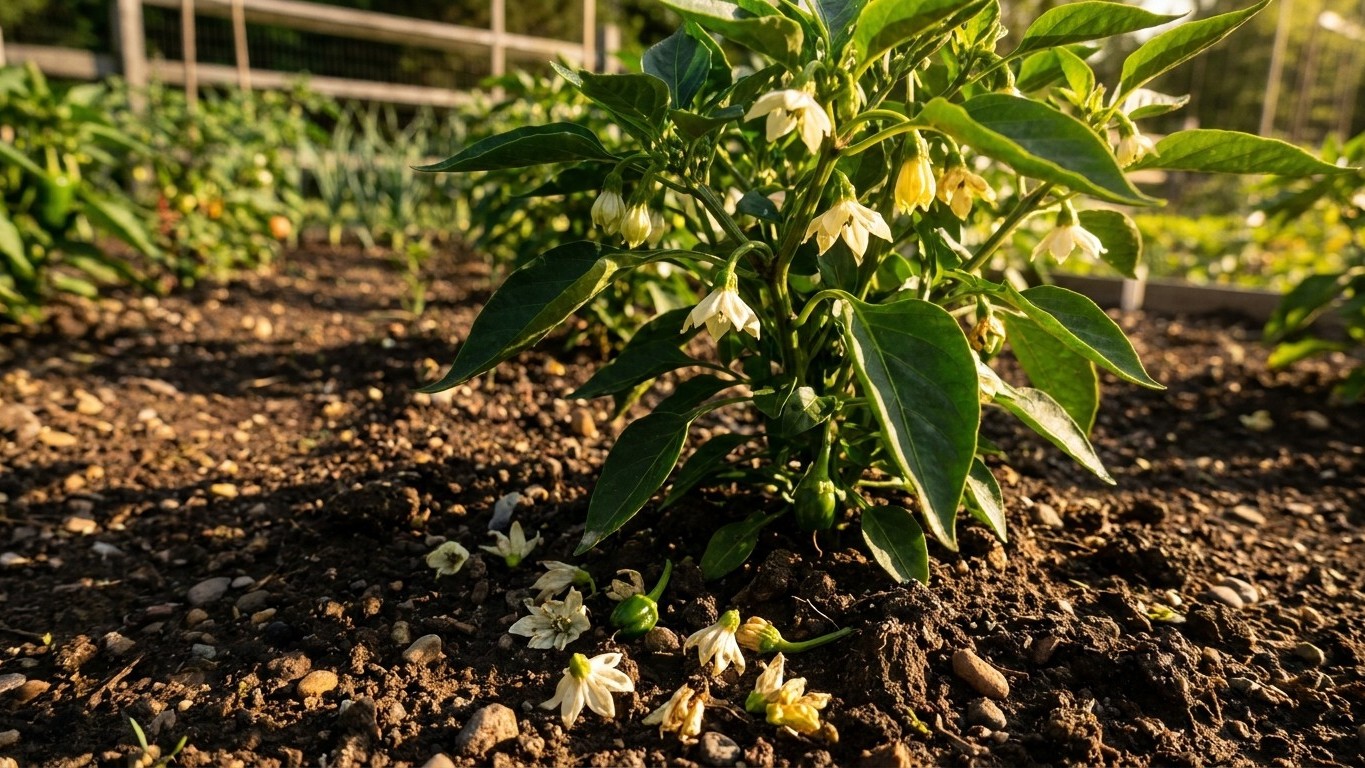

Minnesota’s verified pepper data does not include a named, sourced list of insect species attacking the crop in this state. What the record does show is a set of climate thresholds, tied to frost dates and heat days, that decide whether a pepper plant sets fruit at all, and those thresholds explain most of the damage gardeners blame on bugs.
Which pests attack pepper in Minnesota
Here’s the honest starting point: no state or federal source in this page’s dataset names specific insect species documented on pepper in Minnesota, the way an extension entomology fact sheet might list flea beetles or aphids for a given crop. That gap matters. A pest list built on generic garden-pest knowledge rather than a named, sourced Minnesota record is exactly the kind of unverified claim that turns a reader off, so none appears here.
What the record does carry is the physiology behind why a pepper plant looks “attacked” when nothing is actually feeding on it. Pepper fruit set fails at both ends of the temperature scale: nights below 55°F on one side, days above 90°F on the other. Minnesota’s reference station averages 10.6 days a year at or above 90°F, which is the real measure of the state’s summer heat load and the number that decides whether late-July and August flowers drop before they ever become peppers.
That single fact reframes the question. A gardener who sees blossoms falling off a pepper plant in a hot stretch is not necessarily watching a pest at work. They are watching a plant whose flowers simply stopped setting fruit because the daytime temperature crossed a threshold the plant cannot work around. The same goes for the cool end of the season: nothing in this page’s verified data gives Minnesota’s typical summer night lows, so if a reader suspects cold nights are behind stalled fruit set, the only honest answer is to watch their own thermometer rather than guess from the calendar or from how far north they live.
None of this means insects never touch a pepper plant in Minnesota. It means this page cannot name which ones, when, or how often, because that data is not part of the verified record behind it. For an actual species list tied to Minnesota gardens, a county extension office is the source that can put a name on what is chewing a leaf, because that identification depends on what shows up in a given year and a given yard, not on a statewide average.
When each one shows up, and what it does first
Without a named pest calendar, the more useful timeline for Minnesota pepper growers is the one built from frost and heat, because it tells a gardener when the plant itself is vulnerable, whatever ends up causing the damage.
The season starts indoors. Pepper transplants need 8 to 10 weeks of growth before they go in the ground, and they should not go outside until the soil reaches 60°F and the last frost has passed. For the Twin Cities area, that frost window runs from April 17 to April 30; northern Minnesota gardeners should expect it two to three weeks tighter on both ends of the season, meaning a later safe planting date in spring and an earlier risk of frost in fall.
The first weeks after transplant are when a plant is thinnest-skinned and most likely to show stress from anything, whether that’s a cold snap, transplant shock, or actual feeding damage. A young pepper plant that stalls or drops its first flowers in the two to three weeks after going into the garden is reacting to nighttime chill more often than to an insect, since the plant hasn’t had time to root deeply and recover its footing.
By midsummer, the pattern shifts. Once daytime highs start reaching into the 90s, which happens on average about 11 days a year at the reference station, flower and fruit drop becomes a heat response rather than an early-season cold response. This is the stretch where a gardener who assumes an insect is to blame will often find nothing on the plant at all, because the cause is airborne, not crawling.
Harvest closes the loop: peppers are typically ready 70 to 85 days after transplanting, which for a Twin Cities garden transplanted in mid-May lands the bulk of harvest in late July through September, right in the window when heat stress is most likely to have already thinned out the fruit set earlier in the summer.
Telling the damage apart from everything else
Misdiagnosis is the real risk with pepper problems, more so than any single pest. A dropped flower, a soft fruit, or a stalled plant can come from heat, cold, a nutrient gap, a watering lapse, or actual feeding, and they don’t always look different enough to tell apart on sight.
| Symptom | Likely cause | What separates it |
|---|---|---|
| Flowers dropping, no fruit forming | Heat or cold stress, not a pest | Happens fleet-wide across the planting, not on isolated stems; tracks with a hot or cold spell rather than spreading over days |
| Chewed or ragged leaf edges | Insect feeding | Visible tissue loss with a feeding pattern; often paired with frass or the insect itself nearby |
| Fruit pitting and going soft after picking | Chilling injury, usually from refrigeration | Shows up only after storage, not on the plant, and correlates with time spent below about 45°F |
| Sudden wilting of a whole plant | Root damage, disease, or mechanical injury | Isolated to one plant rather than the whole row; extension diagnostics can separate disease from injury |
The storage row deserves its own flag, because it’s a mistake that happens in the kitchen, not the garden, and it gets blamed on the wrong thing. The refrigerator is too cold for peppers. Clemson Cooperative Extension’s guidance puts optimal storage at 45 to 50°F with 80 to 90 percent relative humidity, holding for two to three weeks under those conditions. A standard fridge typically runs colder than that, and peppers held below about 45°F pit and soften, a texture change that gets mistaken for spoilage or even pest damage when it’s really just chilling injury.
If a symptom shows up only on part of a plant, or only on plants in one part of the garden, that pattern points toward something localized like an insect or a soil issue rather than the season-wide stress of heat or frost. A county extension office can look at a sample or a clear photo and separate those causes with more certainty than any general guide can offer.
What actually works here, and what is a waste of time
On a growing season as short as Minnesota’s, timing does more work than any treatment applied after the fact. Getting the calendar right prevents a large share of what looks like pest or disease trouble later.
Hardening off transplants before they go outside, and waiting until soil hits 60°F and frost risk has passed, avoids the stress that makes young plants vulnerable to everything else, insects included. Starting seed indoors on the 8 to 10 week schedule means transplants go out at a size that can shrug off minor feeding damage instead of being set back by it. A floating row cover placed over young transplants immediately after planting keeps early-season insects off the plant during its most fragile weeks, and costs nothing in terms of chemical exposure or timing guesswork.
What doesn’t work: reaching for a treatment when the actual problem is heat-driven flower drop. Spraying a plant that’s simply too hot to set fruit changes nothing, because there’s no organism to target. The fix there is shade cloth during the worst heat stretches or simply accepting a slower fruit set until temperatures ease, not a pesticide application. Refrigerating harvested peppers in the belief it extends shelf life is another dead end, since it introduces chilling injury faster than it prevents rot.
Beyond that, this page does not recommend specific products, active ingredients, or application rates, because what’s legal to use on food crops varies by state and changes over time. That decision belongs to University of Minnesota Extension, which tracks what’s currently labeled for use in the state and can match a control method to whatever is actually identified on the plant.
Where to check this for your own county
University of Minnesota Extension is the source to check for anything this page can’t verify at the county level, including a confirmed identification of whatever is actually feeding on a pepper plant. A statewide climate average, even one as specific as 10.6 days above 90°F, describes a reference station’s weather, not the pest pressure in one particular backyard.
Pest presence shifts from county to county and year to year depending on local weather, neighboring crops, and what overwintered nearby. A gardener in a southern Minnesota county working with the mild end of the frost window, April 17 to April 30, faces a different early-season risk than one in the northern part of the state working two to three weeks tighter on both ends. That difference alone changes when a plant is most exposed to cold-related stress, and by extension, when insect damage is easiest to mistake for something else.
The most useful next step for anyone unsure what’s damaging a pepper plant is a call or visit to the county extension office, ideally with a photo or a physical sample in hand. That’s the level at which an identification actually holds up, rather than a guess based on a symptom description alone.
Common questions
Why do my pepper flowers fall off without ever becoming fruit?
That’s the fruit-set failure point built into the plant’s biology: nights below 55°F or days above 90°F both stop fruit set. Minnesota averages 10.6 days a year at or above that heat threshold, so a hot stretch in July or August is a common trigger, with no insect involved.
Can I refrigerate peppers I’ve harvested to keep them longer?
Not in a standard fridge. Peppers hold best at 45 to 50°F with high humidity, for up to two to three weeks. Below about 45°F, they pit and soften from chilling injury, which looks like damage but isn’t caused by anything eating the fruit.
When is it safe to move pepper transplants outside in Minnesota?
After the last frost and once soil has reached 60°F. For the Twin Cities, the last frost typically falls between April 17 and April 30; northern Minnesota should plan on the window running two to three weeks tighter.
Is there a list of insects known to attack pepper in Minnesota?
Not one that’s part of this page’s verified sources. For an actual identification of what’s on a specific plant, University of Minnesota Extension and the local county office are the right contact, since pest presence varies by location and season in ways a statewide dataset doesn’t capture.