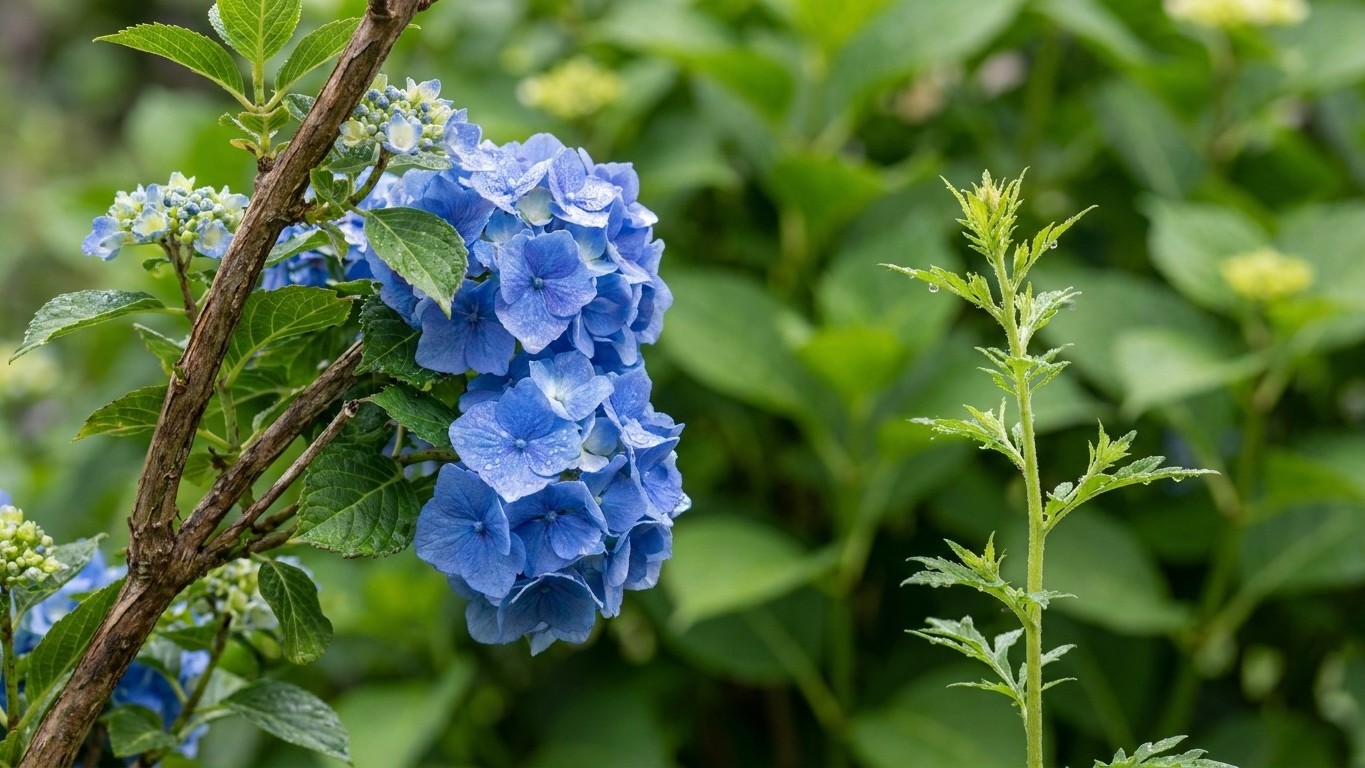

Panicle and smooth hydrangeas are worth trying in Minnesota, but check with your local extension office for how they fare in the far north. Bigleaf hydrangeas often lose their flower buds to the cold, and oakleaf types are a gamble outside the warmest corners. What separates them is where each one carries next summer’s buds: on wood that has to live through January, or on shoots that grow fresh in spring.
What this comes down to in Minnesota

At the Minneapolis-St. Paul reference station, the last spring freeze falls between April 17 and April 30, and the first fall freeze between October 11 and October 23 (NOAA NCEI 1991-2020 Climate Normals). That window is long enough for a hydrangea to push new stems, set buds and flower, so shrubs that bloom on new wood do well here. Shrubs that need last year’s stems intact have to get through a winter that the USDA Plant Hardiness Zone Map places somewhere between zone 3a and 5a, depending on where you garden. The USDA system rests on one number, the average annual extreme minimum temperature, and the Twin Cities sit at the mild end of the state.
Here are six cultivars, ordered from the most dependable to the biggest gamble.
Annabelle
A smooth hydrangea (Hydrangea arborescens) with big white mophead blooms that has been a cold-climate staple for generations. It flowers on new wood, so a winter that kills the stems back to the ground still leaves a full summer of bloom. The heavy heads can flop after a hard rain.
Incrediball
Another smooth hydrangea, bred to carry the same white flower heads on sturdier stems. It shares Annabelle’s new-wood habit and its tolerance for a deep freeze. Gardeners tired of staking tend to move to this one.
Limelight
A panicle hydrangea (Hydrangea paniculata) with cone-shaped blooms that open lime green, fade to cream and take on pink tones as fall cools. It blooms on new wood and handles full sun better than most hydrangeas. Panicle types are among the hardiest in the genus, which is why this one shows up in so many northern yards.
Bobo
A dwarf panicle with white flowers that stays compact, so it suits foundation beds and containers sunk into the ground. Like its larger cousins, it flowers on shoots made in the current season. Small plants also get more protection from snow cover.
Quick Fire
An early-blooming panicle that opens white and ages to pink and red. Flowering ahead of most other panicles is a real advantage where the growing season ends in mid-October. It also blooms on new wood, so winter dieback costs it little.
Endless Summer
A bigleaf hydrangea (Hydrangea macrophylla) sold as a reblooming type. It can bloom on both old and new wood, but in Minnesota the old-wood buds are usually killed, and the plant often dies back and flowers late or sparsely. It rewards extra winter care, covered in Protecting Hydrangeas Through a Minnesota Winter.
Working it out for your own garden
A cultivar’s survival comes from two facts you can look up: which species it belongs to, and whether it blooms on old wood or new wood. Hydrangeas have no days-to-maturity number the way a vegetable does, so the method is a question about timing. Do the buds exist before winter, or do they form after the last spring freeze?
| Type | Blooms on | Minnesota outlook |
|---|---|---|
| Panicle (H. paniculata) | New wood | Reliable in most of the state; check locally in the far north |
| Smooth (H. arborescens) | New wood | Reliable in most of the state; check locally in the far north |
| Bigleaf (H. macrophylla) | Mostly old wood | Buds often lost; flowers are unpredictable |
| Oakleaf (H. quercifolia) | Old wood | Marginal; best in the milder south |
Take Limelight as a worked example. Its flower buds start forming on stems that grow after the last spring freeze, which at the Minneapolis-St. Paul reference station falls between April 17 and April 30. Say a hard winter kills every stem above the snow line. The roots survive, new shoots grow through May and June, and the plant flowers in midsummer, well ahead of the first fall freeze between October 11 and October 23. Nothing the winter did to the old stems matters to the bloom.
Now run the same test on a bigleaf. Its flower buds form the previous late summer and sit exposed on the stems all winter. A cold snap or a thin snow year kills them. The shrub leafs out, looks healthy and never blooms, because the part that needed to survive did not.
To check your own plants in spring, wait until the shrub should have leafed out. Then scratch a small patch of bark on a stem with a thumbnail. Green underneath means the stem is alive. Brown and dry means it died back, so cut to the first live bud. How and when to cut is laid out in When to Prune Hydrangeas in Minnesota.
What changes across the state
The Twin Cities reference point is the mild end of Minnesota. Northern Minnesota runs a few weeks tighter at both ends of the season, with later springs and earlier fall freezes. For a new-wood bloomer that shortens the flowering season without threatening the plant. For a bigleaf or oakleaf, a colder winter makes bud loss close to certain.
Several things move the numbers within the state. Latitude matters a great deal, and the coldest zones sit in the north. The Twin Cities hold extra warmth in their pavement and buildings, so a shrub tucked against a south wall in St. Paul has a better winter than the same shrub on an open farm field. Lake Superior moderates temperatures along the North Shore, while the interior just inland can be considerably colder.
Snow cover counts for more than most gardeners expect. A steady blanket insulates the crown and lower stems from the worst air temperatures, so a hydrangea in a spot where snow piles up often does better than one on a windswept rise. In the open western part of the state, wind strips that cover and dries out exposed stems. Planting in the lee of a house or a fence changes the winter your shrub actually gets, so watch how the plant comes through the cold.
The mistakes this state punishes

One common mistake is buying a bigleaf for its blue or pink color without checking the species. Garden centers sell them in spring, covered in blooms forced in a greenhouse, and the plant looks like a bargain. Then it leafs out and never flowers again, because the old-wood buds froze. If you want the color, choose a panicle that turns pink in fall, or accept that a bigleaf will be a foliage plant in most years.
A warm spell in April does damage of its own. Shrubs wake up, leaf out early, and a freeze in the April 17 to April 30 range, or just after it, burns the tender growth. New-wood bloomers recover by making fresh shoots, but expect a slower, later bloom. Do not cut stems back in the first warm week, because they are often alive lower down. Do the scratch test and wait for the buds to swell.
Late feeding is another trap. Nitrogen in late summer pushes soft growth that cannot harden off before the first fall freeze, which arrives between October 11 and October 23 at the reference station. Ease off fertilizing as the season wears on. Mulching the crown after the ground freezes helps, though the timing and the materials are covered in the Protecting Hydrangeas Through a Minnesota Winter article. Finally, do not pull a shrub that looks dead in May. Give it time before deciding.
Checking this against your county
A state-wide figure is a starting point. The frost window above comes from the Twin Cities, and your yard may run earlier or later by a week or more. Your county office at University of Minnesota Extension can tell you your local conditions and which hydrangeas have done well in your area. For everything beyond winter survival, the main guide to growing hydrangeas in Minnesota covers siting, soil and care.
Common questions
Do bigleaf hydrangeas survive Minnesota winters?
The roots and lower stems often do, particularly under snow. The flower buds on last year’s wood usually do not, so the plant leafs out but blooms late or not at all. Reblooming cultivars such as Endless Summer can produce flowers on new growth, though the show is smaller than the label suggests.
Do panicle hydrangeas need winter protection?
Mature panicle hydrangeas generally need little. They bloom on new wood, so even a winter that kills stems back leaves the flowers intact. Young plants in their first winter benefit from mulch over the crown and a spot out of the wind.
Can oakleaf hydrangeas grow in Minnesota?
They are marginal. Oakleafs bloom on old wood, so the winter cold that kills buds ends the flowers for the year. Southern Minnesota and sheltered city yards give them the best chance. In the north, they tend to disappoint.
Will a hydrangea that died back to the ground come back?
If the roots survived, a smooth or panicle hydrangea will send up new shoots in late spring and bloom the same summer. Wait until the plant has had time to leaf out, and scratch a stem to check for green before cutting anything out.