
In Mississippi, the sourced climate and horticultural record does not point to a named list of insects eating pepper plants. What it documents instead are the two temperature windows that stall pepper before any insect gets involved: nights under 55°F and days over 90°F, 71.1 of which hit Jackson in an average year. Identifying an actual insect on an actual plant belongs to a county extension office. This page covers the growing-season windows that matter and how to tell insect damage from everything else that looks like it.
Which pests attack pepper in Mississippi
The facts behind this page don’t include a county-level or state-level list of insect species feeding on pepper in Mississippi, and no entomology or extension service is cited here as having published one. A lot of general pepper-pest content simply repeats the same handful of insects for every Southeastern state, whether or not they’ve actually been documented locally. This page won’t do that.
What the record does document well is the growing-season stress that makes a Mississippi pepper plant more or less able to shrug off whatever is already feeding on it in a given yard. Nights below 55°F and days above 90°F both stop fruit set, per Utah State University Extension, and Jackson averages 71.1 days a year at or above that 90°F mark. That’s a wide stretch of heat sitting in the middle of a normal Mississippi season, and a stressed plant shows feeding damage faster and recovers from it slower than a plant that isn’t fighting the weather too.
It helps to think in categories instead of names. Feeding damage on pepper generally shows up as one of three types: ragged, chewed leaf tissue, pointing to something with mandibles working the foliage; stippled, yellowing leaves with sticky residue or fine webbing, pointing to something piercing and sucking sap; or holes bored directly into fruit, which usually shows up only after the plant has already set fruit once. None of that names a species. It does say which end of the plant to check first, and whether the timing matches early-season stress or late-season fruit development.
For an actual identification, that call goes to Mississippi State University Extension Service’s county offices, not to a climate record like this one, and that’s covered further down this page.
When each one shows up, and what it does first
Without a documented species list, the honest calendar for Mississippi pepper runs on plant stages rather than insect life cycles, since that’s what the sourced data actually tracks. It still lines up with when trouble tends to appear.
Transplants go in after the last spring frost, which at the Jackson reference station runs March 6 to March 22, and only once soil has reached 60°F, per Utah State University Extension. Suburban and rural gardens away from that station typically see their last frost later, sometimes by one to two weeks, so a county check matters before setting plants out. In the two to three weeks right after transplanting, a still-rooting plant is at its thinnest margin: any feeding damage on young leaves shows fast because there isn’t much tissue to spare.
Once plants are flowering, the next vulnerable stretch is fruit set itself. Fruit set fails at both ends, nights under 55°F and days over 90°F, and that failure can look like pest damage even with no insect involved: flowers or small fruit simply drop. Jackson’s 71.1 days a year at or above 90°F sit mostly in the hottest stretch of summer, working against fruit set regardless of what’s on the leaves. The sourced data doesn’t cover Mississippi’s summer night minimums, so whether the cool end of that window is a factor in a given yard is something to watch locally, not something to assume from the calendar.
Once fruit is set and sizing, visible damage tends to shift from leaves to fruit, since that’s the part of the plant carrying the most sugar and moisture at that stage. Harvest generally runs 70 to 85 days after transplanting, per Clemson Cooperative Extension, so damage that shows up on fruit late in that window is happening on a plant that’s already most of the way to a usable crop.
Telling the damage apart from everything else
Most of what looks like a pest problem on Mississippi pepper is actually a symptom of the conditions above, especially during the hottest and coolest stretches of the season. Before assuming an insect is responsible, it’s worth ruling out the more common culprits.
| What you see | Likely cause | What tells them apart |
|---|---|---|
| Flowers or small fruit dropping, no chew marks | Heat or cold stress at fruit set | No feeding holes or insects visible; coincides with a run of very hot or unusually cool nights |
| Ragged holes in leaves | Chewing insect | Torn tissue with a visible feeding edge, often worse at leaf margins |
| Yellow stippling with fine webbing | Sap-feeding insect | Sticky residue or webbing on the underside of leaves |
| Wilting despite moist soil | Disease or root damage | Wilting persists during the cool part of the day, not just afternoon heat |
| Sunken, discolored fruit skin | Sunscald or chilling injury | Appears on the sun-facing side, or after fruit sat below 45°F in storage |
The single most common mistake isn’t misreading an insect, it’s putting harvested peppers straight in the refrigerator. Clemson Cooperative Extension puts pepper’s optimal storage at 45 to 50°F, warmer than a typical kitchen fridge, and colder than that causes the pitting and softening of chilling injury, damage that gets blamed on a pest when it’s actually a storage mistake. A crisper drawer often runs colder than 45°F, so a few days there can leave skin damage that looks like something fed on the fruit after harvest.
None of this replaces a direct look at the plant. A photo of the damage, the leaf pattern, and where on the plant it shows up is what a county extension agent needs to actually identify a cause.
What actually works here, and what is a waste of time
Timing does more work in Mississippi’s pepper season than any product on a shelf, mostly because the frost-free window and the heat window both have real, sourced boundaries that a calendar can respect and a spray schedule can’t.
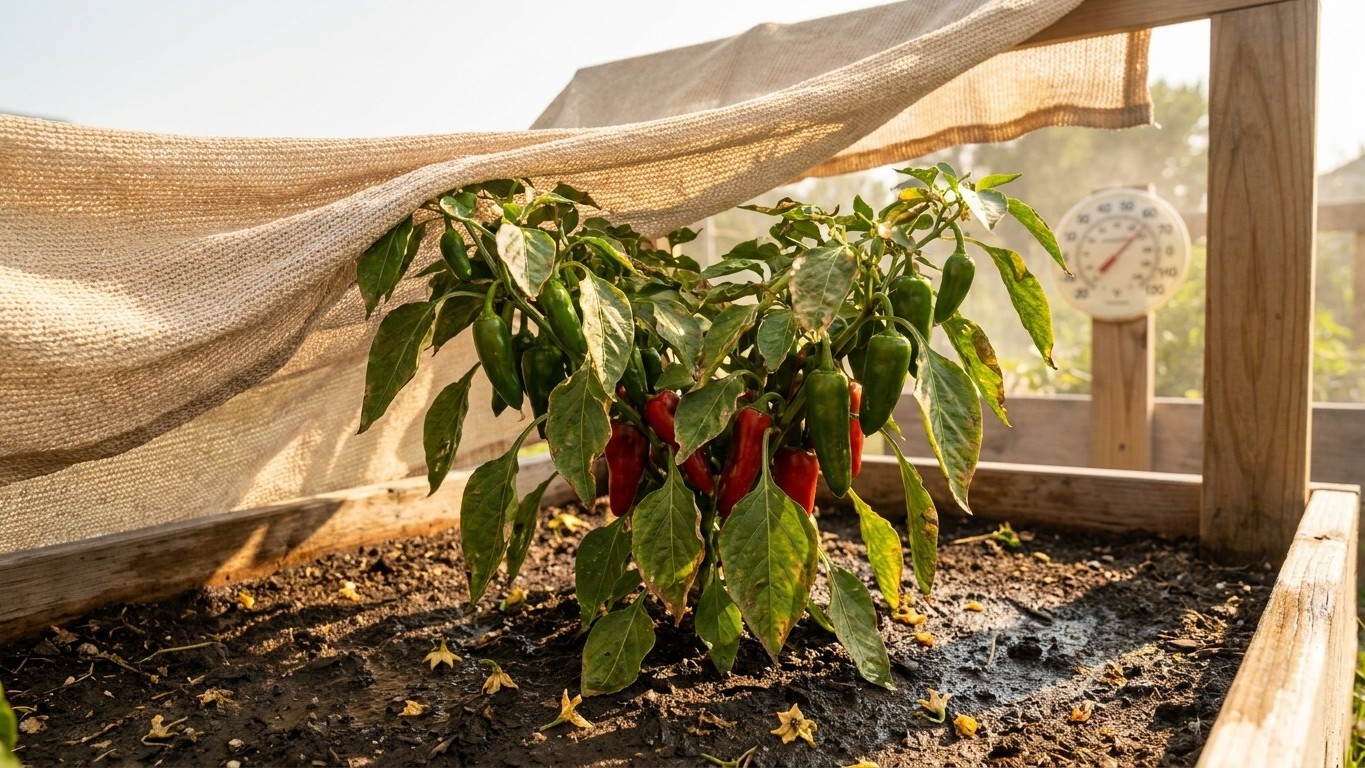
Transplanting only after soil hits 60°F and the last frost has passed, March 6 to March 22 at the Jackson reference station, prevents more early-season loss than anything applied to the plant later. A physical barrier over young transplants, row cover or mesh, during the first two to three weeks after transplant protects the thinnest, most vulnerable tissue during the window when feeding damage shows up fastest. That barrier has to come off before flowering, since pepper needs pollinator access to set fruit at all.
On the heat end, there’s less a gardener can do to change the plant’s physiology and more to manage around it. Starting transplants indoors 8 to 10 weeks before the outdoor planting date, per Utah State University Extension, gets flowering underway before the hottest stretch of Jackson’s 71.1 annual days above 90°F sets in, rather than forcing fruit set into the peak of it.
What’s largely a waste of time: treating an unidentified problem based on a symptom photo matched to an internet list, especially when the pattern (flower drop with no chew marks, sunken fruit skin, morning wilting) points to heat, cold, or storage rather than an insect. Spraying on a fixed schedule instead of in response to a confirmed problem burns money without fixing anything, and it can remove the insects that would otherwise keep a smaller pest problem in check.
Where to check this for your own county
Everything documented here, the 71.1 days above 90°F, the March 6 to March 22 frost window, the fruit-set thresholds, comes from state or reference-station-level data. None of it describes one specific garden, and pest pressure especially can vary from one side of a county to the other depending on what’s planted nearby and how a yard has been managed.
A state-level climate normal never tells you what’s in your own backyard; only a direct look at the plant does that. That’s the gap a county extension office fills. Mississippi State University Extension Service maintains offices across the state’s counties, and that’s the right first call for identifying an actual insect on an actual pepper plant, not a general record like this one.
A call or visit goes further with specifics in hand: weeks since transplant, which part of the plant is affected, and whether the damage coincided with a stretch of unusually hot or cool weather. That’s the same information in the damage table above, and it’s what lets an agent narrow a cause instead of guessing from a description.
Suburban and rural gardens also tend to see their last frost land later, and first fall frost earlier, than the reference-station dates carried here, sometimes by a week or two, more at elevation. Check with the county office before setting a transplant date off this page’s numbers alone.
Common questions
Does Mississippi State University Extension Service publish a list of pepper pests for the state?
Not in the sourced facts behind this page. For identification specific to a garden, a county office is the right contact rather than a general climate or horticulture record.
Why are my pepper flowers dropping with no visible insect damage?
Fruit set fails at both ends, nights below 55°F and days above 90°F, according to Utah State University Extension. Flower and small-fruit drop with no chew marks or webbing usually points there before it points to a pest.
Can harvested peppers go straight into the refrigerator?
No. Clemson Cooperative Extension puts optimal storage at 45 to 50°F, warmer than most refrigerators, and colder temperatures cause pitting and softening from chilling injury.
When is it safe to transplant peppers outdoors near Jackson?
After the last spring frost, which runs March 6 to March 22 at the Jackson reference station, and once soil has reached 60°F. Gardens away from that station often see frost linger later, so a county check is worth doing first.