
In Idaho’s low valleys, summer squash is ready when the skin turns glossy and gives slightly under a fingernail, usually starting in early July and continuing until the first fall frost. There’s no waiting for a “ripe” color the way you’d wait on a tomato: pick small, pick often, and don’t count on storing a surplus for long. A week in the fridge is the ceiling; after that, freezing or cooking is the only real option for a glut.
When summer squash are ready in Idaho
The plant tells you before the calendar does. Summer squash, whether zucchini, yellow crookneck, or pattypan, is picked immature, so the signal isn’t a color change but a texture one: skin that still gives under light fingernail pressure, seeds inside still soft, and a fruit that hasn’t ballooned past roughly six to eight inches for zucchini or four inches across for pattypan. Wait for a hard rind and you’ve got a squash that’s already past its best window, tougher and seedier than anyone wants on a dinner plate.
Idaho’s growing season sets the outer edges of that window, and the Boise area gets wider edges than most of the state. NOAA’s 1991-2020 climate normals for station USW00024131 put the last spring frost between April 23 and May 7, and the first fall frost between October 7 and October 21. That’s the frame: plant after the spring date, and expect the vines to keep producing until the fall one shuts things down. Since Clemson Cooperative Extension notes summer squash reaches harvest about 55 days after planting, a Boise-area gardener setting transplants out in early May is typically picking fruit by late June or early July, with the vines running until mid-October if the plants stay healthy and watered.
That’s the caveat worth repeating: Boise sits low in its valley, and the frost dates above come from that specific station. Most of the rest of Idaho sits higher and colder, with shorter frost-free windows on both ends. A garden at elevation might see its last frost weeks later and its first fall frost weeks earlier, compressing the whole harvest season into a narrower stretch. The USDA Plant Hardiness Zone Map puts the state anywhere from zone 3b to 7b, and that range says more about winter cold than about squash timing directly, but it’s a fair proxy for how much the frost-free window shrinks once you leave the valley floor.
None of that changes the day-to-day rule, though: check the vines every day or two once fruit starts setting. The plant reads a mature squash as a signal to slow down, so letting even one fruit get away from you, hidden under a leaf and easy to miss, can throttle the whole plant’s output for the rest of the week.
Keeping them, and for how long
Here’s the number that surprises new gardeners: summer squash doesn’t really keep. Clemson Cooperative Extension’s Home & Garden Information Center is direct about it: store summer squash in a plastic bag in the refrigerator, and count on up to 1 week before quality drops. That’s it. There’s no root cellar trick, no dark-and-cool corner that stretches it into months the way it does for winter squash like butternut or acorn.
The distinction matters because the two crops get lumped together by name alone. Winter squash has a hard, cured rind that seals in moisture and blocks the organisms that go after softer flesh. Summer squash is harvested with a still-tender, still-permeable skin, the very quality that makes it good eating raw or lightly cooked is the same quality that lets it lose water and start to decay within days of coming off the vine. Clemson’s one-week figure is a maximum under good conditions: cold enough, bagged to slow moisture loss, and handled without bruises or nicks that give rot a head start. A squash picked on a Boise afternoon pushing past 90°F, then left on a counter overnight before it makes it to the fridge, won’t reliably make it to day seven.
That week-long ceiling is also why “storage” isn’t really the right frame for a summer squash glut. With winter squash, the harvest-and-storage conversation is about curing and root-cellar temperatures. With summer squash, the honest conversation is about what happens after the one week runs out: freezing (shredded for baking, or blanched in slices), pickling, or giving it away before it turns. Grating and freezing in bags is the method most extension offices point gardeners toward when the vines outpace the kitchen, because freezing sidesteps the moisture-loss problem entirely rather than trying to slow it down.
None of this is a case for skipping the fridge step. A squash left at room temperature loses firmness within a day or two, well before that one-week mark, so the bag-in-the-refrigerator instruction isn’t optional if you want any of that week at all. Skip it, and shelf life gets measured in hours, not days.
Where in the house that actually is
“Refrigerator” sounds simple until you remember that a modern kitchen fridge is built to hold meat and dairy near the mid-30s, which is colder than plenty of produce actually wants. Summer squash isn’t as chill-sensitive as, say, a tomato, but the crisper drawer, not the main shelf, is still the right call: it runs a few degrees warmer and holds more humidity than the rest of the box, which matches the plastic-bag-and-fridge instruction better than an open shelf near the back wall, where cold air blasts straight off the cooling vent.
A garage or mudroom, the default overflow spot in a lot of Idaho homes, doesn’t work for this crop the way it might for potatoes or winter squash. Boise summers average roughly 47.5 days a year at 90°F or hotter, and an unheated garage tracks outdoor temperature closely enough that squash stored there in July or August sits in conditions closer to a car dashboard than a produce drawer. Even in October, once nights are cold enough to threaten frost, an uninsulated garage can dip below freezing on a clear night, and unlike a curing winter squash rind, summer squash has no tolerance for that at all: a hard freeze turns the flesh mushy within hours.
A heated living space is the other extreme: comfortable for people, too warm for a vegetable trying to hold onto its moisture. That leaves the refrigerator crisper drawer as the only spot in most houses actually built for this job, and it’s worth checking with a real thermometer rather than trusting the dial. Refrigerator thermostats drift, and a drawer that’s supposed to sit in the high 30s can run colder near a cooling vent or warmer if it’s packed tight with other produce blocking airflow. Ten minutes with a thermometer confirming the drawer temperature is the cheap insurance that makes the one-week window realistic instead of optimistic.
What goes wrong here
The most common failure isn’t spoilage, it’s math. One healthy zucchini plant can produce far more fruit than a household eats fresh in a week, and because the plant slows fruit-set once a squash matures on the vine, an overwhelmed gardener who lets a few oversized zucchini sit “for later” is actually training the plant to produce less. The fix is blunt: harvest every fruit at the small stage, every couple of days, whether or not you have a plan for it yet. Freeze or give away what you can’t eat, but keep the vine picked.
Dry heat during a Boise summer is the second failure point. With August averaging just 0.17 inches of rain and June and July not far behind at 0.75 and 0.21 inches, summer squash growing in that stretch depends almost entirely on irrigation rather than rainfall, especially with roughly 47.5 days a year hitting 90°F or higher driving fast evaporation from the soil surface. Inconsistent watering during fruit set shows up as misshapen fruit and bitter flavor, not just smaller yields, so a rain gauge or even a finger in the soil is what actually settles whether a given week’s watering was enough. The seasonal averages set expectations; they don’t replace checking the bed.
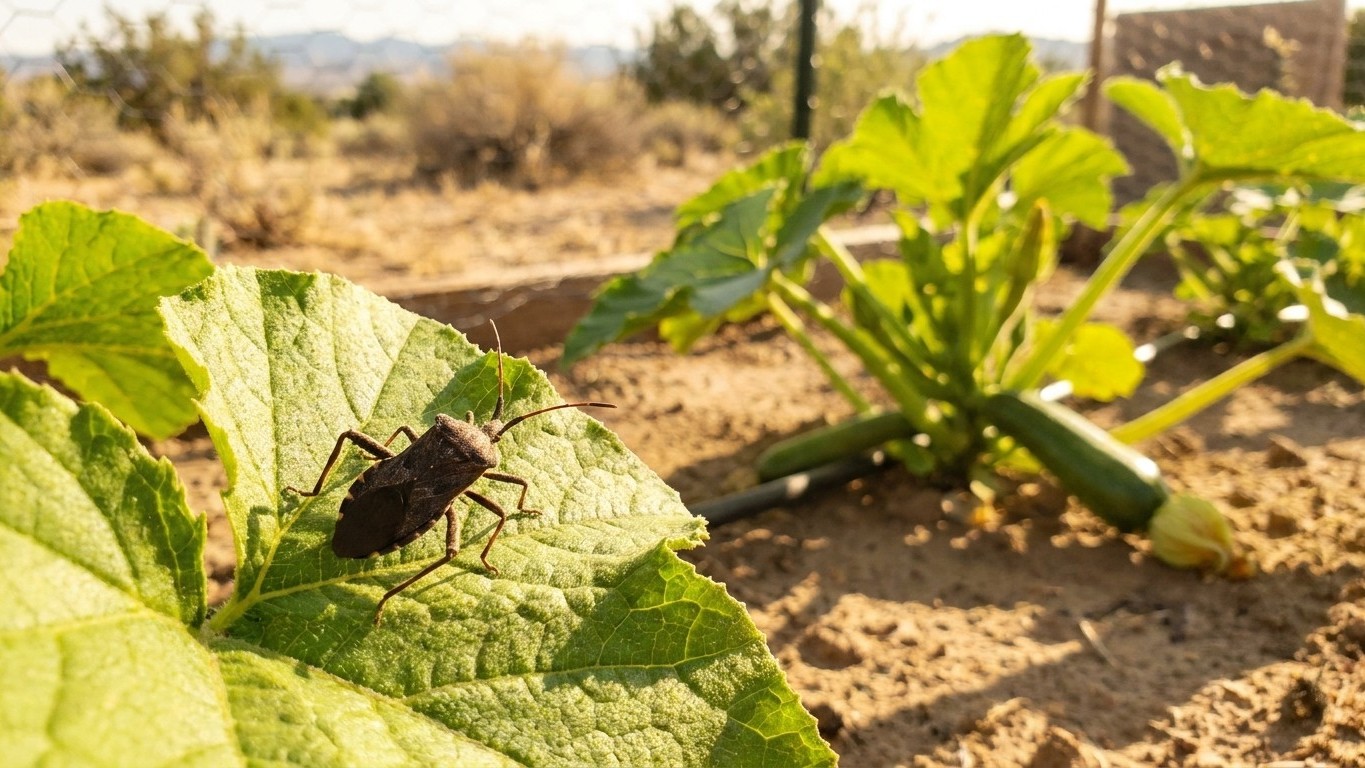
Pests round out the list. University of Idaho Extension documents the squash bug as one of the pests found in this territory, and it’s the one most likely to show up on summer squash specifically, feeding on leaves and stems until a heavily infested plant wilts even with adequate water. Checking the undersides of leaves for the bug’s bronze egg clusters every week or two, before a full infestation sets in, is far easier than treating one once it has spread through the whole planting.